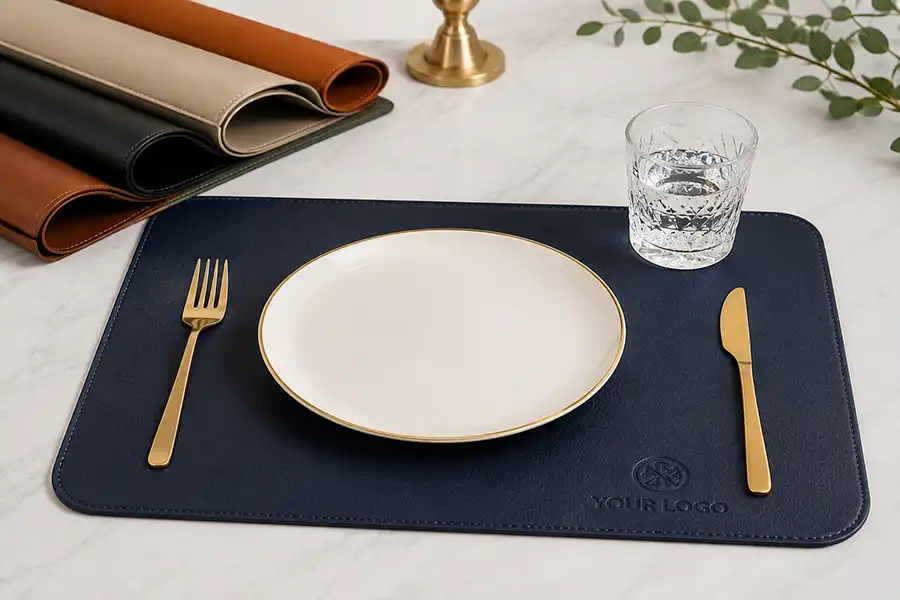



Leather placemats are more than just table accessories—they reflect the style and quality of your brand, whether in a hotel, restaurant, café, or gift project. Selecting the right material is crucial for durability, appearance, maintenance, and overall customer satisfaction. In this guide, we explore the most popular materials for leather placemats and provide insights to help buyers make informed choices for bulk orders.
PU Leather Placemats
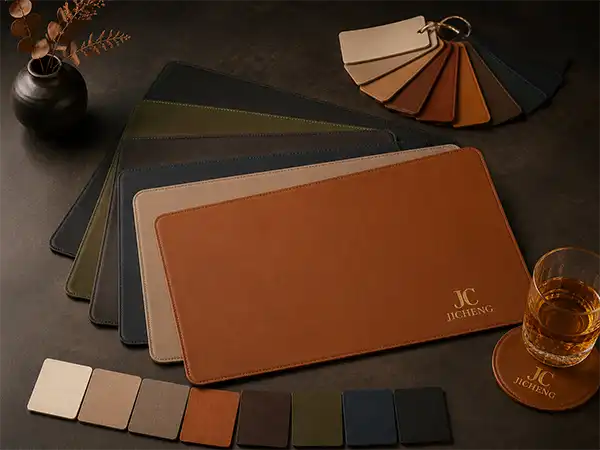
PU leather is one of the most commonly used materials in commercial placemats. It provides a premium look at a cost-effective price.
Advantages:
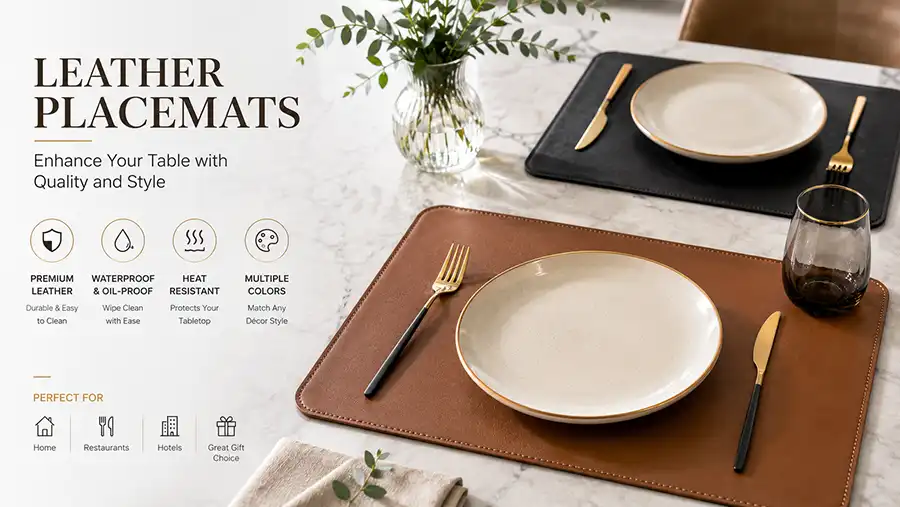
Waterproof and stain-resistant
Easy to clean and maintain
Wide range of colors and textures
Suitable for bulk orders and OEM/ODM projects
Durable for high-frequency use in restaurants and hotels
Best Use Cases: Hotels, restaurants, cafés, retail brands.
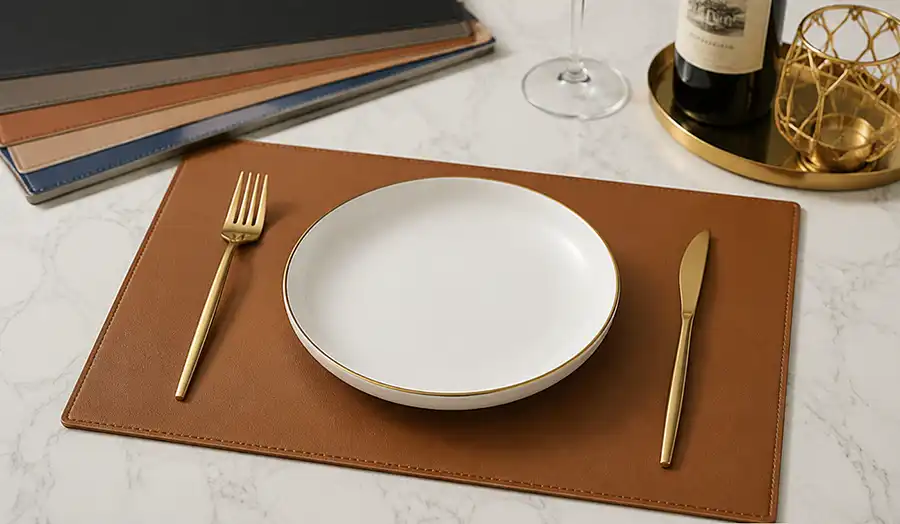
Double-Sided PU Leather
Double-sided PU leather placemats offer a versatile and premium design option. Each side can have a different color or texture, providing reversible functionality.
Benefits:
Two distinct designs in one product
Longer service life
Offers a more luxurious experience for guests
Ideal for gift sets and corporate branding
Tip: Always check color consistency in bulk orders to maintain a uniform appearance.
PVC Leather Placemats
PVC leather is a synthetic alternative that mimics the look of genuine leather.
Advantages:
Lower cost for large orders
Water-resistant surface
Lightweight and flexible
Easy to produce in large quantities
Considerations: PVC is less breathable and may show scratches faster than PU leather, but it is sufficient for casual dining and promotional products.
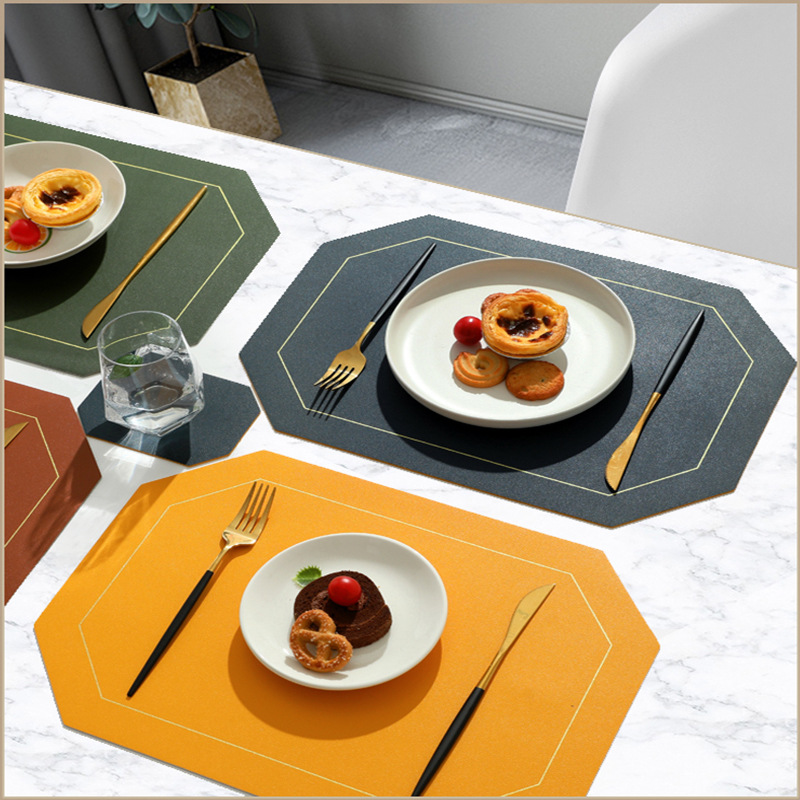
Genuine Leather Placemats
Genuine leather placemats are perfect for high-end applications that require a natural texture and luxurious feel.
Advantages:
Unique leather grain for premium aesthetics
Highly durable when properly maintained
Adds significant value to upscale restaurants or hotel dining experiences
Considerations: Higher price, requires more careful maintenance, and may have natural color variations.
Waterproof and Maintenance
Most PU and PVC leather placemats are waterproof and easy to clean. For genuine leather:
Wipe with a damp cloth for daily maintenance
Avoid soaking or harsh chemicals
Apply leather conditioner occasionally for long-term durability
Ensuring easy cleaning is critical for restaurants and hotels where tables are frequently used.
Durability and Commercial Use
When choosing a material, consider:
Daily wear and tear
Resistance to heat, spills, and scratches
Long-term appearance consistency
Suitability for bulk orders
PU leather and PVC are typically the most practical for high-volume commercial use, while genuine leather is reserved for premium, high-value applications.
Material Selection Checklist
Before placing a bulk order, check:
Material type: PU, PVC, Double-Sided, Genuine Leather
Color matching and texture consistency
Waterproof or stain-resistant features
Thickness and flexibility
Maintenance requirements
OEM/ODM capabilities for custom designs
Selecting the right material for leather placemats is critical for balancing aesthetic appeal, durability, and cost. PU leather provides the best value for commercial settings, double-sided options offer versatility, PVC is a budget-friendly alternative, and genuine leather adds a premium touch. Always confirm material quality, sample approval, and supplier capabilities before placing bulk orders.
FAQ
Q1: What is the best material for commercial leather placemats?
PU leather is considered the most practical material for commercial placemats used in hotels, restaurants, cafés, and event venues. It offers an excellent balance of durability, waterproof performance, easy maintenance, and cost efficiency. Compared with genuine leather, PU leather is easier to clean and more suitable for high-frequency daily use.
Q2: What is the difference between PU leather and PVC placemats?
PU leather generally provides a softer texture, more premium appearance, and better flexibility than PVC. PVC placemats are usually more affordable and highly water-resistant, while PU leather offers a more luxurious feel that is preferred by hospitality brands, restaurants, and retail customers.
Q3: Are leather placemats waterproof?
Most PU leather and PVC placemats are waterproof and designed to resist spills, stains, and daily moisture exposure. Liquids can usually be wiped away with a damp cloth. However, genuine leather placemats require additional care and should not be soaked in water for extended periods.
Q4: Which placemat material is best for hotels and restaurants?
For most hospitality applications, double-sided PU leather placemats are the preferred choice. They provide an elegant appearance, excellent durability, easy cleaning, and longer service life. Many hotels and restaurants also choose custom colors and logo embossing to match their brand image.
Q5: How long do PU leather placemats last?
The lifespan of PU leather placemats depends on usage frequency and maintenance. In normal restaurant and hotel environments, high-quality PU leather placemats can typically last several years while maintaining their appearance and functionality.
Q6: Can leather placemats be customized with logos and brand colors?
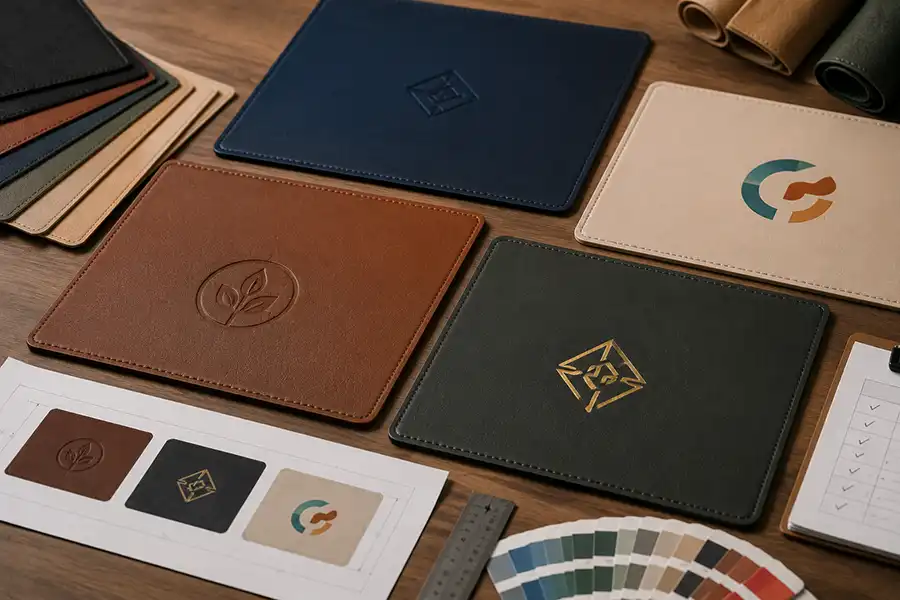
Yes. Most manufacturers offer OEM and ODM customization services, including logo embossing, debossing, foil stamping, screen printing, custom colors, custom sizes, and private label packaging. This allows brands to create unique placemat collections that align with their visual identity.
Q7: What thickness is recommended for leather placemats?
Commercial leather placemats are commonly produced in thicknesses ranging from 1.8 mm to 3.0 mm. Thicker placemats generally provide a more premium feel and better durability, while thinner options may be preferred for lightweight retail products.
Q8: Can I order samples before placing a bulk order?
Yes. Professional manufacturers typically provide samples before mass production. Sample approval allows buyers to verify material quality, color matching, logo placement, and overall product appearance before confirming large-volume orders.