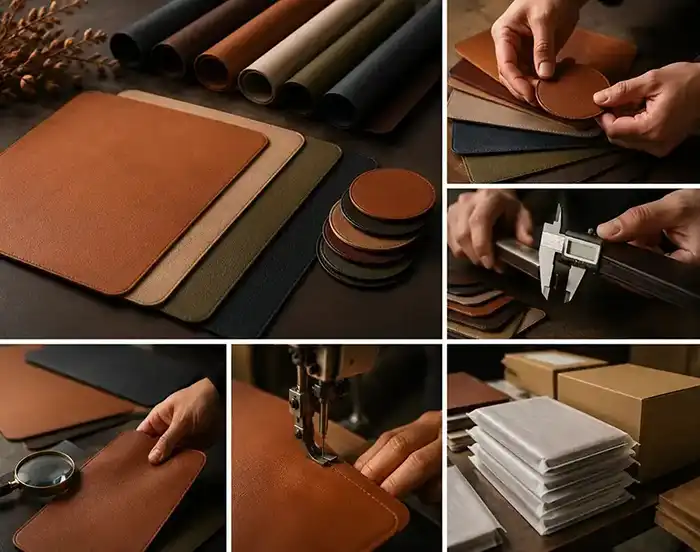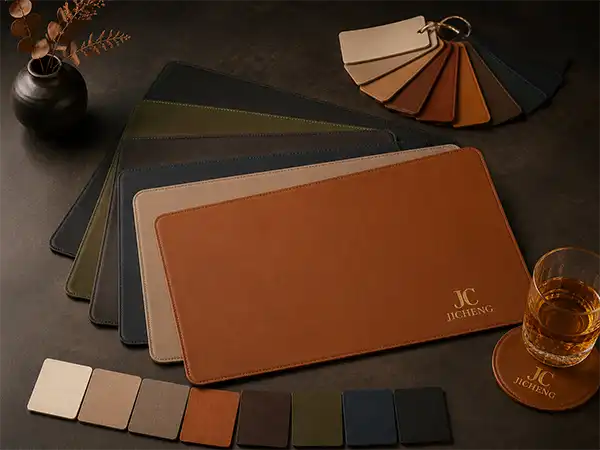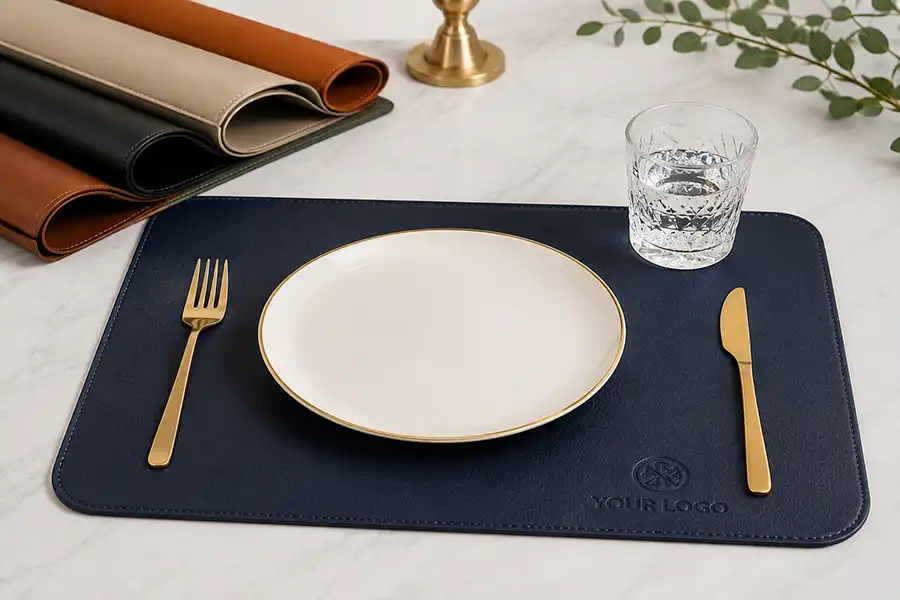



Choosing a branding method for custom leather placemats with a logo involves more than selecting the most noticeable effect. The final result also depends on the placemat material, surface texture, artwork complexity, number of colors, logo size and intended product positioning.
Debossing, foil stamping, screen printing, digital printing and laser engraving each create a different appearance. The most suitable option is the method that works with the selected surface, supports the artwork and produces an approved sample consistent with the intended brand presentation.
Define the Desired Logo Appearance First
Begin with the visual effect the finished placemat should achieve.
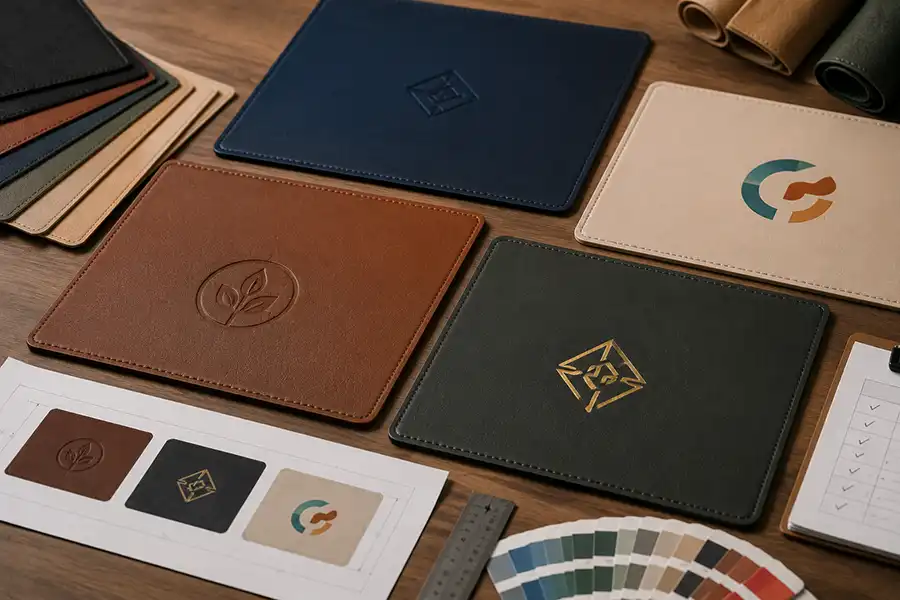
A hotel or premium restaurant may prefer a subtle recessed logo that blends into an understated table setting. A retail or gift product may benefit from a metallic highlight, while a promotional placemat may require stronger brand-color visibility. Designs containing gradients, multiple colors or decorative patterns may require a printing process rather than a pressed mark.
The initial direction should reflect the brand positioning, product color, required logo visibility, intended application and packaging presentation. The branding process should be selected after the desired appearance has been defined.
Review the Placemat Material and Surface
The same branding process can produce different results on smooth, grain-textured, coated or flexible surfaces. Material construction, finish and color can influence logo depth, contrast, adhesion and edge clarity.
A smooth surface may support sharper printed or foil details, while a pronounced grain can affect fine lines and small text. Surface coatings may also influence printing, foil adhesion or the visual response to laser marking.
Buyers who have not finalized the product surface should first choose the right leather placemat material. Reviewing available custom placemats and table mats can also help identify which texture, finish and product style best support the intended logo effect.
The artwork and selected placemat surface should be evaluated together before sampling begins.
Quick Comparison of Leather Placemat Logo Methods
| Logo Method | Typical Visual Result | Best Considered When |
|---|---|---|
| Debossing | Subtle recessed branding | A clean, premium and low-color logo is required |
| Foil stamping | Metallic or colored highlight | Stronger contrast or luxury presentation is required |
| Screen printing | Clear surface color | Simple artwork needs visible brand color |
| Digital printing | Detailed or full-color artwork | The design contains multiple colors, graphics or patterns |
| Laser engraving | Precise marked or engraved effect | The selected material responds suitably to engraving |
This table provides an initial comparison rather than a universal recommendation. Final suitability depends on the actual material, artwork and approved sample.
Compare the Main Logo Application Methods
Debossed Logos
Debossing creates a recessed mark by pressing the logo into the surface. It usually produces a subtle, professional appearance without adding printed color, making it suitable for clean emblems, wordmarks and understated premium branding.
Logo line thickness, overall size, position, mark depth and edge clarity should be reviewed during sampling. Fine artwork may lose definition when lines are too thin or the material texture is pronounced. Depth and clarity can also vary across PU, PVC and other leather-like surfaces.
Foil-Stamped Logos
Foil stamping adds a metallic or colored highlight to the logo area. Gold, silver and other foil tones can create stronger contrast than debossing and may suit hospitality, gift, retail or premium private-label products.
The foil color should be evaluated against the placemat color. Artwork detail, logo size, position, surface compatibility, adhesion and visual consistency should also be checked on the actual sample.
Screen-Printed Logos
Screen printing applies visible color to the placemat surface and is often considered when a simple logo requires clear brand visibility. It may suit single-color or limited-color artwork with strong contrast between the logo and product.
The number of colors, line detail, surface smoothness, printed area and sample appearance should be reviewed. Cleaning performance and durability should be evaluated using the selected material and intended use rather than assumed from the process name alone.
Digitally Printed Logos and Graphics
Digital printing may support detailed artwork, multiple colors, gradients, decorative patterns or larger graphic areas where the factory process and selected material are suitable.
Artwork resolution, color expectations, printed area and placement should be defined before sampling. The achievable detail and color result depend on the confirmed printing capability and the response of the selected surface.
Laser-Engraved or Laser-Marked Logos
Laser engraving or laser marking can create a precise branded or decorative effect on a compatible surface. Depending on the material, the result may appear recessed, darker, lighter or visibly contrasted against the surrounding area.
Material response, resulting color change, logo size and detail level should be tested before approval. Different PU, PVC and coated leather-like surfaces may react differently, so the final decision should be based on a sample rather than a reference image alone.
Match the Logo Artwork to the Branding Process
A simple emblem with bold lines may be suitable for debossing, foil stamping or screen printing. Small text, fine details, multiple colors, gradients and large graphic areas may require a different process.
A detailed printing method may be unnecessary for a subtle premium wordmark, while a pressed logo may not reproduce a complex full-color design. The branding process should follow the artwork and desired appearance instead of forcing the design into an unsuitable method.
Before sampling, review line thickness, small text, color count, gradients, decorative elements and the total branded area. Simplifying the artwork may improve clarity when the logo will be debossed, foil stamped or printed at a small size.
Confirm Logo Size, Position and Product Presentation
The same logo method can create a different impression depending on its size, position and relationship to the complete product.
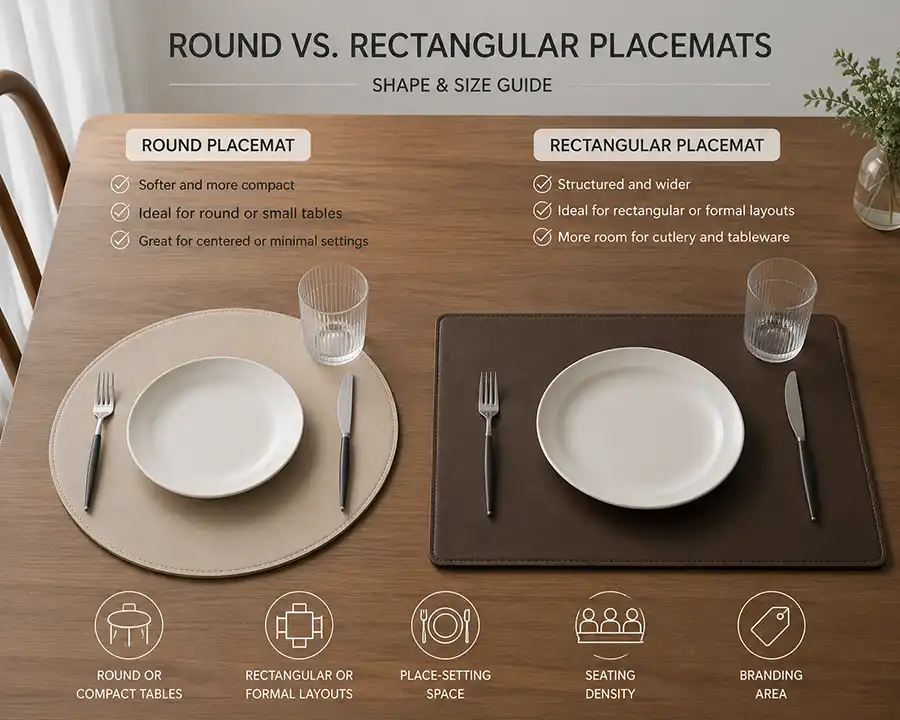
A small corner logo may support a discreet hospitality presentation, while a larger central design may create stronger retail or promotional impact. Logo dimensions should be reviewed together with placemat shape, edge distance, orientation, product color and the intended table setting.
Packaging should also be considered. A logo used on the placemat may need to coordinate with private-label sleeves, gift boxes, retail displays or other branded packaging elements.
Approve the Logo Sample Before Bulk Production
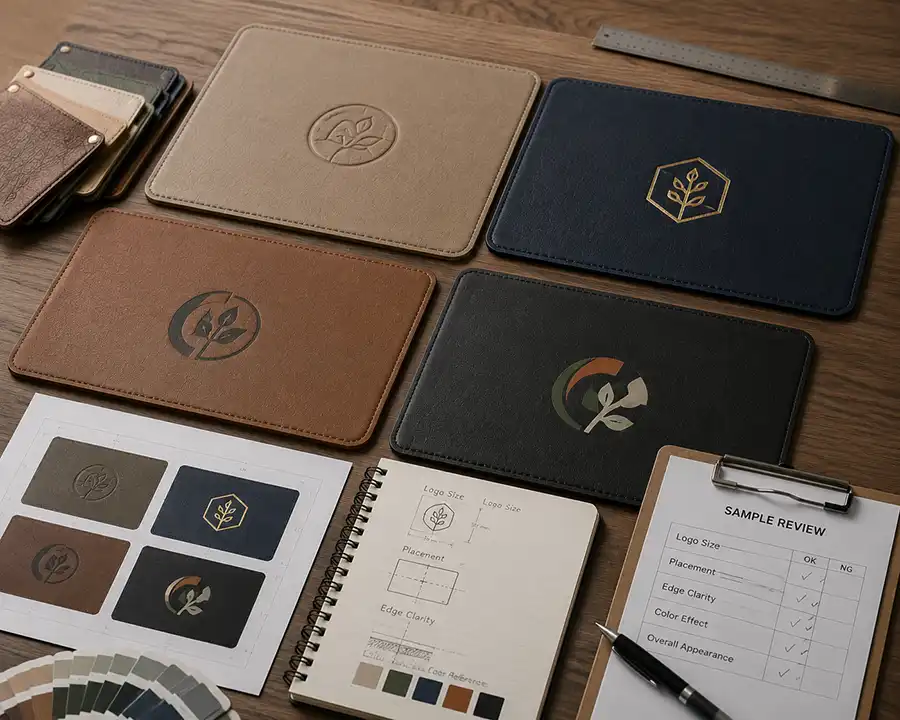
Final suitability should be confirmed through a sample made with the selected material, artwork and branding process.
Review the logo size, position, color or foil tone, mark depth where applicable, edge clarity, alignment, surface appearance and consistency with the approved artwork. The completed sample should also be assessed as part of the overall product and packaging presentation.
Sampling gives the buyer and factory an opportunity to adjust the artwork, scale, position or process direction before bulk production. A digital design or reference image cannot fully represent how the actual material surface will respond.
Choose the Right Logo Method for Your Custom Placemats
A useful customization inquiry should include more than the question, “Can you add our logo?”
Prepare:
Logo artwork
Preferred placemat material
Product dimensions and shape
Placemat color
Logo size and position
Preferred branding method, if known
Expected order quantity
Packaging requirements
Target market or application
Contact us by email or WhatsApp to discuss your custom leather placemat OEM/ODM project. Attach the logo artwork in the email or WhatsApp conversation so the material, surface, artwork and branding direction can be reviewed together.
The project information can then be used to evaluate the suitable logo method, prepare a sample and provide a bulk quotation. Final recommendations remain subject to the selected material and approved sample.
Frequently Asked Questions About Custom Leather Placemat Logos
What is the best logo method for leather placemats?
The most suitable method depends on the desired appearance, material surface, artwork complexity, product color and approved sample. Debossing may suit subtle branding, foil stamping creates stronger contrast, and printing may be more suitable for visible color or detailed graphics.
What is the difference between debossing and foil stamping?
Debossing creates a recessed mark in the material without adding printed color. Foil stamping adds a metallic or colored surface effect that provides stronger visual contrast.
Can a full-color logo be printed on leather placemats?
Digital printing may support detailed or full-color artwork where the factory process and selected material allow. Artwork resolution, color expectations, printed area and surface response should be confirmed through sampling.
Is laser engraving suitable for PU leather placemats?
Suitability depends on the exact PU surface, coating and material response. Testing is necessary because different synthetic leather surfaces may produce different marked, engraved or color-change effects.
Should I approve a logo sample before bulk production?
Yes. A sample allows the buyer to review logo size, position, color, depth, clarity, surface appearance and overall presentation before confirming bulk production.
Conclusion: No single logo method is suitable for every custom leather placemat project. Debossing, foil stamping, screen printing, digital printing and laser engraving each create a different visual result, while the material surface and artwork determine which direction is practical. Confirm the logo size and position, approve a sample made with the selected material and contact the factory by email or WhatsApp with complete product and order information before requesting bulk production.