



Choosing between round vs. rectangular placemats involves more than matching the placemat to the table shape. The practical choice depends on the available dining space, plate and cutlery layout, seating density, required surface protection and overall product presentation.
A placemat that looks correctly proportioned by itself may become crowded once plates, glasses and neighboring place settings are added. Shape and size should therefore be evaluated as part of the complete table layout.
Start With the Table and Available Dining Space
Before comparing placemat formats, record the table shape, overall dimensions, number of seats and approximate space available for each diner. Plate diameter, cutlery position, glassware and distance from the table edge should also be considered.
The same placemat may fit comfortably on a large dining table but create overlap on a compact table with closely spaced seats. A useful starting point is to mark the intended place-setting area directly on the table and check how much space remains between adjacent settings.
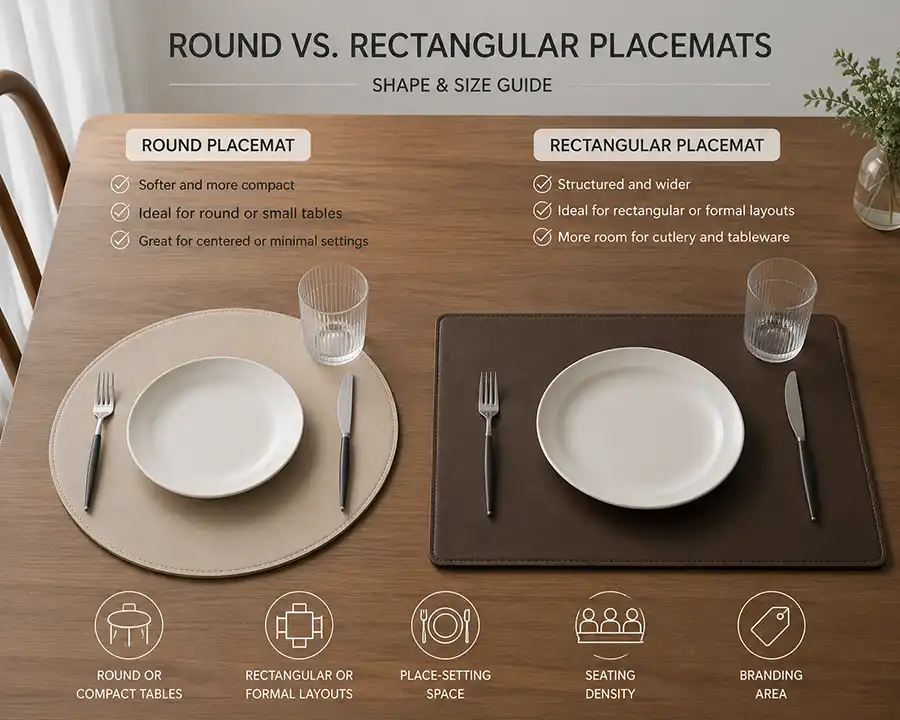
Round vs. Rectangular Placemats at a Glance
| Comparison Area | Round Placemats | Rectangular Placemats |
|---|---|---|
| Typical visual effect | Softer and more compact | Structured and wider |
| Common table direction | Round or compact tables | Rectangular or formal layouts |
| Place-setting space | Often suits centered or minimal settings | Usually provides more lateral room for cutlery |
| Seating density | May reduce corner overlap in tighter layouts | Needs sufficient width between neighboring settings |
| Branding area | Works well with centered or curved arrangements | Provides a wider area for logos or decorative designs |
This comparison provides a starting direction. The table dimensions, service items and spacing between diners should determine the final format.
When Round Placemats Work Well
Round placemats can work well on round dining tables, compact tables and centered plate arrangements. Their curved outline may reduce visual crowding where neighboring seats are relatively close, making them useful for cafés, smaller place settings and decorative collections with a softer visual style.
The table itself does not need to share the same geometric shape. A round placemat may also work on a square or rectangular table when the layout provides enough room, while rectangular or oval formats may fit a round table when the diameter and seat spacing allow it.
When Rectangular Placemats Work Well
Rectangular placemats generally provide more horizontal room for a dinner plate, cutlery, napkin and selected glassware. This makes them a common direction for rectangular tables, traditional place settings and standardized hospitality or retail collections.
The wider surface can also support a horizontal logo, decorative border or printed design. Before selecting this format, check the distance between adjacent diners and confirm that the corners do not overlap neighboring settings or extend beyond the usable table area.
When Small, Oval or Custom Placemats Are Useful
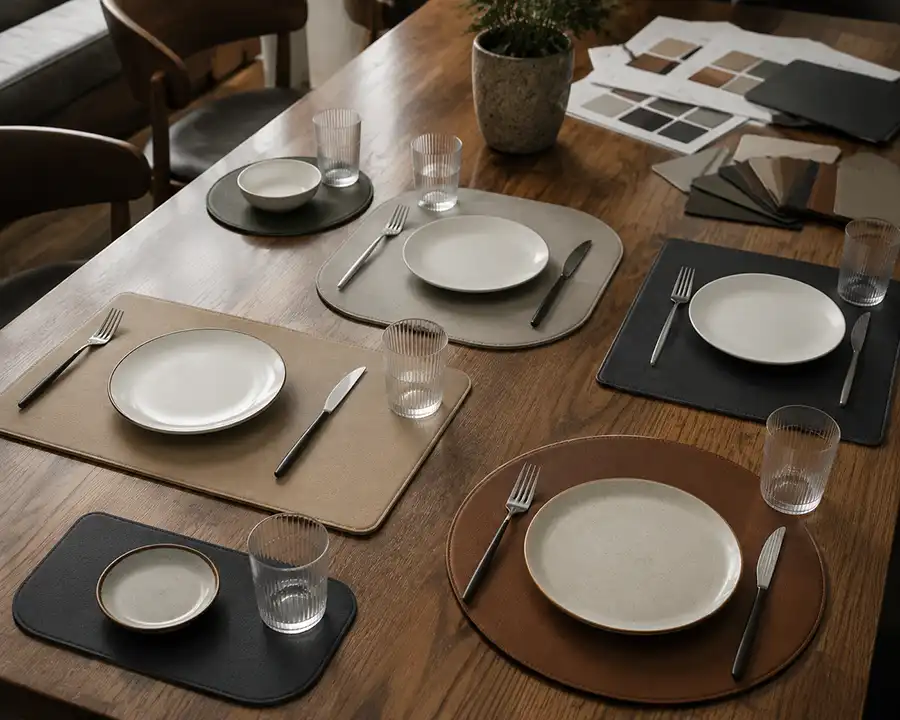
Small placemats may be practical for cafés, compact dining tables, closely spaced restaurant seating, drink service, side tables and minimal place settings. Their reduced footprint can improve spacing, although it also leaves less room for cutlery, glassware, napkins and table-surface protection.
Oval and curved-edge placemats can soften a formal layout or provide more clearance around neighboring seats. A custom outline may also support an unusual table shape, a branded silhouette or a distinctive private-label collection.
Projects requiring custom placemat shapes and sizes should confirm the outline, material behavior, edge construction and production feasibility through a physical sample before bulk production.
How to Estimate a Suitable Placemat Size
A practical planning relationship is:
Plate and Cutlery Layout + Required Protection Area + Space Between Seats = Suitable Placemat Size Direction
Begin with the plate dimensions, then allow space for cutlery, glassware, napkins or menus. Review the distance from the placemat to the table edge and the remaining clearance between neighboring place settings.
The final size may also be influenced by the number of seats, intended logo area and required level of table protection. A compact hospitality setting and a large formal place setting may therefore need different dimensions even when they use the same plate size.
Check the Complete Place Setting
Test the proposed placemat with the dinner plate, cutlery, glasses, napkin, menu and any condiment items positioned as they will be used. Include nearby table decorations and the neighboring seat layout in the review.
This test may show that an attractive placemat is too wide for service movement, too small for the intended protection area or unable to keep the logo visible once the plate is placed.
Material thickness, flexibility and edge construction can also affect how the selected shape sits on the table. Where these factors influence the layout, buyers should first choose the right leather placemat material before confirming the final dimensions.
Consider Logo Position, Storage and Packaging
Shape and size determine the available logo area, orientation and distance from the edges. A wide rectangular placemat may suit a horizontal logo, while a round format may work better with centered or curved branding.
Storage and packaging should also be reviewed when several formats belong to the same retail or private-label collection. Larger or unusually shaped placemats may require different stacking, carton or retail-packaging arrangements. These requirements should support the table layout rather than override it.
Confirm the Layout With a Physical Sample
Final approval should use a physical sample on the intended table with the complete place setting.
Review the overall dimensions, shape and corner profile, plate position, cutlery and glass spacing, distance from the table edge, clearance between adjacent placemats, logo placement and overall visual balance. Material thickness and edge finish should also be checked.
A physical sample gives a more reliable result than reviewing an isolated measurement or digital image because it shows how the placemat performs in the actual service layout.
Review Available Placemats for Different Table Layouts
After confirming the table form, approximate dimensions, required place-setting space and material direction, buyers can review custom placemats and table mats for hospitality, retail and private-label applications.
Available formats should be compared against the complete layout rather than selected from appearance alone. Projects with non-standard tables, limited seat spacing or distinctive branding may require custom dimensions or a custom-cut outline.
Develop the Right Placemat Shape and Size for Your Project
Prepare the following information before requesting sample development or a factory quotation:
Table shape and dimensions
Number of seats
Plate size
Preferred placemat shape
Target dimensions
Material and color
Logo requirements
Expected order quantity
Packaging requirements
Target market or application
Contact the factory by email or WhatsApp for shape and size review, sample development, custom production and a bulk quotation. Layout images, artwork or table references can be attached after opening the email or WhatsApp conversation.
Frequently Asked Questions About Placemat Shapes and Sizes
Are round placemats only suitable for round tables?
No. Available table space, seating density and the complete place setting are more important than matching the same geometric shape. Round placemats may work on other tables, while rectangular or oval formats may also fit a round table.
What size placemat should I choose?
Review the plate size, cutlery, glassware, table dimensions, number of seats and space between neighboring settings. Confirm the final dimensions with the actual table layout rather than relying on one universal size.
Are small placemats suitable for restaurants?
They can suit cafés, compact tables and closely spaced seating. The trade-off is reduced space for accessories and a smaller table-protection area.
Can rectangular placemats be used on a round table?
Yes, when the table diameter and neighboring place settings provide sufficient room. Check the placemat width, corner position and distance between diners before approval.
Can placemats be made in custom shapes and sizes?
Custom production may be possible when the selected material, cutting method, edge construction and sample result support the design. The final outline and dimensions should be approved before bulk production.
Conclusion: Placemat shape should follow the complete table layout rather than the table outline alone. Round and rectangular placemats offer different space and presentation advantages, while small, oval and custom formats involve practical trade-offs. Because no universal dimension fits every project, buyers should evaluate the plate, cutlery, glassware, seat spacing and table surface together, confirm the result with a physical sample and provide complete layout information before requesting custom production.