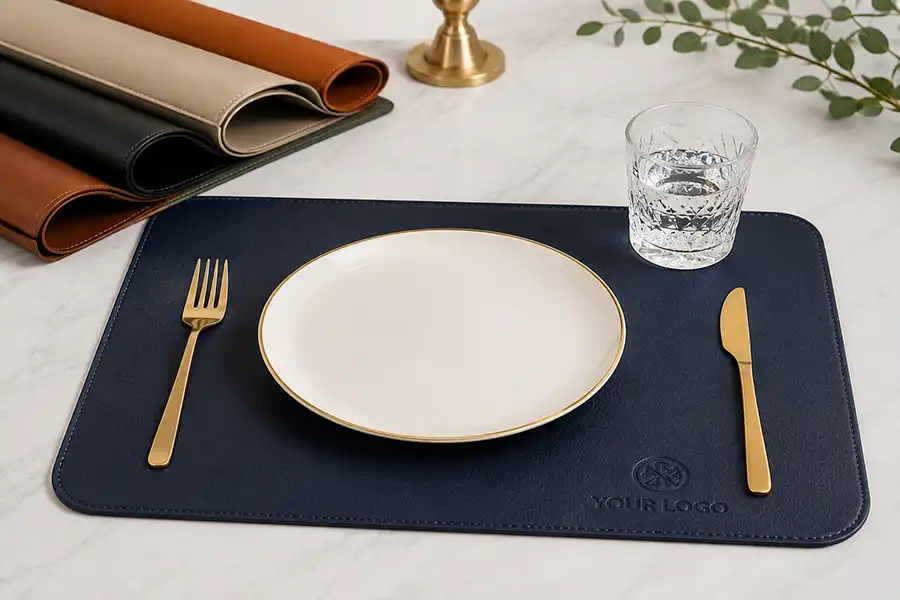



Finding the right leather placemat manufacturer is one of the most important decisions for restaurants, hospitality brands, wholesalers, retailers, and private label businesses. The supplier you choose will directly affect product quality, delivery reliability, customization options, and ultimately your customer satisfaction.
While many manufacturers offer leather placemats, not all factories provide the same level of quality, production capability, and service. Choosing a supplier based only on the lowest price often leads to inconsistent products, delayed shipments, and unnecessary business risks.
This guide explains the key factors buyers should evaluate when selecting a leather placemat manufacturer for wholesale and custom projects.
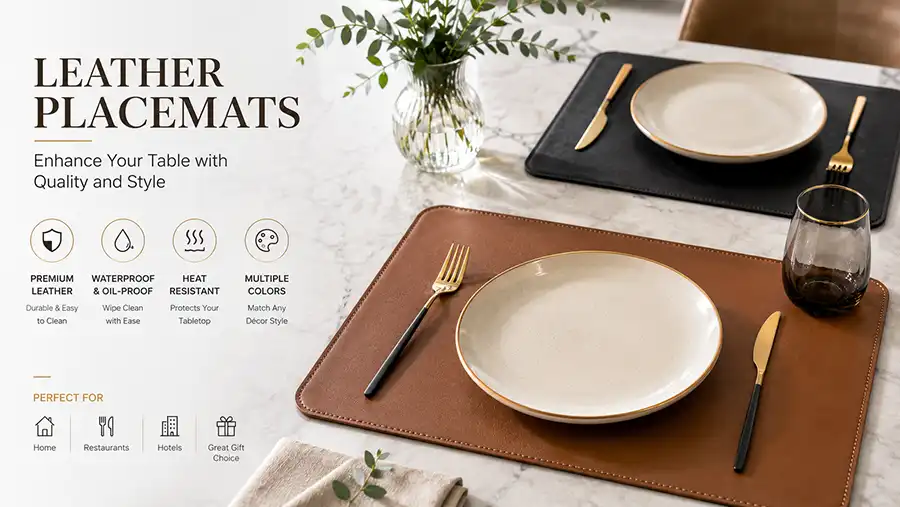
Why Choosing the Right Manufacturer Matters
Leather placemats are not simply decorative products. For many businesses, they represent a direct extension of the brand experience.
A reliable manufacturer helps you:
Maintain consistent product quality
Protect your brand reputation
Reduce production risks
Improve customer satisfaction
Increase repeat orders
Support future business growth
The wrong supplier can result in quality issues, delivery delays, and increased operational costs.
Understand Your Project Requirements First
Before contacting manufacturers, buyers should clearly define project requirements.
Consider the following:
Product Type
Determine which type of placemat you need.
Common options include:
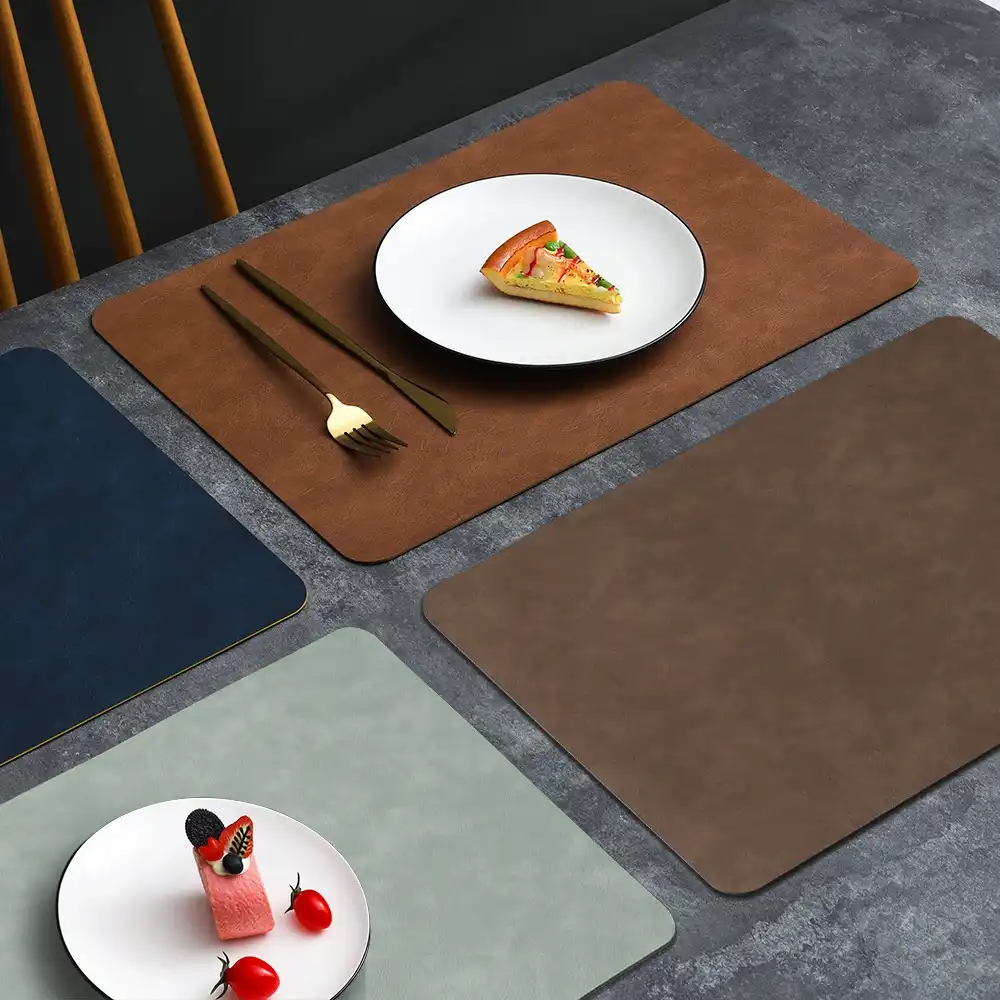
PU leather placemats
PVC leather placemats
Double-layer placemats
Linen-textured placemats
Premium decorative placemats
Different manufacturers may specialize in different materials.
Order Quantity
Production requirements vary significantly between:
Small trial orders
Medium wholesale orders
Large commercial projects
Knowing your expected volume helps identify manufacturers capable of supporting your business.
Target Market
Your target market influences product specifications.
For example:
Hotels may prioritize luxury appearance.
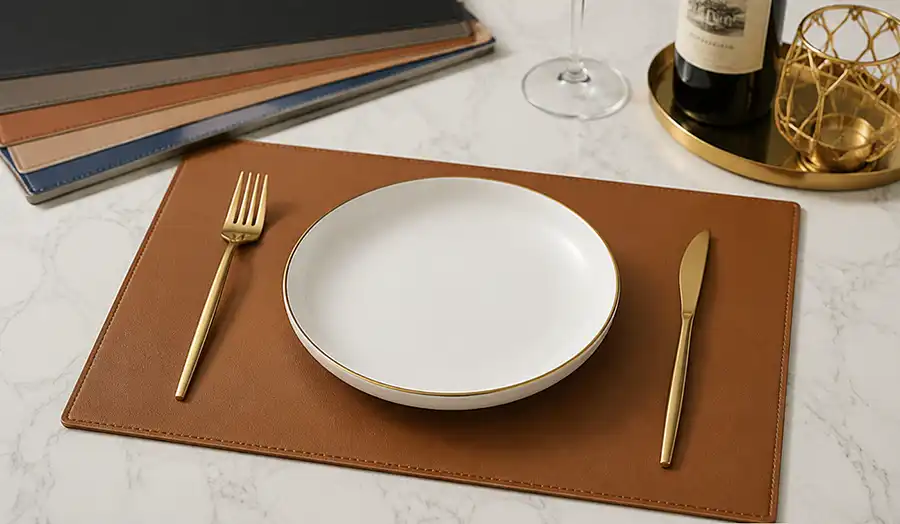
Restaurants often require durability and easy cleaning.
Retail brands focus on packaging and brand identity.
Event companies value reusable and decorative designs.
Evaluate Manufacturing Experience
Experience is one of the most important indicators of reliability.
An experienced leather placemat manufacturer typically has:
Mature production systems
Skilled workers
Stable material sourcing
Better quality management
Strong problem-solving capabilities
Factories with years of experience usually understand international market requirements better than new suppliers.
Questions to Ask
How long have you been manufacturing placemats?
What are your main export markets?
What industries do you serve?
Can you provide project examples?
Check Production Capacity
Production capacity determines whether a supplier can meet your delivery requirements.
A qualified manufacturer should be able to support:
Sample development
Small batch production
Large-volume orders
Repeat orders
Production capability becomes especially important during peak purchasing seasons.
Key Factors
Evaluate:
Factory size
Equipment quantity
Number of employees
Monthly production capacity
Production lead times
Manufacturers with stable capacity can provide better delivery consistency.
Assess Material Quality
The quality of raw materials directly affects the performance and lifespan of leather placemats.
Reliable manufacturers should provide:
Consistent material quality
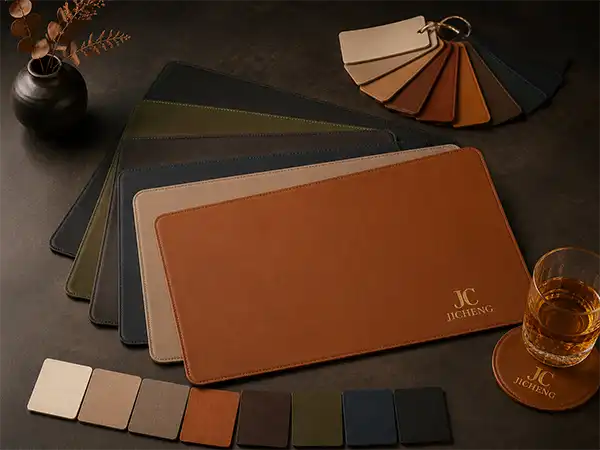
Stable color matching
Durable surface finishes
Uniform thickness
Common Material Options
PU Leather
Advantages:
Soft touch
Cost-effective
Wide color selection
PVC Leather
Advantages:
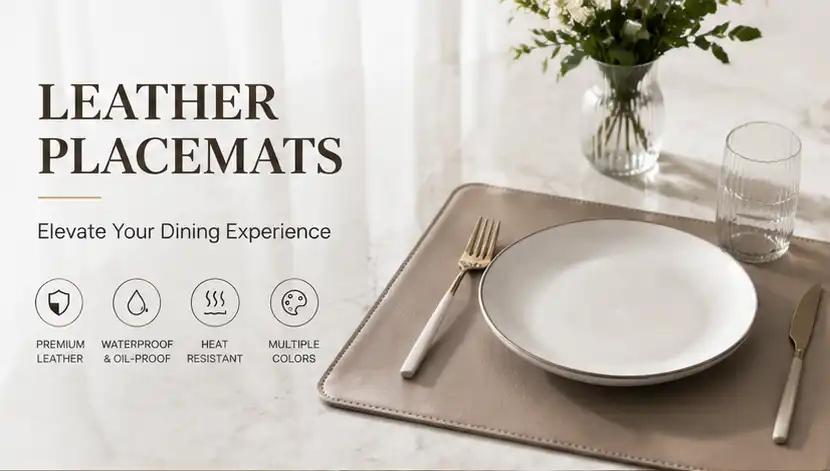
Waterproof
Higher durability
Better stain resistance
Double-Layer Construction
Advantages:
Premium appearance
Stronger structure
Longer service life
Always request material samples before placing bulk orders.
Review Customization Capabilities
Customization is often a key requirement for wholesale buyers.
A professional leather placemat manufacturer should offer flexible OEM and ODM services.
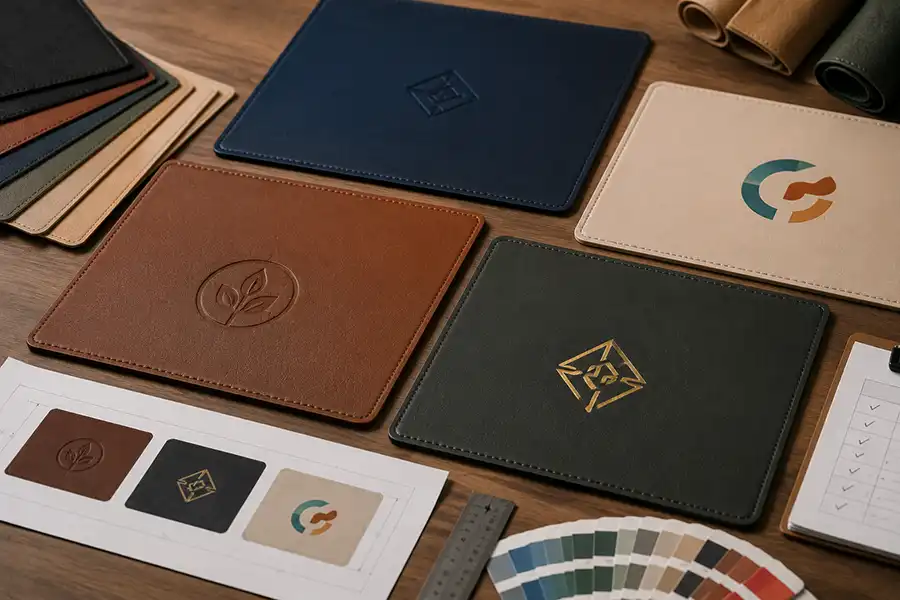
Logo Customization
Popular logo methods include:
Debossing
Embossing
Foil stamping
Screen printing
UV printing
Custom branding helps strengthen product identity and increase market value.
Custom Colors
Look for suppliers that support:
Standard color options
Pantone color matching
Custom color development
Color consistency is especially important for retail and hospitality projects.
Custom Sizes
Standard placemat sizes may not always fit project requirements.
Manufacturers should support:
Rectangle placemats
Round placemats
Oval placemats
Custom dimensions
Custom Shapes
Unique shapes help brands differentiate themselves in competitive markets.
Manufacturers with advanced production capabilities can create:
Geometric shapes
Decorative edges
Brand-specific silhouettes
Seasonal collections
Verify Quality Control Procedures
Quality control is one of the most overlooked factors when selecting a supplier.
Even the best materials can result in poor products without proper inspection systems.
Essential Quality Checks
A reliable factory should inspect:
Raw materials
Surface appearance
Color consistency
Logo quality
Dimensions
Edge finishing
Packaging condition
Comprehensive quality control significantly reduces defect rates.
Ask About Sample Development
Professional manufacturers understand the importance of samples.
Sample approval allows buyers to verify:
Material quality
Color accuracy
Logo appearance
Product dimensions
Overall workmanship
Most suppliers can complete samples within several days depending on customization requirements.
Never skip the sampling stage before placing a large order.
Evaluate Communication and Service
Strong communication often reflects strong management.
During initial discussions, observe:
Response speed
Technical knowledge
Attention to detail
Problem-solving ability
Professionalism
Reliable suppliers provide clear answers and transparent information.
Poor communication at the beginning often leads to larger problems during production.
Check Certifications and Testing Reports
Many buyers require compliance documentation for specific markets.
Common certifications and testing reports may include:
SGS testing
Food-contact testing
CA65 compliance
Material safety reports
Third-party inspection reports
Verification documents help reduce import risks and improve customer confidence.
Compare Total Value Instead of Price Alone
One of the biggest mistakes buyers make is choosing the lowest quotation.
The cheapest supplier may create higher costs through:
Quality problems
Production delays
Product returns
Customer complaints
Instead of focusing only on price, evaluate:
Product quality
Manufacturing capability
Delivery reliability
Service support
Long-term partnership potential
A slightly higher unit price often provides significantly greater value.
Warning Signs When Choosing a Manufacturer
Buyers should be cautious if a supplier:
Refuses to provide samples
Cannot explain production processes
Provides inconsistent quotations
Has poor communication
Cannot verify factory information
Offers unrealistic delivery promises
These warning signs often indicate potential risks.
Building a Long-Term Manufacturing Partnership
The most successful wholesale buyers view manufacturers as strategic partners rather than short-term suppliers.
Long-term partnerships provide:
Better pricing stability
Consistent quality
Faster development cycles
Priority production scheduling
Improved communication
Strong cooperation benefits both parties and supports sustainable growth.
Leather Placemat FAQ
How do I verify a leather placemat manufacturer?
Request samples, certifications, factory information, and production references before placing a bulk order.
Should I choose a manufacturer or a trading company?
Manufacturers typically offer better pricing, stronger quality control, and more customization options.
What certifications should a placemat supplier provide?
Common documents include SGS reports, food-contact testing reports, CA65 compliance reports, and material safety certificates.
Can a manufacturer produce custom logo placemats?
Yes. Most professional factories support embossing, debossing, foil stamping, and printed logos.
What is the typical lead time for wholesale placemat orders?
Production usually takes between 10 and 25 days depending on order quantity and customization requirements.
Can I request custom colors and sizes?
Yes. Most manufacturers support Pantone color matching and custom dimensions.
What should I check before approving a sample?
Verify material quality, color consistency, logo accuracy, dimensions, and workmanship.
Why is quality control important for placemat manufacturing?
Quality control ensures product consistency, reduces defects, and protects brand reputation.
Choosing the right leather placemat manufacturer requires careful evaluation of production experience, material quality, customization capabilities, quality control systems, communication standards, and long-term reliability.
Rather than focusing only on price, buyers should seek manufacturing partners capable of delivering consistent quality, dependable service, and scalable production support.
A professional leather placemat factory can help businesses develop high-quality custom placemats, strengthen brand positioning, and achieve long-term success in competitive markets.
Whether you are sourcing wholesale leather placemats, developing a private label collection, or launching a custom placemat project, selecting the right manufacturing partner is the foundation of a successful business relationship.