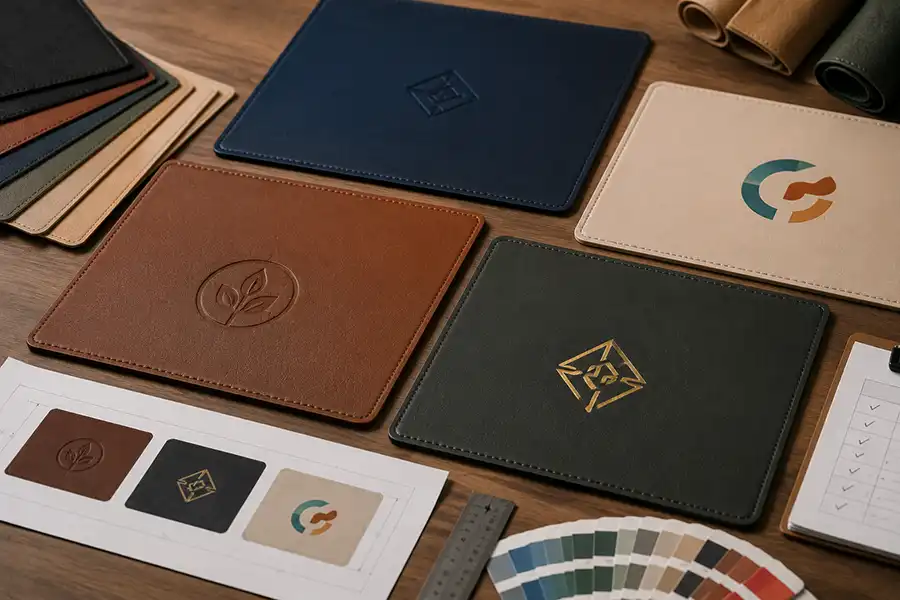


Choosing custom coasters for a bulk order involves more than selecting a shape and adding a logo. The material, dimensions, surface finish, branding method and order quantity all influence the final appearance, production requirements, sample process and unit cost.
This guide explains the main decisions involved in sourcing custom coasters for branded products, promotional programs, commercial projects and recurring wholesale orders. It also shows what information to prepare before requesting a quotation.
For available designs and current customization options, explore our custom coasters for bulk orders.
1. Start with the Intended Use of the Custom Coasters
The intended use should be confirmed before the material, logo process or product construction is selected. A coaster developed for frequent drink service may require different characteristics from one created for a branded gift set or decorative retail collection.
Restaurants, Cafés and Drink Service
Coasters used with coffee cups, cold drinks, wine glasses or bar service should be selected according to moisture exposure, cleaning frequency and drinkware size. Easy-care materials and stable coaster dimensions are usually more important than decorative complexity.
Branded Merchandise
For branded merchandise, the logo effect and visual presentation often have greater importance. PU leather, cork, Teslin and selected woven materials can create different branding styles, ranging from subtle debossed logos to detailed printed artwork.
Corporate and Promotional Projects
Promotional projects may prioritize clear logo visibility, consistent color and practical bulk production. The material and logo method should be evaluated together because not every surface supports the same level of printed detail.
Retail and Homeware Collections
Retail coaster collections may require coordinated colors, different shapes or several designs within the same product range. Surface texture, edge appearance and set consistency become especially important when the coaster is sold as a finished consumer product.
Wholesale and Recurring Orders
For wholesale supply, product consistency and repeatability should be considered from the beginning. It is useful to confirm the material specification, dimensions, color direction and logo process clearly so future batches can follow the approved product standard.
A silicone coaster may be suitable when flexibility and easy cleaning are priorities, while a PU leather coaster may be preferred when a refined surface and debossed branding are more important.
2. Compare Materials for Custom Coasters
The material affects the coaster’s appearance, flexibility, surface texture, cleaning method, logo compatibility and product positioning. There is no single material that is best for every project.
| Material | Surface Character | Common Logo Options | Suitable Project Types |
|---|---|---|---|
| PU Leather | Refined leather-effect surface with broad color options | Debossing, foil stamping, printing and selected engraving | Branded collections, corporate projects and table accessories |
| Genuine Leather | Natural grain with a more premium appearance | Debossing, engraving and selected foil processes | Premium gifts, executive accessories and higher-value collections |
| Silicone | Flexible surface with easy-care characteristics | Printing and other processes suitable for the selected surface | Drink service, promotional use and frequent handling |
| Teslin | Lightweight synthetic surface suitable for printed designs | Detailed printing and decorative artwork | Promotional designs, graphic collections and branded projects |
| Woven PVC | Textured woven appearance with a contemporary tableware style | Printing and selected surface-compatible branding methods | Dining accessories, coordinated table collections and commercial use |
| Cork | Natural appearance with a lightweight construction | Printing, engraving and selected branding methods | Homeware, gifts, decorative collections and natural-style products |
PU Leather Coasters
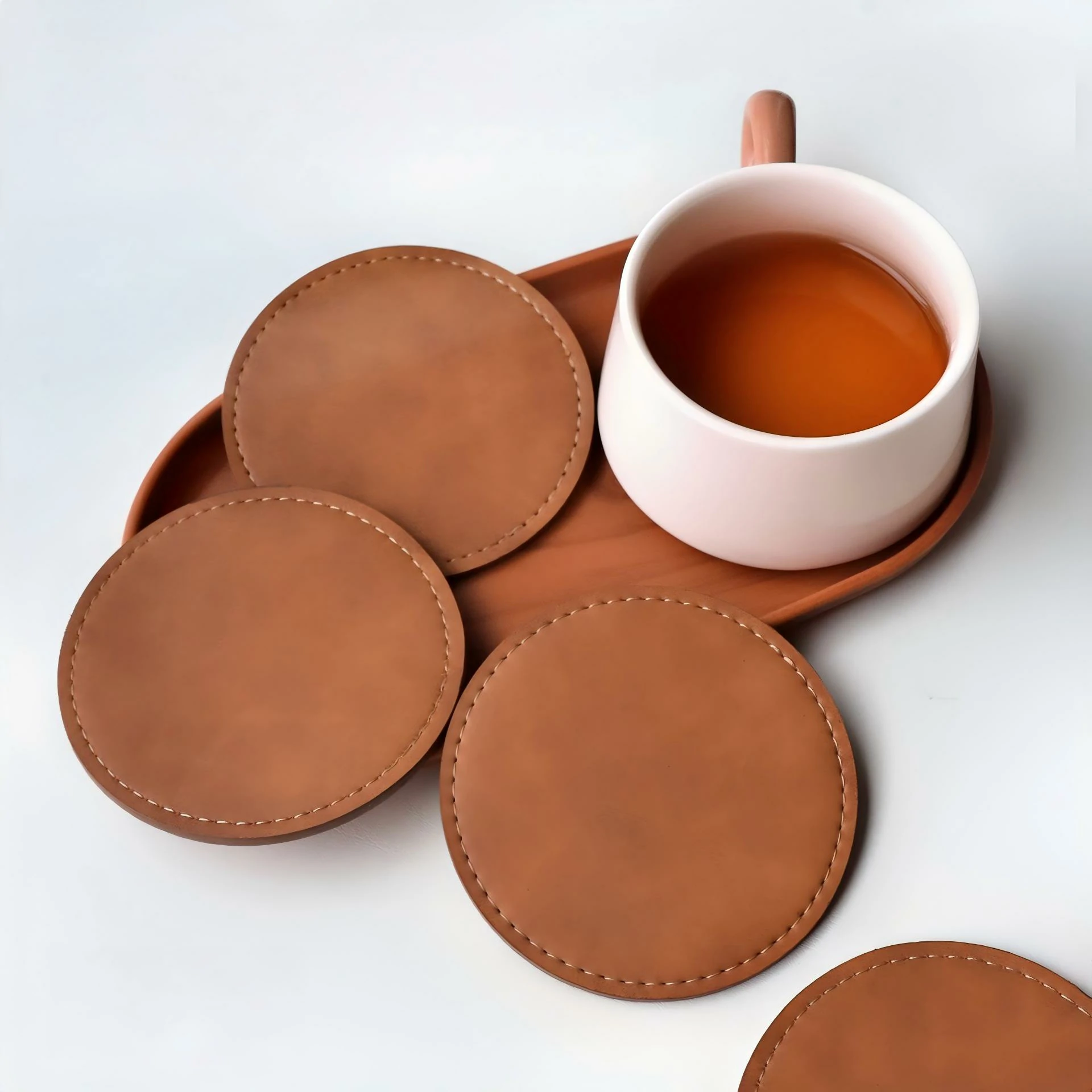
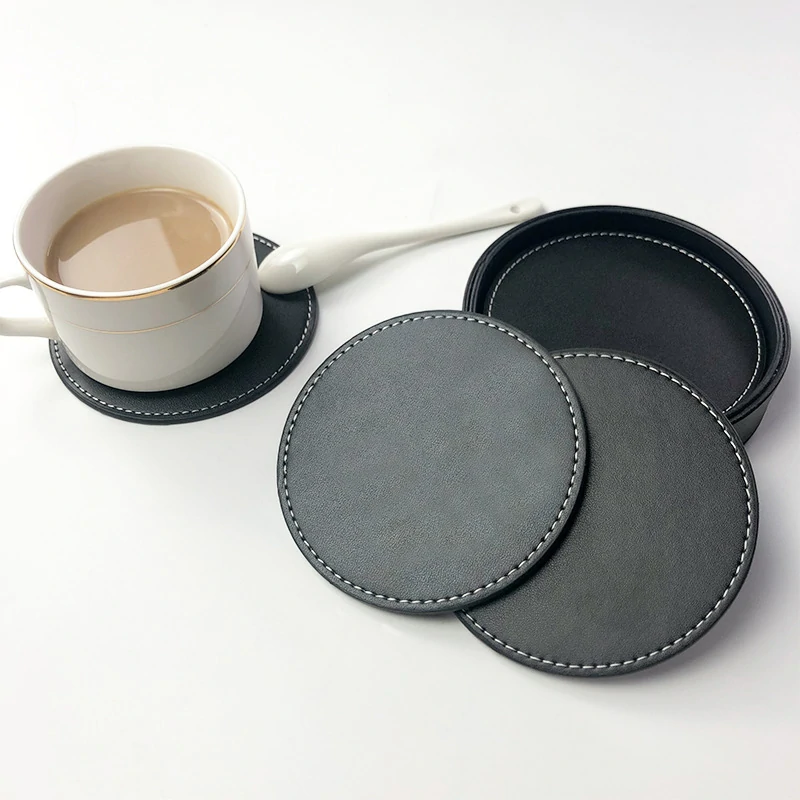
PU leather is frequently selected for custom coasters that require a clean appearance, consistent surface texture and flexible logo options. Round, square, rectangular and irregular shapes can be developed depending on the construction and design.
It can also support single-layer or double-layer styles. A double-layer construction may provide more structure and can create a contrasting edge or reversible color combination.
Genuine Leather Coasters
Genuine leather has a natural grain and may show variation between pieces. This variation is part of the material character, but it should be considered during sample approval when a highly uniform finish is required.
It is generally more suitable for projects that value material appearance and product positioning rather than the lowest possible unit cost.
Silicone Coasters
Silicone can be considered when flexibility, easy cleaning and frequent use are important. Surface texture, thickness, edge design and logo compatibility should be confirmed during product development.
Detailed artwork should be reviewed against the actual printing area because small text or thin lines may need adjustment.
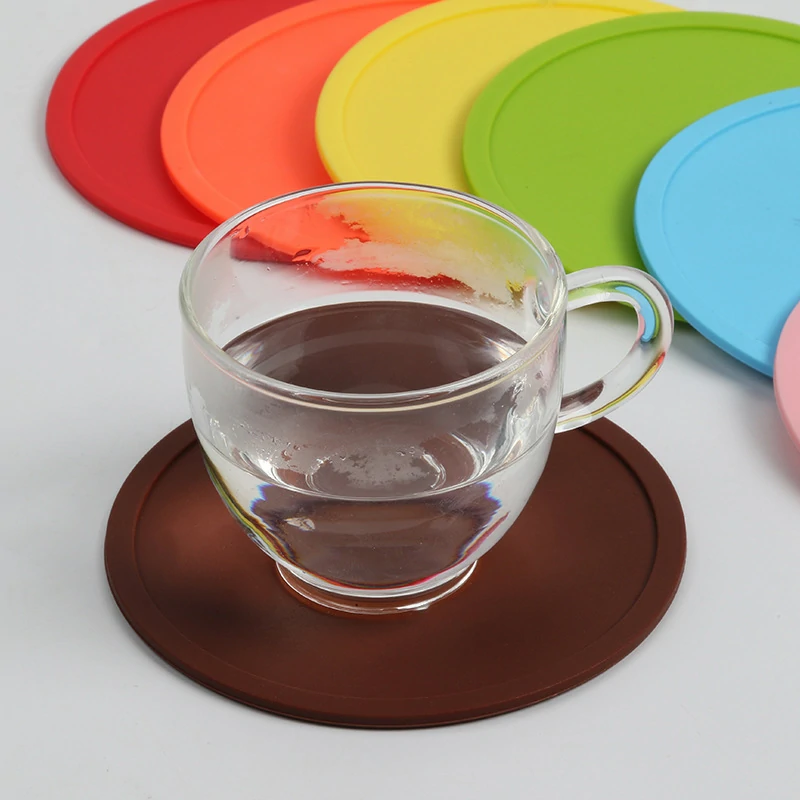
Teslin Coasters
Teslin is a printable synthetic sheet material that can support graphic patterns, decorative artwork and branded designs. The finished performance depends on the selected thickness, surface treatment and overall product construction.
It is useful for projects where printed detail is more important than a leather-like or woven surface texture.
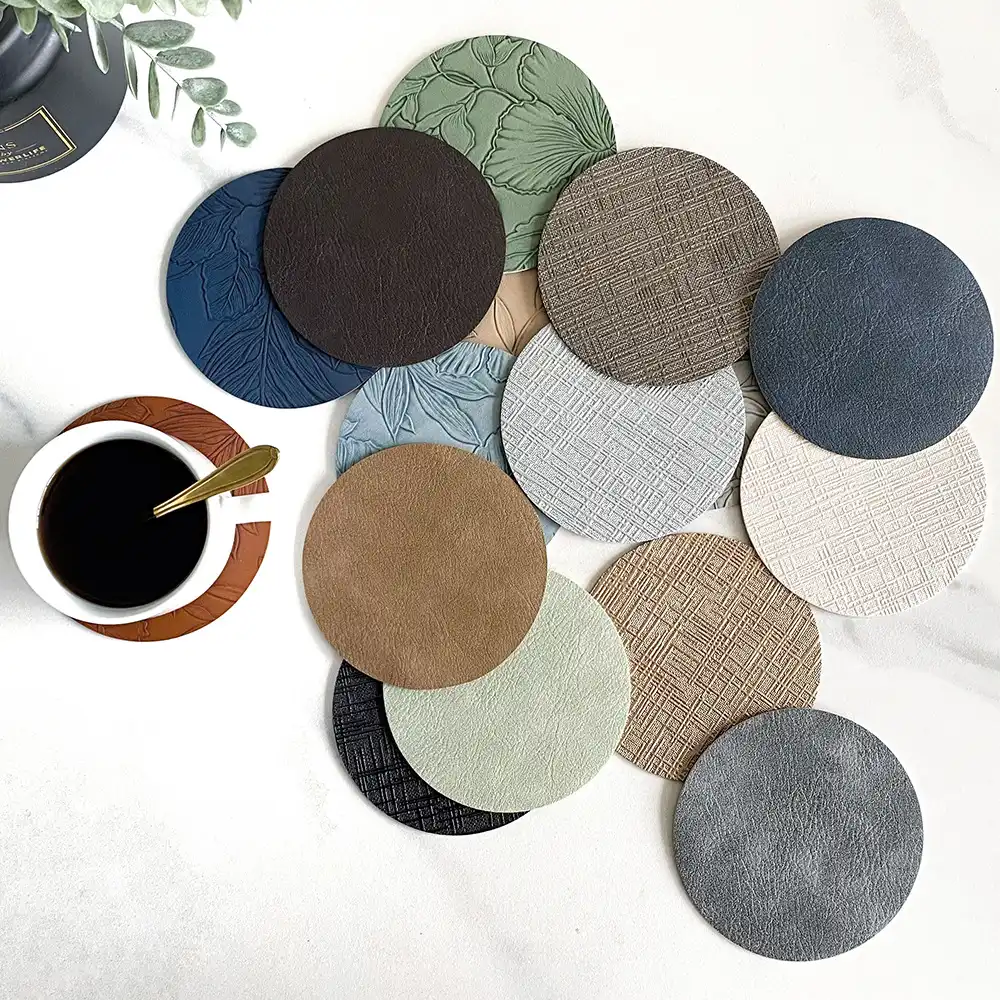
Woven PVC Coasters
Woven PVC provides a textured surface that can coordinate well with placemats and other dining table accessories. The weave pattern, edge finish and logo method should be reviewed together because the textured surface may affect very fine printed details.
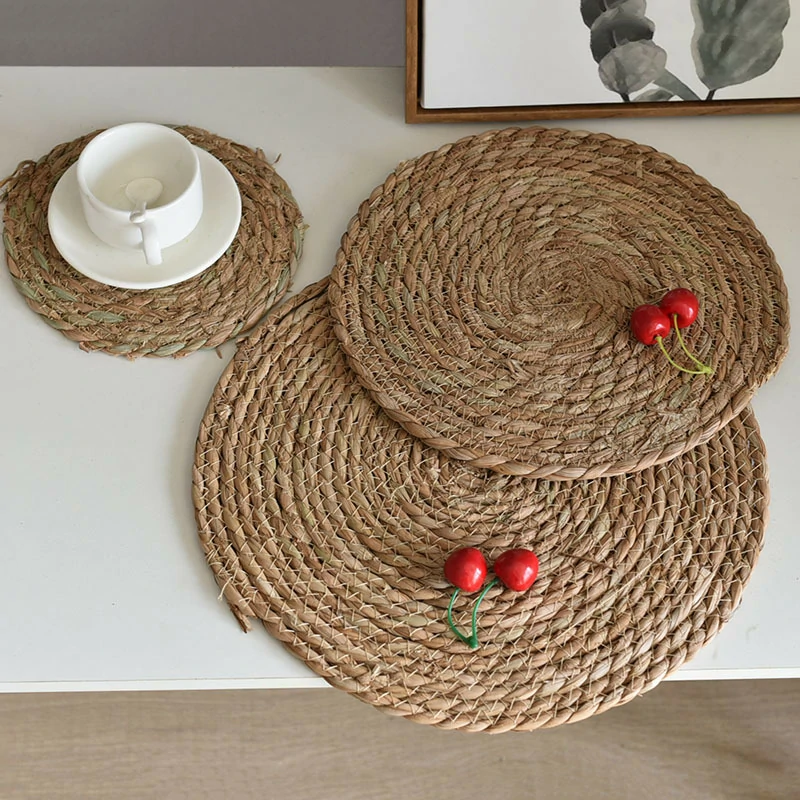
Cork Coasters
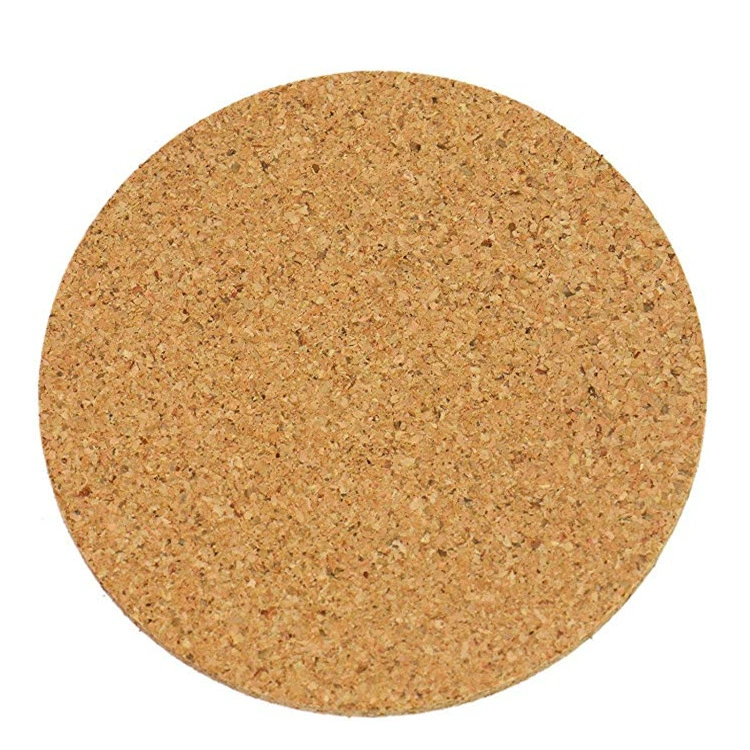
Cork offers a natural appearance and lightweight construction. It may be used alone or combined with another surface material, depending on the required design and structure.
Because cork has a naturally textured surface, the logo size and level of detail should be evaluated before production.
Browse our custom coaster materials and current product styles to compare suitable starting designs.
3. Choose the Right Coaster Shape and Size
Shape and size influence both appearance and practical use. A coaster should provide enough surface area for the intended cup, mug, glass or bottle without appearing unnecessarily large.
Round Custom Coasters
Round coasters are widely used because they suit many types of drinkware and provide a familiar table setting. They are suitable for printed logos, centered branding and coordinated coaster sets.
Square and Rectangular Coasters
Square and rectangular formats offer more corner definition and may provide additional space for text, patterns or horizontal logos. Edge shape and corner radius should be confirmed during sampling.
Irregular and Custom-Cut Shapes
Custom-cut coasters can follow a brand symbol, product outline or decorative pattern. However, overly narrow sections, sharp corners or complicated contours may affect cutting, edge quality and production consistency.
For an irregular shape, provide a vector drawing or clear dimensional artwork so the production feasibility can be reviewed before sampling.
How to Determine a Suitable Size
Start by measuring the bottom diameter or width of the drinkware. The coaster should normally extend beyond the contact area to allow for placement variation and condensation.
Also consider the available logo area. A coaster that is large enough for a cup may still be too small for a detailed logo containing several lines of text.
Confirm the bottom dimensions of the intended drinkware.
Allow enough surrounding surface for stable placement.
Check whether the logo remains clear at the proposed size.
Review custom shapes for narrow edges and difficult contours.
Confirm the final dimensions during sample approval.
4. Select a Logo Method That Matches the Material
Logo selection should not be separated from material selection. The same artwork can appear very different when it is debossed into PU leather, printed on Teslin or engraved into cork.
| Logo Method | Visual Effect | Common Material Direction | Best Suited For |
|---|---|---|---|
| Debossing | Recessed and understated logo | PU leather and genuine leather | Premium, clean and subtle branding |
| Foil Stamping | Metallic or colored surface effect | PU leather and selected suitable surfaces | Decorative logos and gift-style products |
| Printing | Single-color, multicolor or detailed artwork | Teslin, silicone, PVC and suitable coated surfaces | Promotional graphics and visible brand colors |
| Laser Engraving | Engraved or darkened surface effect | Selected leather, cork and compatible materials | Simple logos and natural-style products |
Debossed Logos
Debossing presses the logo into the surface and creates a subtle result without adding another printed color. It works well for simple logos, initials and clean brand marks.
Very thin lines or small text may need to be enlarged so the logo remains clear after pressing.
Foil-Stamped Logos
Foil stamping creates a more decorative visual effect and may be selected when gold, silver or another foil color is part of the design direction. The foil color should be reviewed against the coaster surface color during sampling.
Printed Logos and Artwork
Printing is suitable when a project requires visible colors, detailed artwork or graphic patterns. The printing process depends on the material, number of colors, surface texture and order quantity.
Artwork should be supplied in a high-resolution or vector format whenever possible.
Laser-Engraved Logos
Laser engraving may create a permanent-looking surface mark on selected materials. The final contrast depends on how the material reacts to the engraving process, so the actual result should be confirmed through sampling.
Artwork Preparation
For efficient artwork review, provide an AI, EPS, PDF or other suitable vector file. Include the required logo dimensions and preferred position whenever these details have already been determined.
Avoid text that becomes unreadable at a small size.
Simplify very fine lines when using debossing or engraving.
Confirm brand colors when printed artwork is required.
Review the logo against the actual material texture.
Approve the final logo position before bulk production.
5. Understand MOQ and Sample Development
MOQ is the minimum quantity required for a production order. It may be affected by the material, color, product size, custom shape, logo process and production setup.
Standard MOQ
Our standard starting MOQ is 500 pieces per design or color for many custom coaster projects. The final MOQ may vary when the project requires a special material, custom-cut shape, specific color or different logo process.
Why MOQ May Change
Different materials and production processes require different preparation. A standard round PU leather coaster with a simple logo may have different production requirements from an irregular Teslin coaster with detailed multicolor artwork.
MOQ may be influenced by:
Material availability and minimum material preparation quantity
Standard shape or custom-cut shape
Number of colors or designs
Logo processing requirements
Single-layer or multi-layer construction
Total quantity per design or color
Sample Development
A sample allows the material, size, shape, color, logo and construction to be reviewed before bulk production begins.
Sample development usually takes approximately 3–5 business days after the material, artwork and product specifications are confirmed. More complex designs may require additional review.
What to Check on the Sample
Material type and surface texture
Coaster dimensions and thickness
Shape and edge appearance
Logo size, position and clarity
Color direction
Single-layer or double-layer construction
General product appearance and table use
Bulk production should follow the approved product specification. Any requested changes after sample approval may affect the price, production schedule or need for another sample.
6. Plan the Bulk Production Lead Time
Bulk production usually takes approximately 15–25 days after sample approval and final order confirmation. The actual schedule depends on the material, customization method, order quantity and current production arrangement.
Factors That May Affect Production Time
Material preparation and color availability
Complexity of the coaster shape
Logo method and number of artwork versions
Total order quantity
Number of designs or colors
Required completion date
Projects with a fixed delivery date should be discussed early. The production schedule and shipping time need to be considered together, especially for promotional events, product launches or seasonal programs.
7. What Affects the Price of Bulk Custom Coasters?
The price of custom coasters cannot be determined accurately from quantity alone. Material, size, thickness, logo process and product structure can all change the production cost.
Material
Different materials have different preparation, processing and surface requirements. Genuine leather, PU leather, silicone, Teslin, woven PVC and cork should not be compared only by appearance.
Dimensions and Thickness
A larger or thicker coaster uses more material. Custom dimensions may also affect cutting efficiency and production setup.
Shape
Standard round or square formats are generally simpler to prepare than complicated irregular shapes. A custom contour may require additional tooling or cutting preparation.
Logo Method
Debossing, foil stamping, printing and laser engraving use different production processes. Detailed multicolor artwork may require more preparation than a simple single-position logo.
Construction
Single-layer and double-layer products have different material and assembly requirements. Stitched edges, contrasting layers or special surface combinations may also affect pricing.
Order Quantity
Higher quantities may distribute setup costs across more units, but the final price still depends on the complete product specification.
| Price Factor | Information to Confirm |
|---|---|
| Material | PU leather, silicone, Teslin, woven PVC, cork or another option |
| Size | Diameter, length, width and thickness |
| Shape | Round, square, rectangular or custom-cut |
| Logo | Method, dimensions, position and number of colors |
| Construction | Single-layer, double-layer, stitched or another structure |
| Quantity | Quantity per design and per color |
| Destination | Country, postal code and required delivery date |
8. Information Needed for an Accurate Custom Coaster Quote
Providing complete information helps the manufacturer review feasibility, MOQ, sampling requirements, production time and pricing more accurately.
Include the Following Details
Preferred material: State the material or describe the required surface and use environment.
Shape and dimensions: Provide diameter, length, width and thickness where available.
Logo artwork: Send a vector file or high-resolution image.
Logo method: Mention debossing, printing, foil stamping or engraving when already decided.
Expected quantity: Confirm the total quantity per design or color.
Reference product: Include an item number, photo, drawing or physical sample reference.
Destination country: This helps review shipment requirements.
Required delivery date: State whether the order is linked to an event, launch or fixed deadline.
A quotation request such as “How much are 1,000 custom coasters?” does not provide enough information because two products with the same quantity can have very different materials, sizes and logo processes.
Send the project details through our custom coaster manufacturing page for product and production review.
9. Common Mistakes to Avoid When Ordering Custom Coasters
Selecting a Material Only by Appearance
A material may look suitable in a photograph but may not match the required cleaning method, flexibility, texture or logo process. Confirm the intended use before approving the material.
Ignoring the Drinkware Dimensions
A coaster that is too small may not provide enough contact area, while an unnecessarily large coaster may not suit the intended table setting. Measure the cup or glass base before finalizing the dimensions.
Using Artwork That Is Too Detailed
Fine text, narrow lines and complicated graphics may lose clarity on a small coaster surface. Simplify the design or increase the logo size when required.
Choosing a Logo Method Before the Material
Not every logo process works equally well on every material. The surface texture and material response should be considered before the branding process is confirmed.
Skipping Sample Approval
Digital artwork cannot fully show the material texture, logo depth, foil appearance or printed result. A physical sample provides a more reliable basis for bulk production.
Comparing Quotations Without Comparing Specifications
Two quotations may refer to different material thicknesses, coaster structures or logo processes. Compare the complete product specification rather than the unit price alone.
Changing Specifications After Approval
Changes to material, dimensions, color or artwork after approval may require another sample and may affect the production schedule.
10. Custom Coaster Selection Checklist
Before confirming a bulk custom coaster order, review the following checklist:
The intended use environment has been confirmed.
The coaster material matches the required appearance and use.
The shape and dimensions suit the intended drinkware.
The logo method is compatible with the selected material.
The logo artwork is clear at the required size.
The quantity per design or color has been confirmed.
The sample has been reviewed and approved.
The production and delivery schedule has been confirmed.
Frequently Asked Questions About Bulk Custom Coasters
What is the minimum order quantity for custom coasters?
Our standard starting MOQ is 500 pieces per design or color for many projects. The final MOQ depends on the material, size, shape and logo method.
Can I order a sample before bulk production?
Yes. A sample can be developed to confirm the material, dimensions, color, logo finish and product construction before bulk production.
How long does custom coaster sampling take?
Sample development usually takes approximately 3–5 business days after the artwork, material and product specifications are confirmed.
How long does bulk production take?
Bulk production usually takes approximately 15–25 days after sample approval and final order confirmation. The final schedule depends on the material, logo process and quantity.
Which logo method is best for custom coasters?
The suitable method depends on the material and required visual effect. Debossing is commonly used for leather-effect surfaces, while printing may be more suitable for detailed or multicolor artwork.
Can custom coasters be made in irregular shapes?
Yes. Custom-cut shapes can be reviewed based on a vector drawing, dimensional artwork or reference sample. Complex contours should be evaluated for production feasibility.
What file format should I send for the logo?
AI, EPS or vector PDF artwork is generally preferred. A high-resolution image may also be reviewed when vector artwork is unavailable.
What should I include in my quotation request?
Provide the material, shape, dimensions, logo artwork, expected quantity, destination country, required delivery date and a reference product or image where available.
Start Your Custom Coaster Project
Compare our custom coasters for bulk and private-label orders, or send your preferred material, dimensions, logo artwork and expected quantity for review.