



Most unbacked woven PVC placemats are water-resistant, not fully waterproof. The PVC-coated strands resist water, but small gaps in the weave can let spills reach the tabletop. A continuous waterproof backing can change that performance, so buyers should check the finished construction rather than rely on the material name alone.
A placemat can be easy to wipe clean and still let a spilled drink pass through. Understanding that difference helps you choose the right mat for your table—and describe it accurately when selling it.
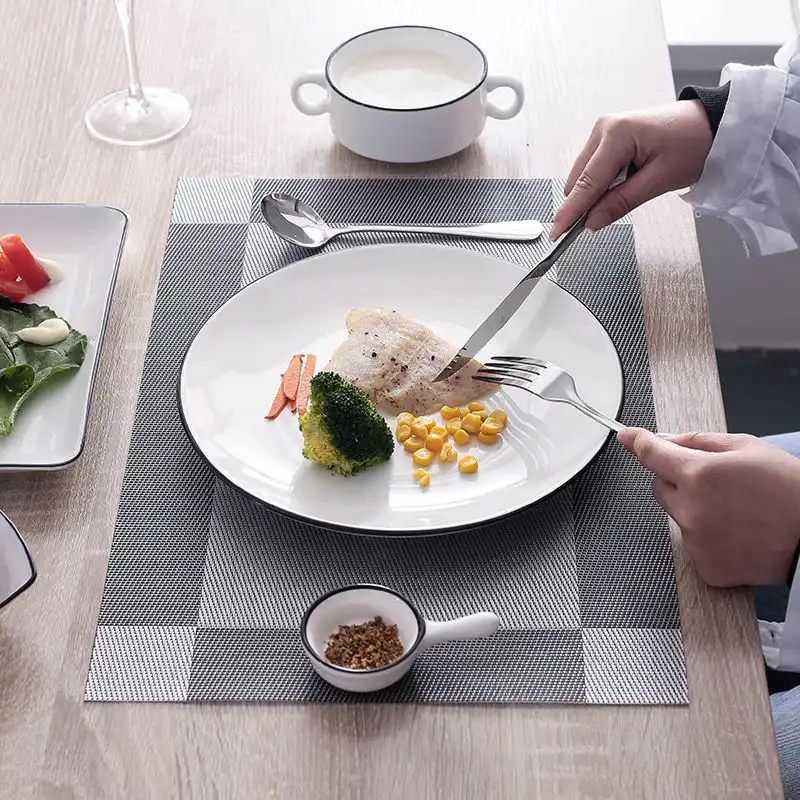
Woven PVC placemats add texture to a table setting, but their woven surface should not be treated as a sealed spill barrier.
Why Does Water Pass Through Woven PVC Placemats?
Woven PVC placemats are made from crossing strands, often polyester yarn coated with PVC. The coating provides a water-resistant surface, while the spaces between the strands remain potential routes for liquid.
Water does not have to soak into the yarn to reach the table. It can simply travel through an opening.
This explains why a few drops on the surface do not prove that a placemat is waterproof. Droplets may rest on individual strands, while a larger spill reaches the gaps between them.
Weave density also matters, but a tighter pattern is not proof of waterproof protection. Even small openings can allow seepage.
| Construction detail | What it means for table protection |
|---|---|
| Open weave without backing | Spills can pass through the openings |
| Tight weave without backing | Smaller gaps may still allow liquid through |
| Woven surface with continuous waterproof backing | The backing may block seepage; check its coverage, edges and condition |
| Finished or sealed edges only | Neat edges do not close gaps across the woven surface |
When comparing woven PVC placemat styles, look at the weave and reverse side as well as the colour and pattern.
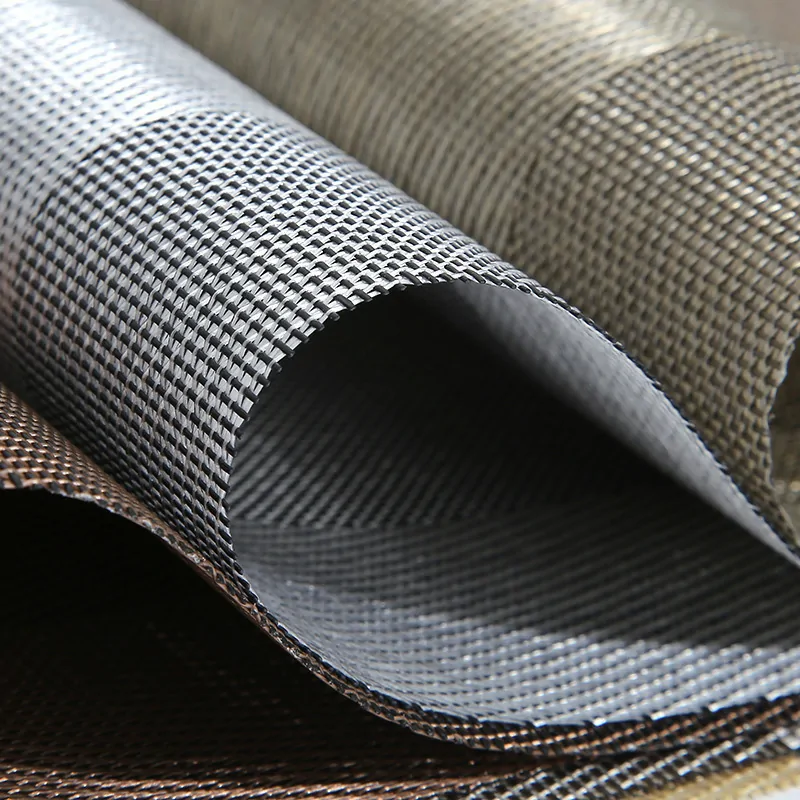
Weave patterns change the appearance and size of the openings. A close-up helps buyers assess the structure, but cannot establish waterproof performance by itself.
Will Woven PVC Placemats Protect a Wood Table?
Woven PVC placemats should not be your only protection against moisture on a wood table. An unbacked woven mat can allow water, coffee or other drinks to reach the finish underneath.
After a spill, lift the placemat instead of wiping only the visible surface. Clean the tabletop and dry both sides of the mat before replacing it.
The same habit helps with condensation around cold glasses. Moisture can collect beneath a setting without an obvious overturned drink.
If preventing liquid from passing through is essential, select a placemat with a verified continuous barrier and check that its underside is compatible with your table finish. Spills can still run around the edges of any placemat.
Why Choose Woven PVC If It Is Not Fully Waterproof?
For many dining settings, the attraction is the combination of woven texture and straightforward cleaning.
The surface creates a textile-like appearance without requiring the same care routine as a conventional fabric placemat. Depending on the selected product, light food residue can be removed with a damp cloth, while a hand rinse may help clear particles caught between strands.
For cafés and restaurants, that can make the material useful for routine table resets. Staff still need to check beneath the mat after spills and allow cleaned surfaces to dry.
Design is another reason to choose it. Contrasting yarn colours, borders and printed patterns give buyers several ways to coordinate a collection with tableware or an interior.
For example, JC Mats’ mandala-inspired round woven PVC placemat uses PVC-coated polyester yarn with a natural-tone base and black or white printed linework. Its decorative appearance comes from the woven surface and artwork; it should not be confused with a solid waterproof sheet.
How to Check Whether a Placemat Leaks
Before ordering in bulk, test a physical sample rather than judging water resistance from a catalogue photograph.
A simple comparison can reveal obvious seepage:
Place clean, dry absorbent paper on a water-safe tray.
Lay the placemat flat over the paper.
Apply a measured amount of water to the centre.
Check the paper beneath at recorded intervals.
Note where moisture appears: beneath the weave, around an edge or near a seam.
Repeat after cleaning the sample according to its care instructions.
Keep the water volume and observation times consistent when comparing different samples.
This is a practical screening check, not a certified waterproof test. For orders that require defined liquid protection, agree on the test conditions and acceptance criteria with the supplier before production.
Also assess what happens after cleaning. Check whether the mat lies flat, whether the backing remains intact where present, and whether both sides can dry properly.
How Do You Clean Woven PVC Placemats?
Follow the instructions for the selected product. Printed designs, coatings and backings may require different treatment.
For products approved for hand cleaning:
Remove loose crumbs before wiping.
Use a soft cloth or sponge with mild detergent.
Gently clean between the strands where food has collected.
Remove detergent residue and let both sides dry before stacking.
“Washable” does not automatically mean dishwasher-safe or machine-washable. Confirm those methods separately.
For printed woven mats, avoid abrasive scrubbing unless the manufacturer specifically approves it. Cleaning should remove residue without wearing away the decorative surface.
What Should Wholesale Buyers Confirm Before Ordering?
For a bulk purchase, distinguish between the material’s properties and the finished product’s performance.
Ask whether “waterproof” refers to the coated yarn or to a tested barrier across the complete placemat. If there is a backing, confirm its material, coverage and cleaning requirements.
The approved specification should also identify:
The yarn and coating construction.
The selected weave, dimensions and edge finish.
Approved cleaning methods.
Any agreed seepage test and acceptance criteria.
The wording to be used on retail packaging.
Heat resistance needs separate confirmation. Water resistance does not establish whether a mat is suitable beneath cookware taken directly from an oven or stove.
For retail collections, accurate wording helps customers understand what they are buying. “Water-resistant woven surface” and “wipe-clean care” describe different benefits from “waterproof table protection.” Use only the claims supported by the selected product.
Choosing Woven PVC Placemats for Your Collection
Woven PVC is worth considering when your priorities include visible texture, coordinated colours and practical daily care. If your application requires a barrier against liquid, make that requirement part of the initial enquiry and sample review.
JC Mats supports woven PVC placemat projects for importers, homeware brands and hospitality suppliers. Through our placemat customization services, buyers can discuss size, shape, colour, branding and custom packaging, with feasibility confirmed for the selected construction.
Send your preferred style, estimated quantity, dimensions, packaging requirements and delivery destination. Include any liquid-protection requirement so the sample can be evaluated against the conditions that matter to your order.