
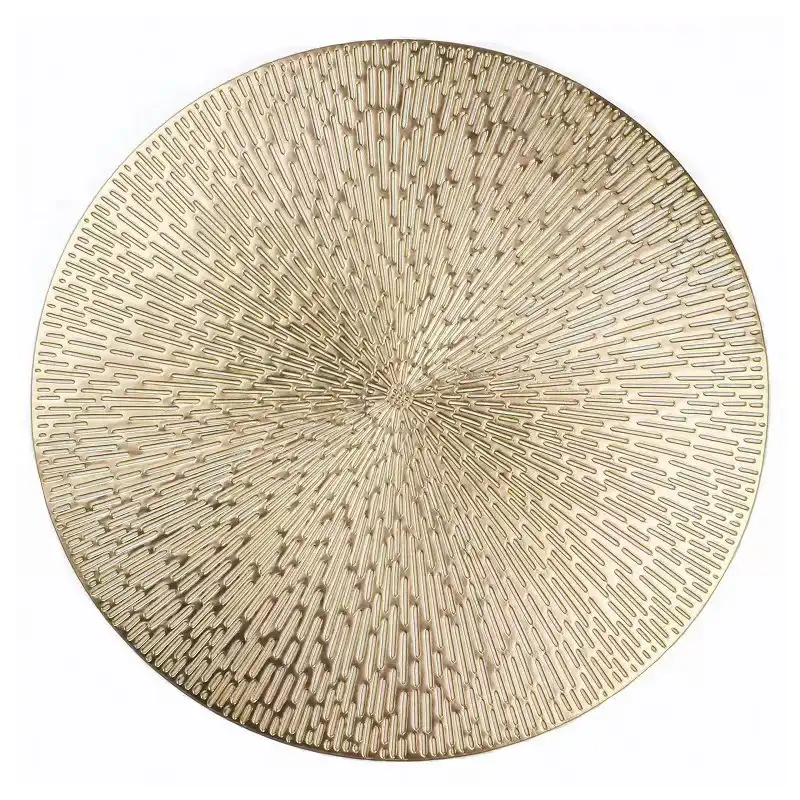
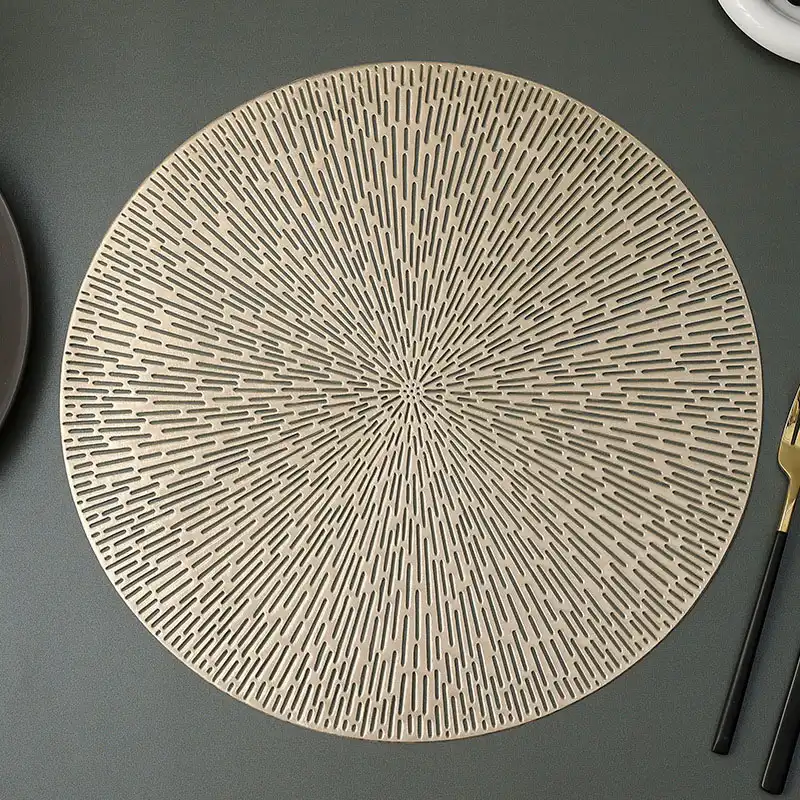
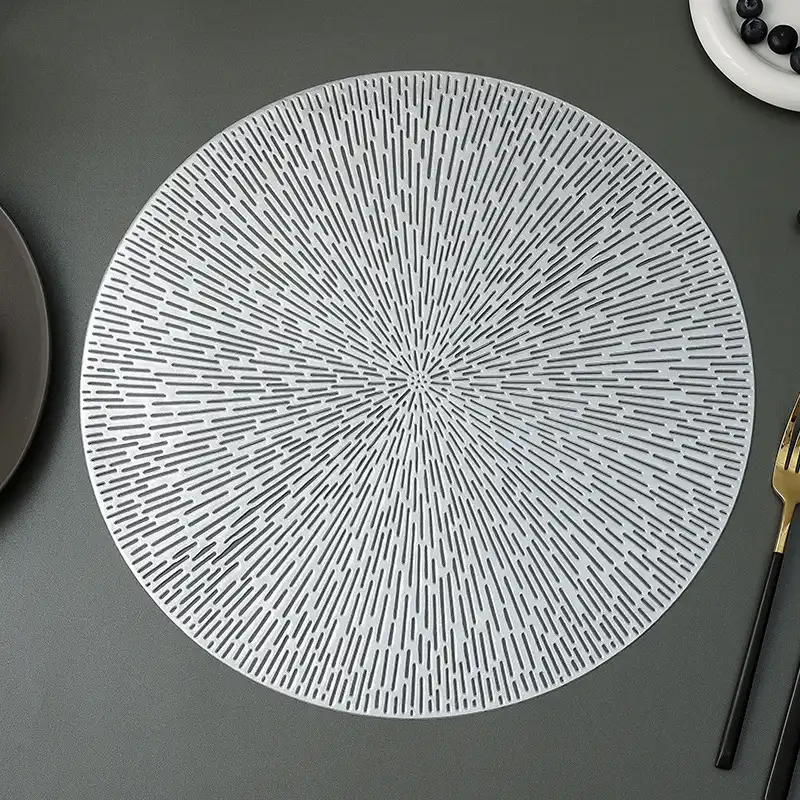
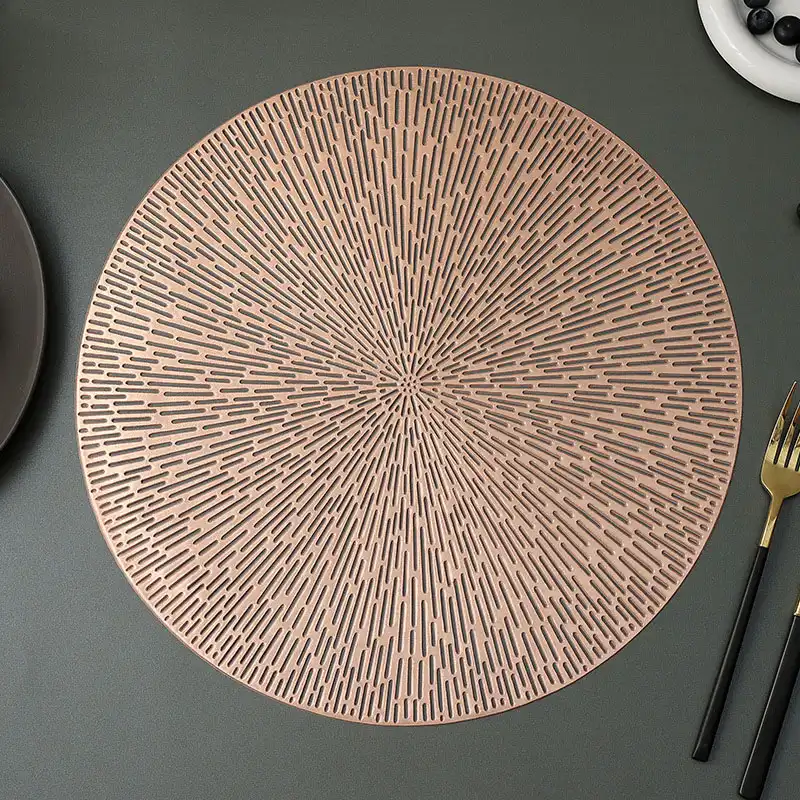
The tabletop does not disappear beneath this placemat. It becomes part of the design.
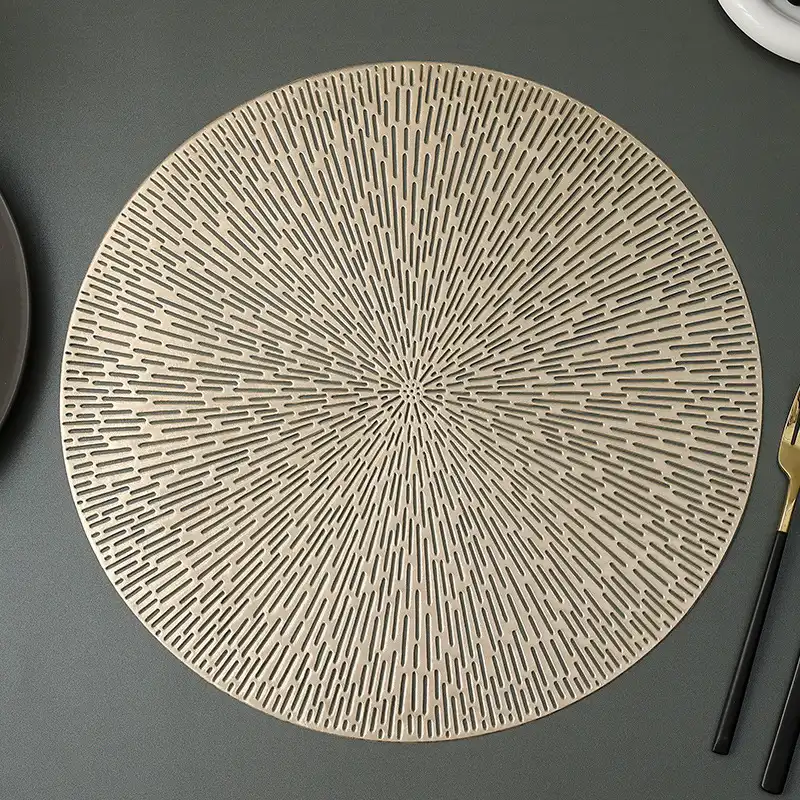
Hundreds of narrow cutouts radiate from the centre of the 38 cm round PVC surface, allowing the color below to show through the pattern. A metallic hot-stamped finish adds another layer of contrast, giving the mat a decorative presence that changes with the table, lighting and surrounding tableware.
Product Details
| Item No. | T014 |
|---|---|
| Material | PVC |
| Shape | Round |
| Standard Size | 38 cm Diameter |
| Approx. Weight | 105 g per piece, with normal production tolerance |
| Surface Design | Radial Openwork Cutout Pattern |
| Finish | Metallic Hot-Stamped Appearance |
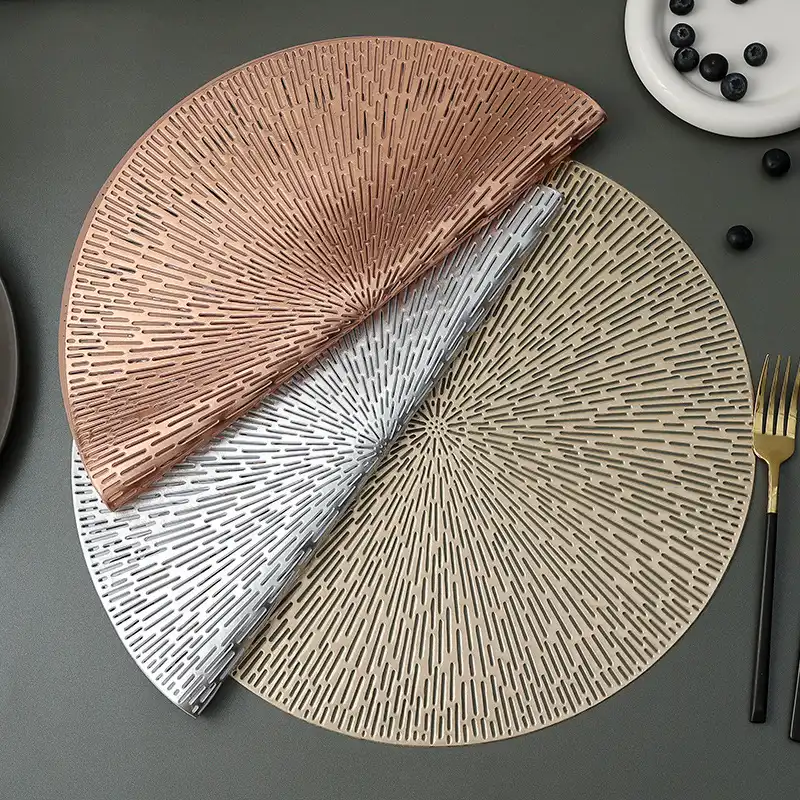
| Color Options | Gold, silver and rose gold |
| Care | Wipe clean or rinse briefly, then dry flat before storage |
| Customization | Diameter, metallic color, cutout pattern and branding details can be reviewed for bulk projects |
The Table Surface Becomes Part of the Pattern
The defining feature is not simply the metallic color. It is the way the cutout pattern interacts with the surface underneath.
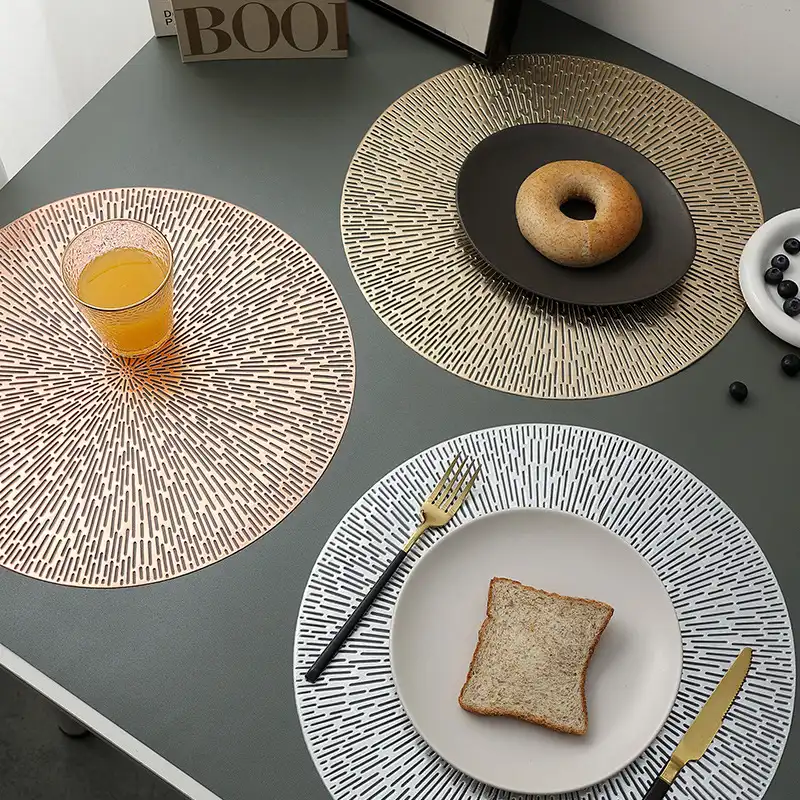
On a dark tabletop, gold and silver options create stronger contrast through the openings. On pale wood, marble or a white tablecloth, the same pattern appears softer and more delicate. This makes the finished presentation dependent on both the placemat and the table beneath it.
The narrow slots follow a radial arrangement, becoming part of a larger circular composition rather than repeating as a basic grid. From a distance, they create a sunburst-like texture. Viewed closely, the individual openings give the surface a lighter and more detailed appearance.
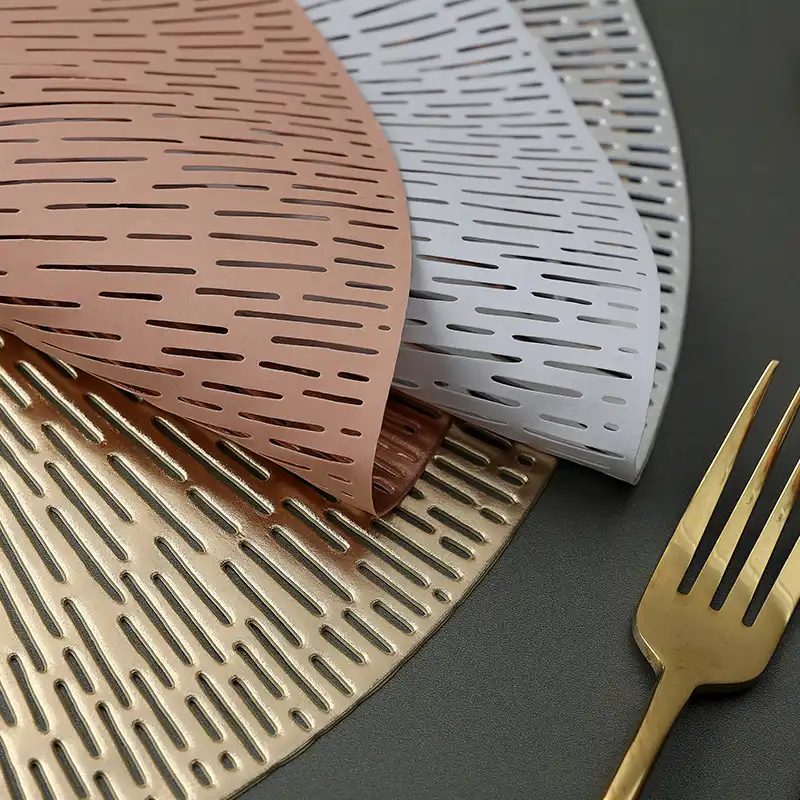
This is a true openwork design. The pattern is cut through the PVC rather than printed as dark lines on a solid sheet.
Metallic Appearance Without a Metal Construction
Although the gold, silver and rose-gold finishes have a metallic appearance, the placemat itself is made from PVC. It should not be described as a metal placemat, metal charger or rigid metal table accessory.
The flexible PVC construction makes the mat easier to lift, move and store than a hard metal piece. It can be gently curved or loosely rolled for temporary handling, although repeated sharp folding should be avoided.
The three finishes create different styling directions:
- Gold provides the warmest and most traditional decorative effect.
- Silver works naturally with cooler tableware, glass and contemporary interiors.
- Rose gold introduces a softer metallic tone for events, lifestyle collections and more delicate color palettes.
The finish may appear different under daylight, warm restaurant lighting and screen display. A physical sample is recommended when the metallic tone must coordinate with cutlery, charger plates, napkin rings or other accessories.
Decoration First, Table Protection with Clear Limits
The openwork pattern gives the placemat its strongest visual identity, but it also changes how the product handles spills.
Because the surface contains many cut-through openings, water, sauces, crumbs and oil may pass through and reach the tabletop. The mat should not be presented as a completely waterproof barrier or a sealed protective sheet.
After a spill, lift the placemat and clean both the PVC surface and the table underneath. This is especially important on unfinished wood, lacquered furniture, sensitive stone or tables where trapped moisture may leave marks.
The placemat still creates separation beneath plates, bowls and serving pieces, but its main advantage is decorative presentation rather than full liquid containment.
Normal dining plates, cups and warm serving ware can be placed on the surface. Cookware taken directly from a stove or oven should be used with a separate heat-resistant trivet.
Cleaning Between the Cutout Details
Most routine marks can be removed with a soft damp cloth. Mild detergent and a brief rinse may be used when food residue reaches the narrow openings.
Rather than scrubbing across the pattern with a stiff brush, clean gently in sections and follow the direction of the radial slots. A soft sponge or very soft brush can help remove residue caught along the cut edges.
Avoid abrasive pads, sharp scraping tools, bleach, alcohol and strong solvent-based cleaners. These may affect the PVC surface or reduce the consistency of the metallic finish.
After rinsing, allow both sides and the cutout areas to dry fully before stacking. Moisture remaining between multiple mats can transfer back to the metallic surface or tabletop.
The finish should also be protected from repeated aggressive rubbing. Commercial buyers should include cleaning-method review as part of sample testing when the mats will be reset several times each day.
38 cm Round Format for Visible Decorative Borders
The 38 cm diameter is larger than many compact round placemats and provides room beneath a wide range of plates and bowls. With appropriately sized tableware, part of the radial pattern remains visible around the plate as a decorative border.
The result depends strongly on plate diameter. A smaller dessert or breakfast plate reveals more of the openwork design, while a large charger may cover much of the central pattern.
Cutlery can be positioned partly on the mat where the complete place setting allows, but the narrow cutouts create a more textured surface than a plain sheet. Buyers should test the actual knife, fork and glass arrangement rather than judging the fit from diameter alone.
For multi-seat tables, check the table dimensions, number of guests and spacing between neighboring mats. The 38 cm format may work comfortably on one layout but become crowded when more settings are added.
Where the Openwork Design Creates the Most Value
Banquets, Weddings and Event Table Styling
The radial pattern works particularly well when the placemat is expected to contribute to the decoration rather than disappear beneath the plate. Gold and rose-gold finishes can coordinate with event stationery, floral details, cutlery and metallic table accessories.
Because the tabletop or tablecloth remains visible through the openings, event planners can create different results without changing the cutout pattern itself.
Hotels and Restaurants with Feature Table Settings
This style is better suited to selected dining areas, private rooms, seasonal menus and feature tables than to buyers looking only for a plain utility mat.
It can introduce a stronger visual identity beneath simple white or black tableware while avoiding a multicolor printed surface.
Cafés, Dessert Displays and Afternoon-Tea Settings
Smaller plates, cups and dessert ware leave more of the radial design visible. This allows the placemat to function as part of the presentation instead of being largely hidden beneath an oversized plate.
Retail and Decorative Tabletop Collections
Gold, silver and rose gold can form a compact three-color collection around one recognizable openwork pattern. Retail buyers can keep the same size and design while offering different metallic directions for seasonal or interior-focused ranges.
Project note: Review the table color, tablecloth, plate diameter, intended lighting and cleaning routine together before confirming a bulk order.
Custom Openwork Development and Bulk Order Support
Openwork products require the pattern, remaining solid areas, edge strength and metallic finish to be considered together. A visually attractive drawing is not automatically suitable for stable production.
Pattern Density and Structural Review
The existing radial design provides a production-ready starting point. Project-specific cutout patterns may also be reviewed according to the artwork, order quantity and manufacturing feasibility.
If openings are placed too close together, the remaining PVC sections may become narrow or less stable. Pattern changes should therefore be evaluated through a physical sample rather than approved only from a digital drawing.
Diameter and Tableware Planning
The standard diameter is 38 cm. Alternative sizes can be reviewed for dessert plates, dinner plates, charger settings or decorative centrepieces.
Changing the diameter may require the pattern spacing and cutout proportions to be adjusted so that the design does not appear too dense or too empty.
Metallic Color and Finish Confirmation
Gold, silver and rose gold provide the current finish directions. Project-specific metallic tones may be reviewed according to quantity and material availability.
Sample approval should cover the overall color, consistency of the hot-stamped finish, cut edges and appearance under the intended lighting.
Logo and Branding Placement
Branding on an openwork surface requires more planning than branding on a plain placemat. Fine lettering placed across several cutouts may become difficult to read or may not have enough continuous surface for a clear result.
A logo can be positioned within a planned solid area, placed near the outer edge or incorporated into a custom cutout pattern, subject to artwork and production review.
A large central logo is also likely to be covered by the plate. The final position should be checked with the intended tableware before sampling.
Wholesale and Repeat-Order Support
Bulk orders can be reviewed for hotels, restaurants, banquet suppliers, event companies, distributors, tabletop retailers and homeware brands.
For quotation, provide the estimated quantity, preferred diameter, metallic color, intended application, custom pattern or logo artwork when applicable, and delivery destination.
Repeat orders should reference the approved sample and confirmed specification so that the diameter, cutout pattern, metallic finish and edge quality remain consistent.
Sample Confirmation Before Production
A physical sample can be used to confirm the finished 38 cm diameter, approximate weight, pattern clarity, flexibility, cut-edge quality, metallic appearance and branding position.
Final production should follow the approved sample and confirmed order specification. Product customization applies to the placemat itself; custom packaging is not included.
Round PVC Placemat with Hot-Stamped Cutout Design Frequently Asked Questions
What is an openwork or cutout placemat?
It is a placemat with openings cut through the material as part of the decorative pattern. On this design, narrow radial slots allow the tabletop or tablecloth below to remain visible.
Is this placemat made from metal?
No. It is made from flexible PVC with a metallic hot-stamped appearance. Gold, silver and rose gold describe the finish, not a solid metal construction.
Will the openwork placemat stop spills from reaching the table?
Not completely. Liquid, crumbs and food residue may pass through the cutout openings. After a spill, clean both the placemat and the tabletop underneath.
Is a 38 cm round placemat suitable for a dinner plate?
It suits many standard plates and bowls while leaving part of the radial pattern visible. Oversized chargers and wider cutlery arrangements should be tested as a complete place setting.
How should the metallic cutout surface be cleaned?
Use a soft damp cloth, mild detergent or a brief rinse. Clean residue gently from the cutout areas, avoid abrasive tools and strong chemicals, and dry both sides completely before stacking.
Can the cutout pattern, metallic color or logo be customized for bulk orders?
Yes. Custom diameters, metallic colors, openwork patterns and branding details can be reviewed for bulk projects. Final feasibility and pricing depend on the quantity, artwork, structural requirements and approved sample.