
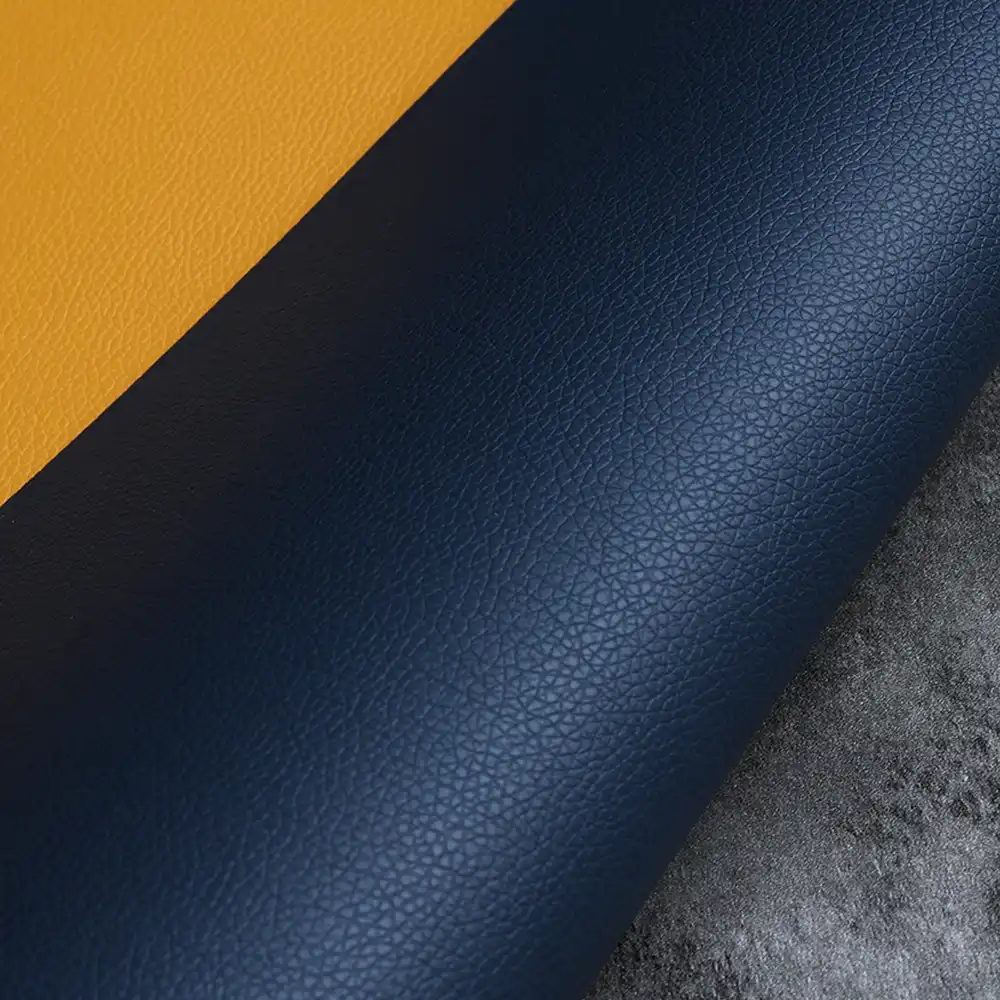
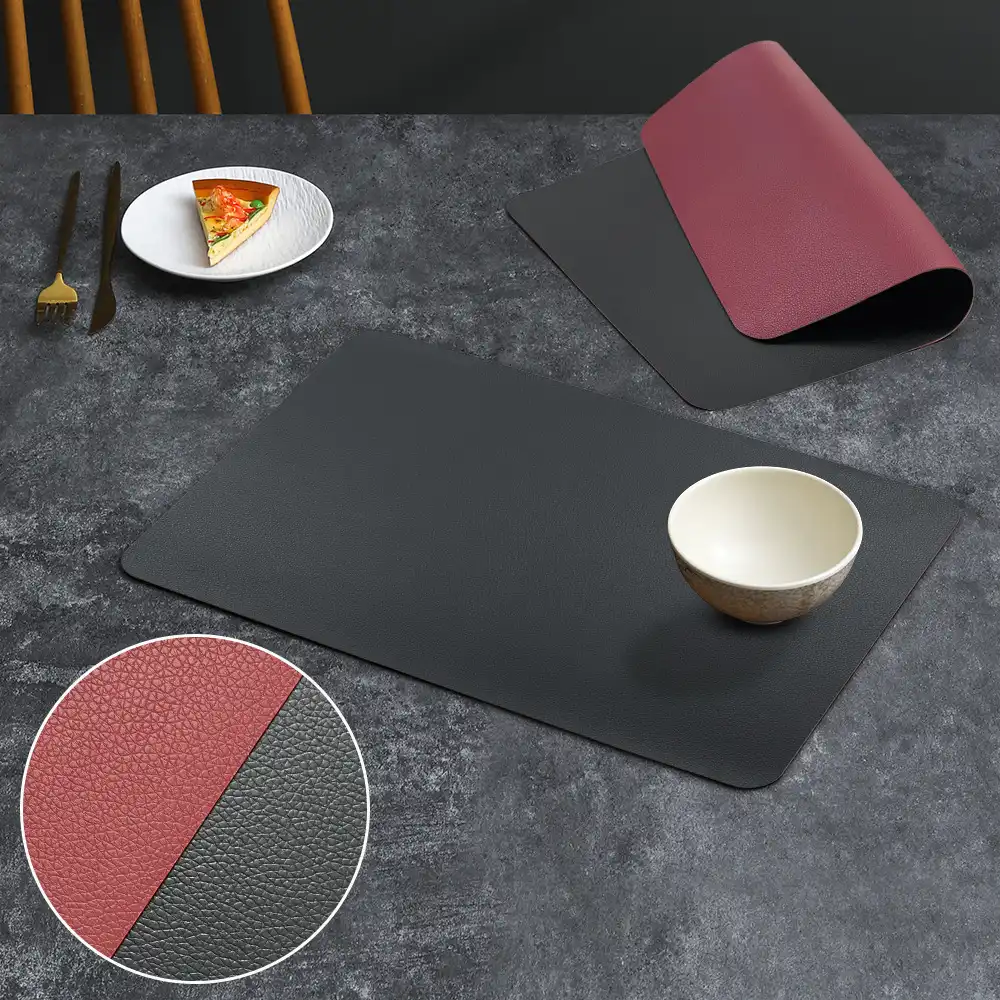
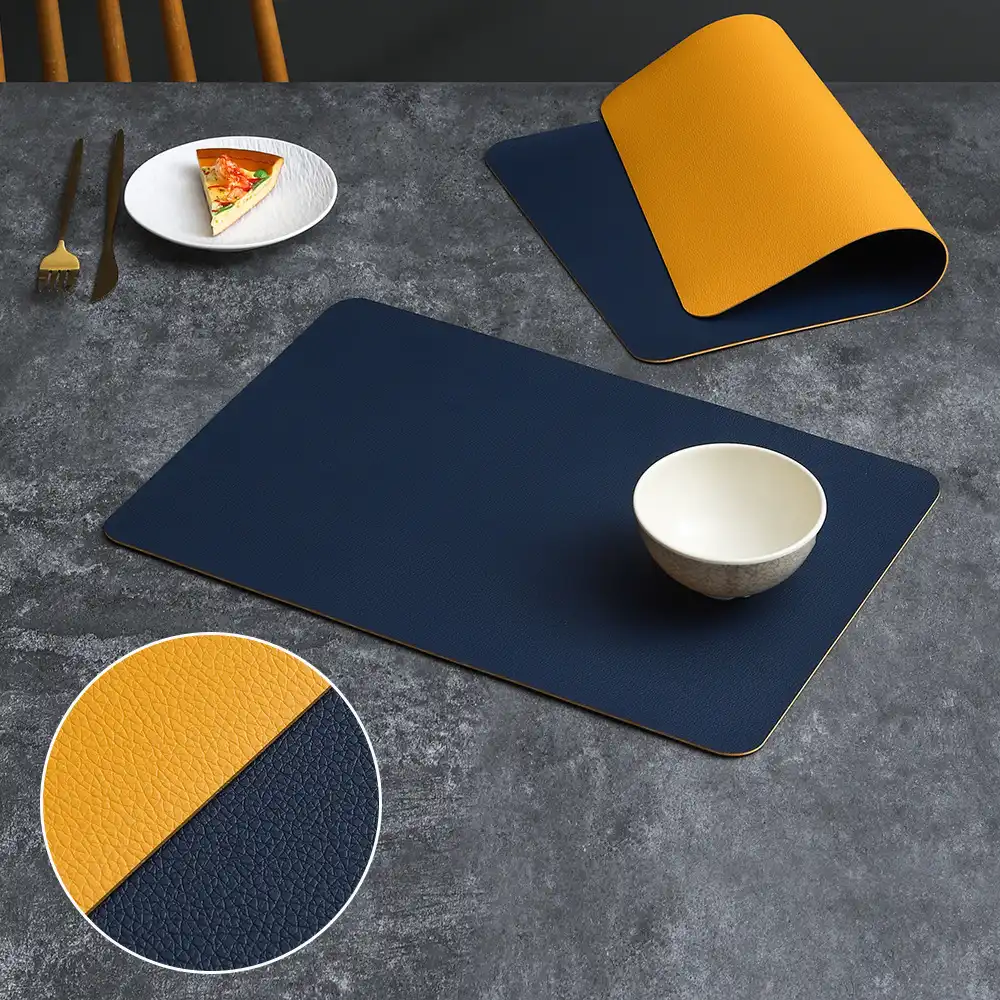
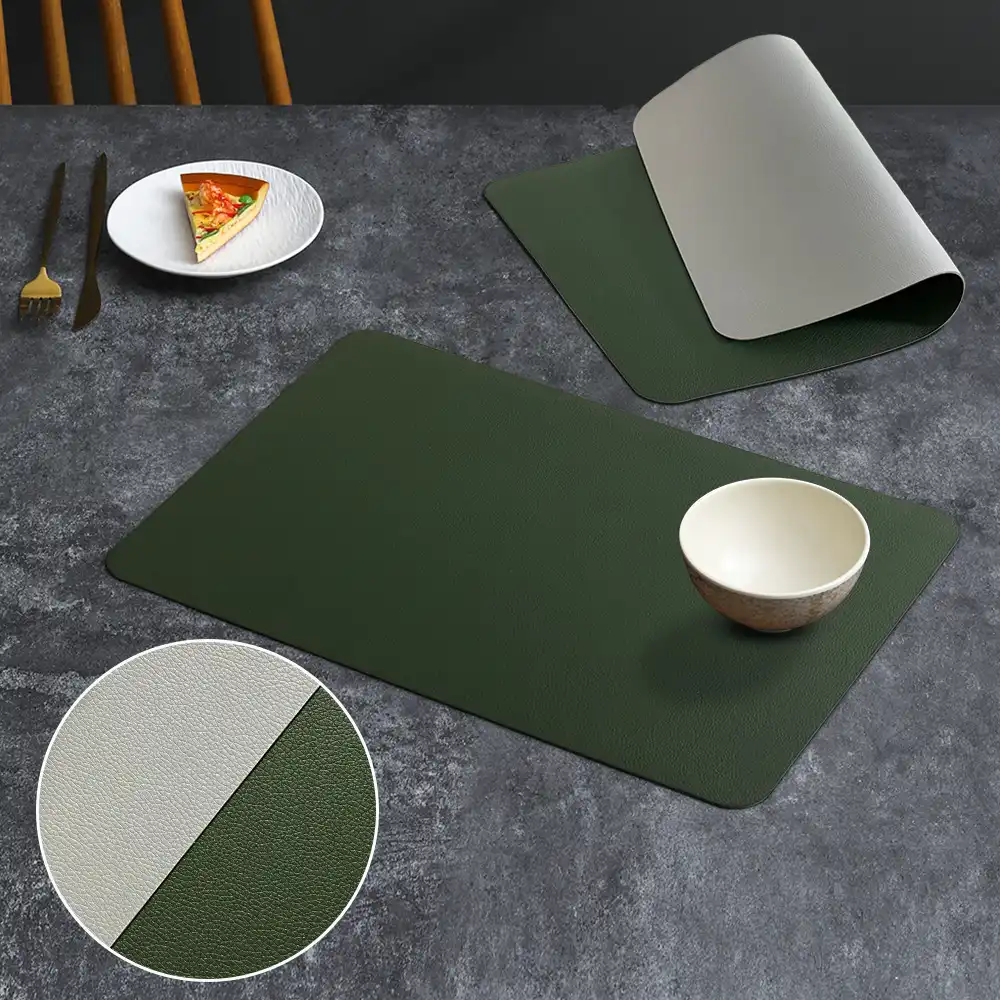
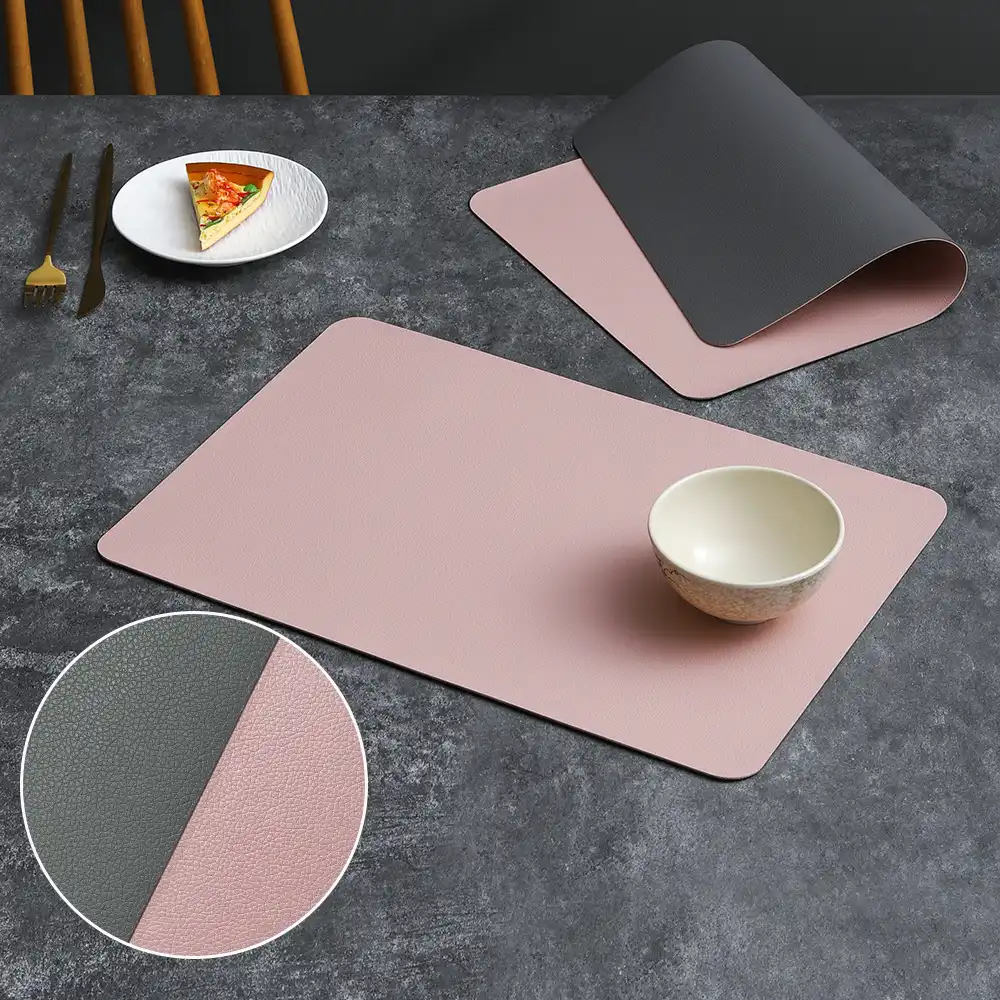
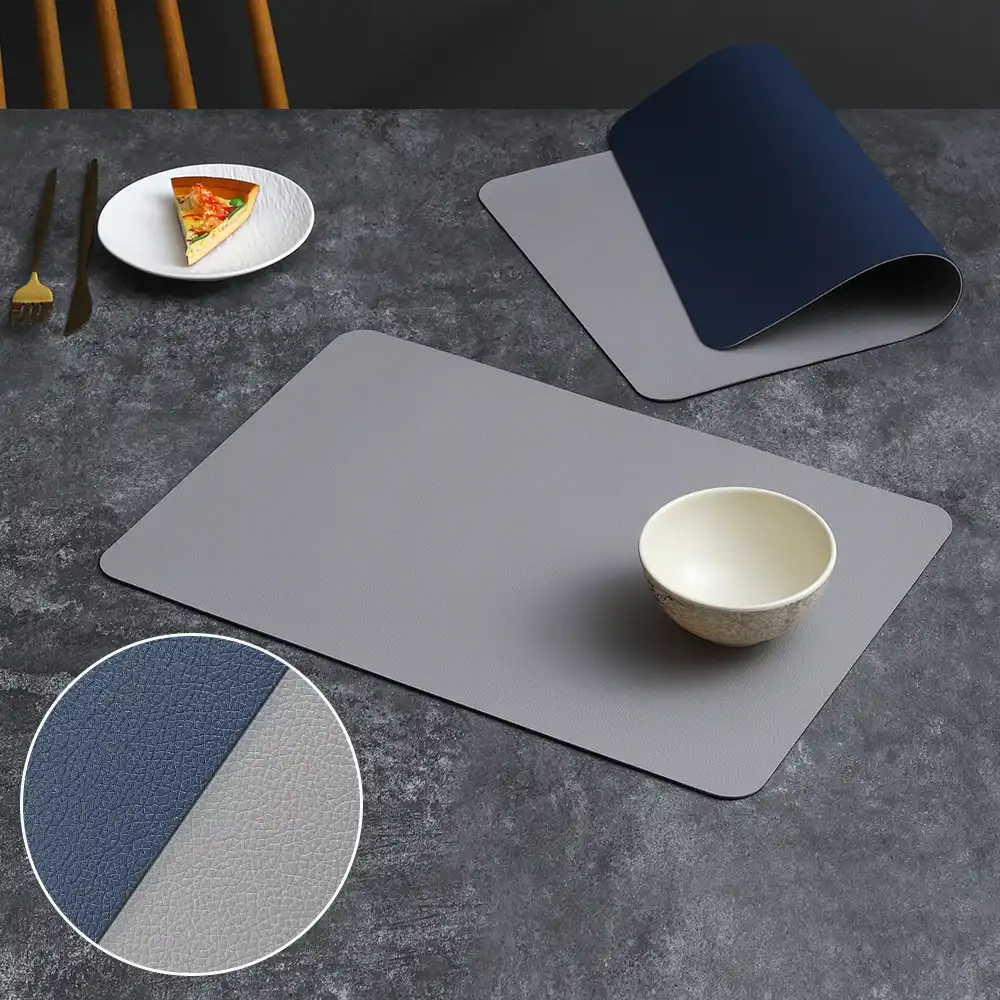
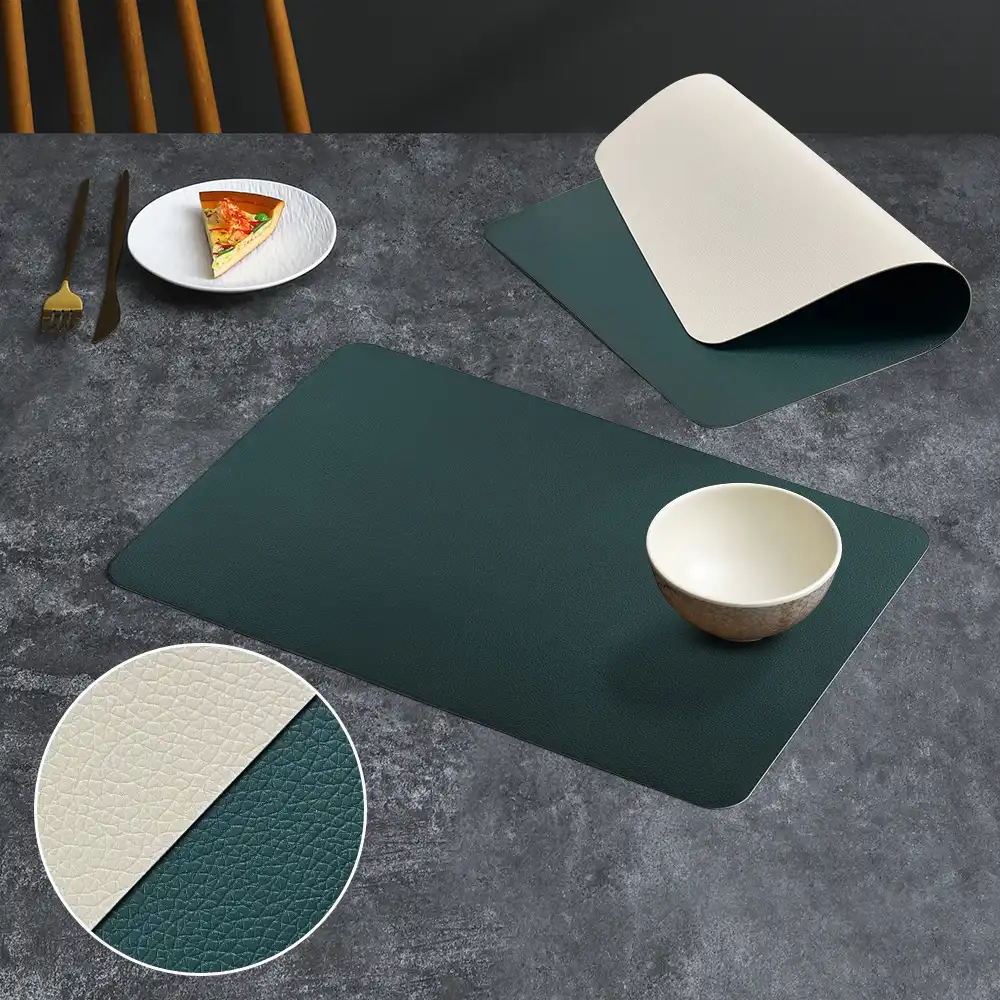
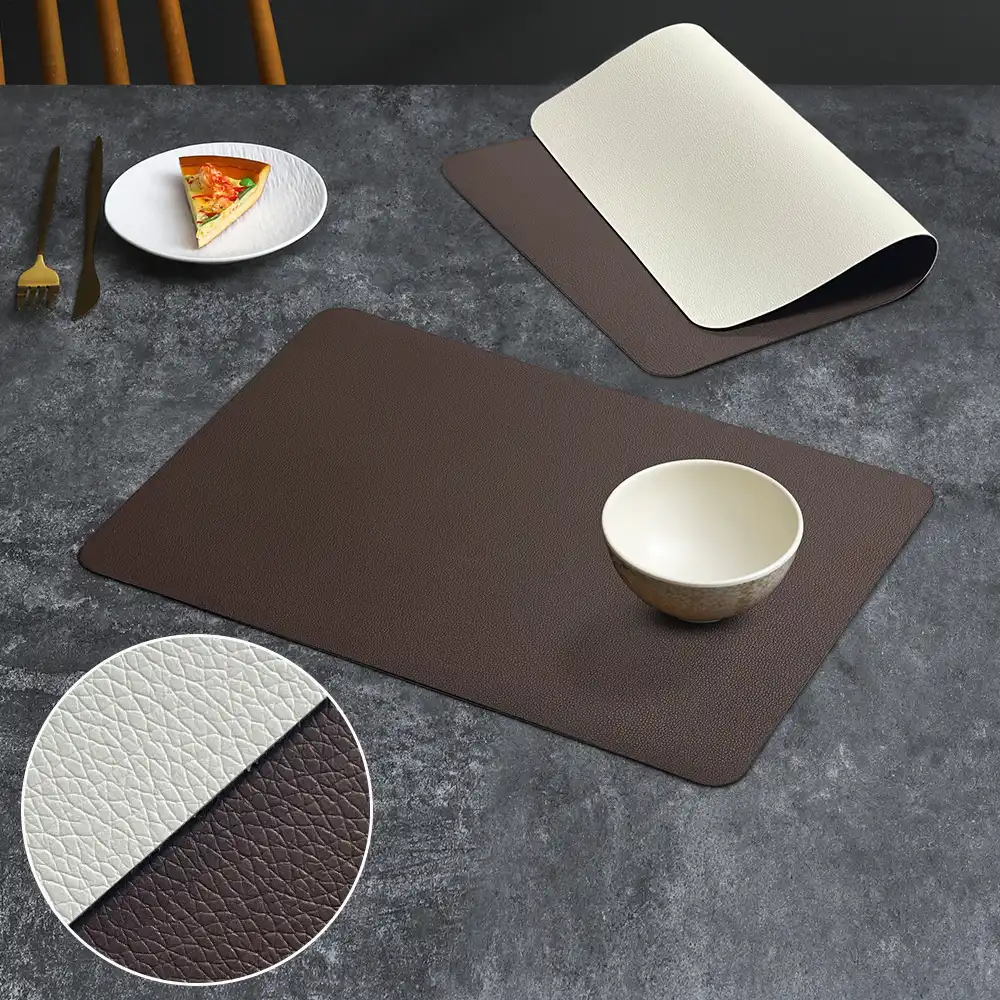
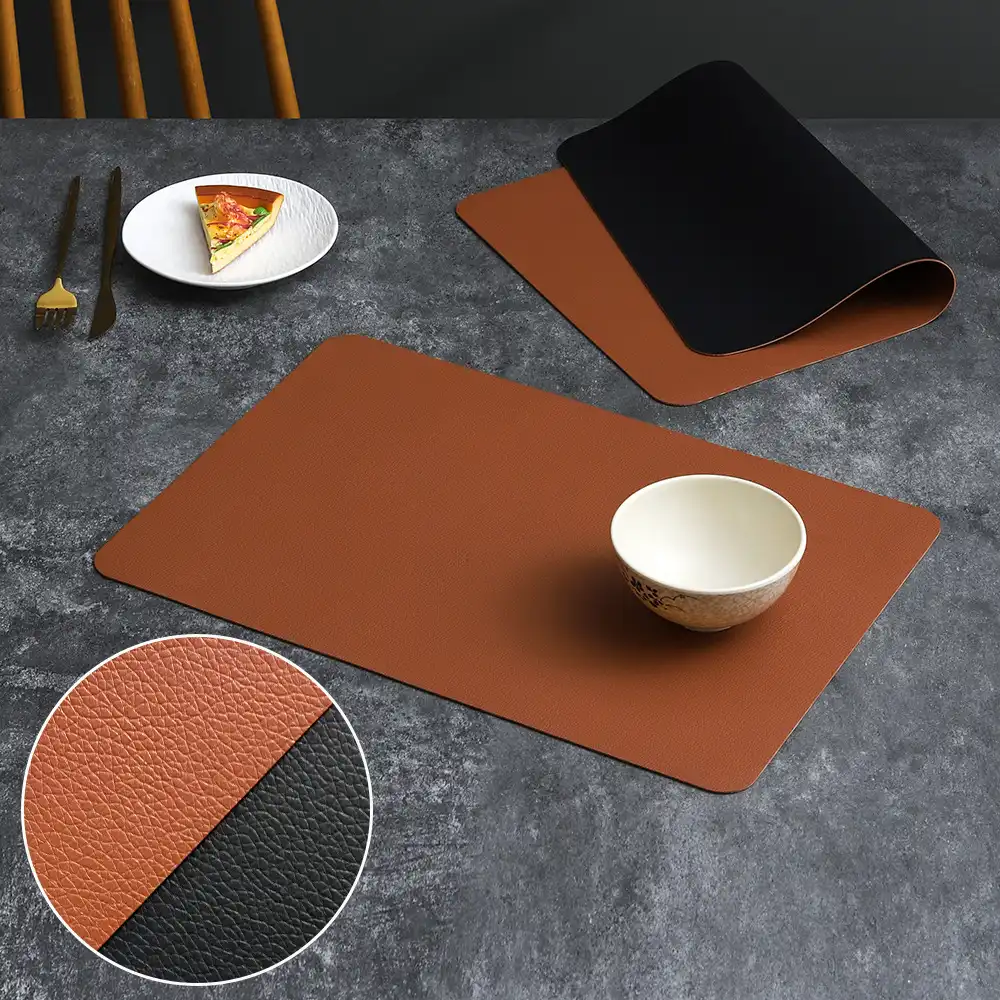
A defined lychee-grain texture gives this rectangular PU faux leather placemat a clean and consistent leather-inspired appearance on both sides. Unlike decorative gold-line or floral-embossed designs, its visual identity comes from the grain, the two-color construction and the contrast between the selected surfaces.
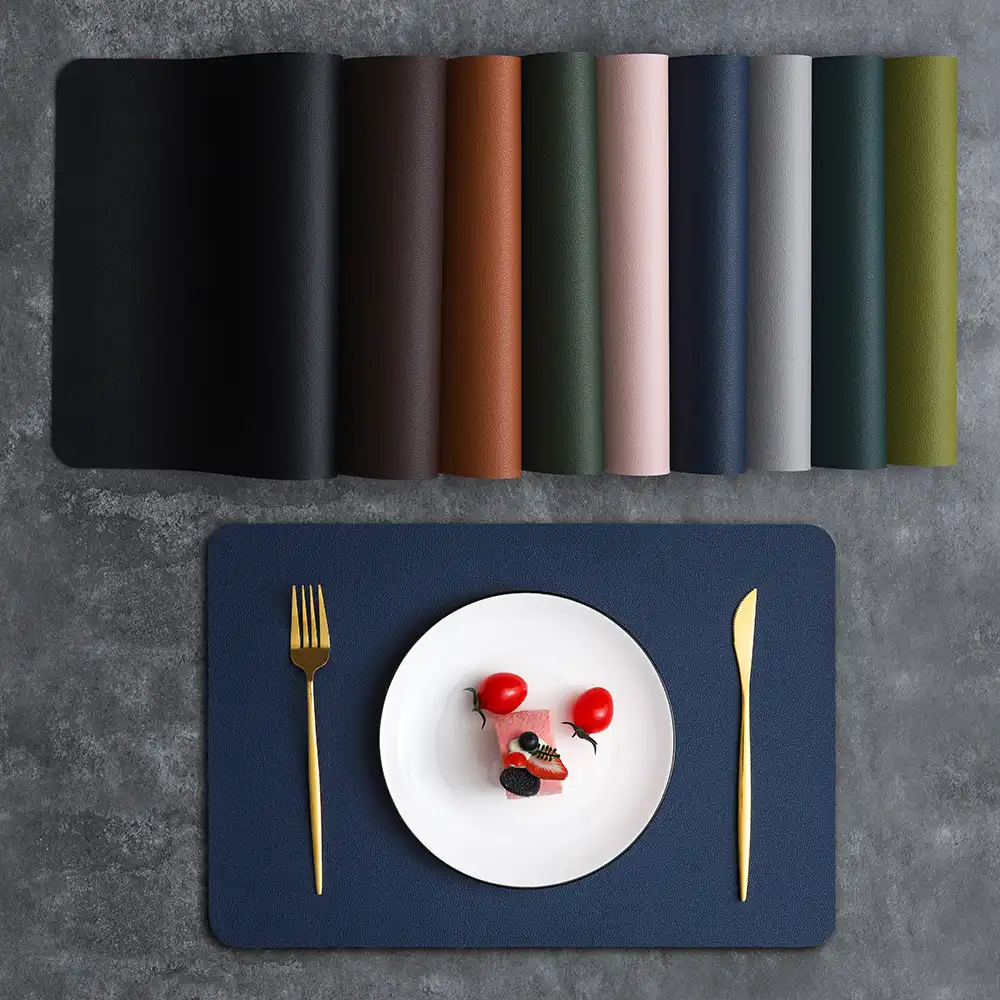
The reversible format allows one placemat to support two coordinated table directions. Eleven current color pairings range from neutral combinations to stronger blue, yellow, red and green contrasts, making the design suitable for hospitality projects, home dining and color-led tabletop collections.
Product Details
| Item No. | F017 |
|---|---|
| Material | PU Faux Leather |
| Shape | Rectangular with Rounded Corners |
| Standard Size | 43 × 30 cm |
| Approx. Weight | 140 g per piece |
| Reference Thickness | Approx. 2.0 mm |
| Surface | Lychee-Grain Texture on Both Sides |
| Construction | Layered, Reversible Two-Tone Design |
| Color Options | 11 color pairings available; refer to the current color selector |
| Logo Options | Digital printing, screen printing, UV printing, debossing and debossing with foil, subject to artwork review |
| Care | Wipe clean or briefly rinse, then dry both sides before storage |
| Customization | Color pairing, dimensions, surface direction and logo application can be reviewed for bulk projects |
Consistent Lychee-Grain Texture on Both Sides
The fine pebbled surface is commonly described as a lychee-grain texture because of its small, evenly distributed raised pattern. It gives solid colors more depth than a completely smooth sheet while remaining quieter than floral embossing, metallic borders or full-color printing.
Both surfaces carry a finished grain, allowing either selected color to face upward. The texture should still be described as PU faux leather rather than genuine leather or natural cowhide.
The regular grain works well with modern ceramic tableware, glassware, wood, stone and metal dining surfaces. It provides enough visual detail to avoid looking flat while leaving food presentation and tableware as the main focus.
Reversible Color Pairings Without Decorative Borders
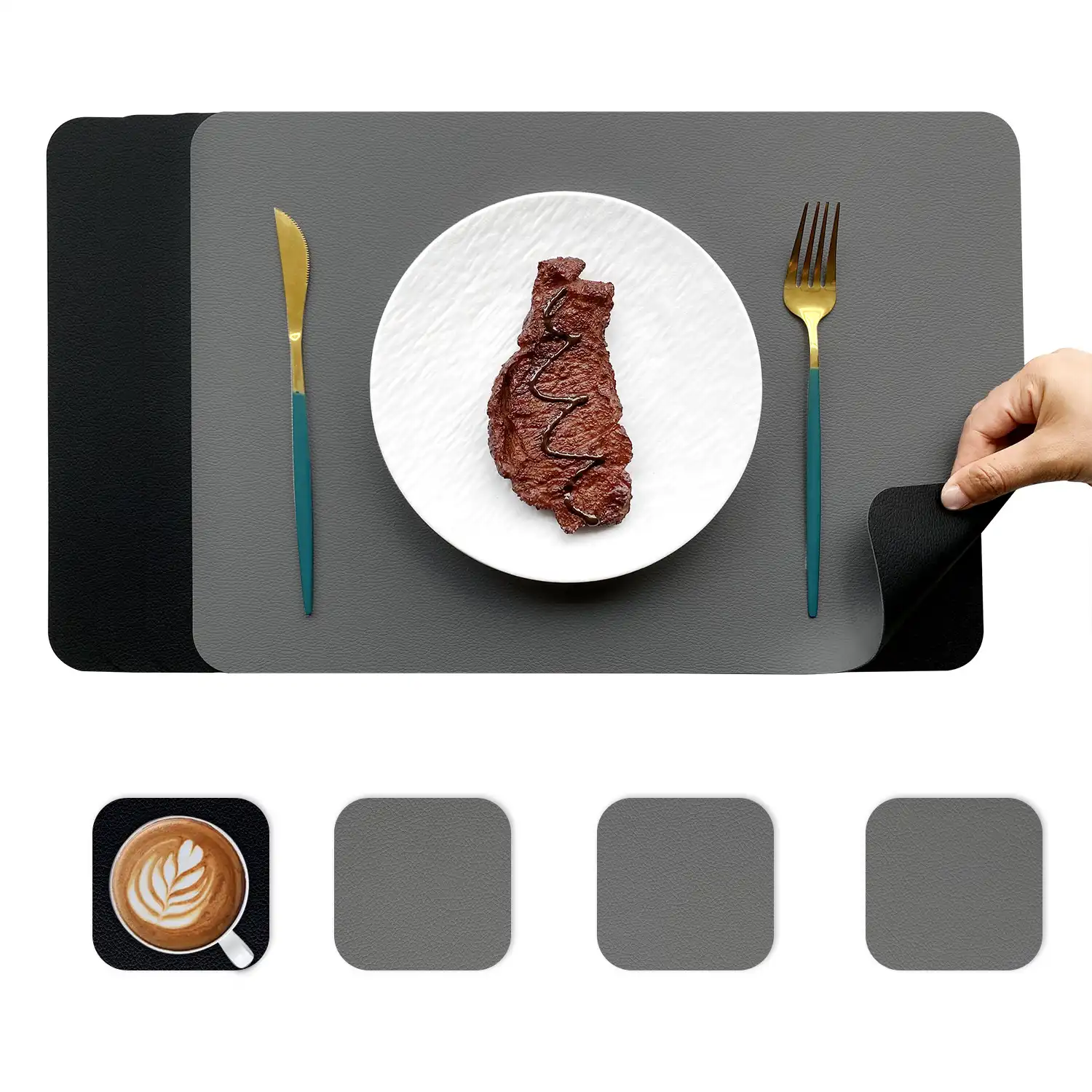
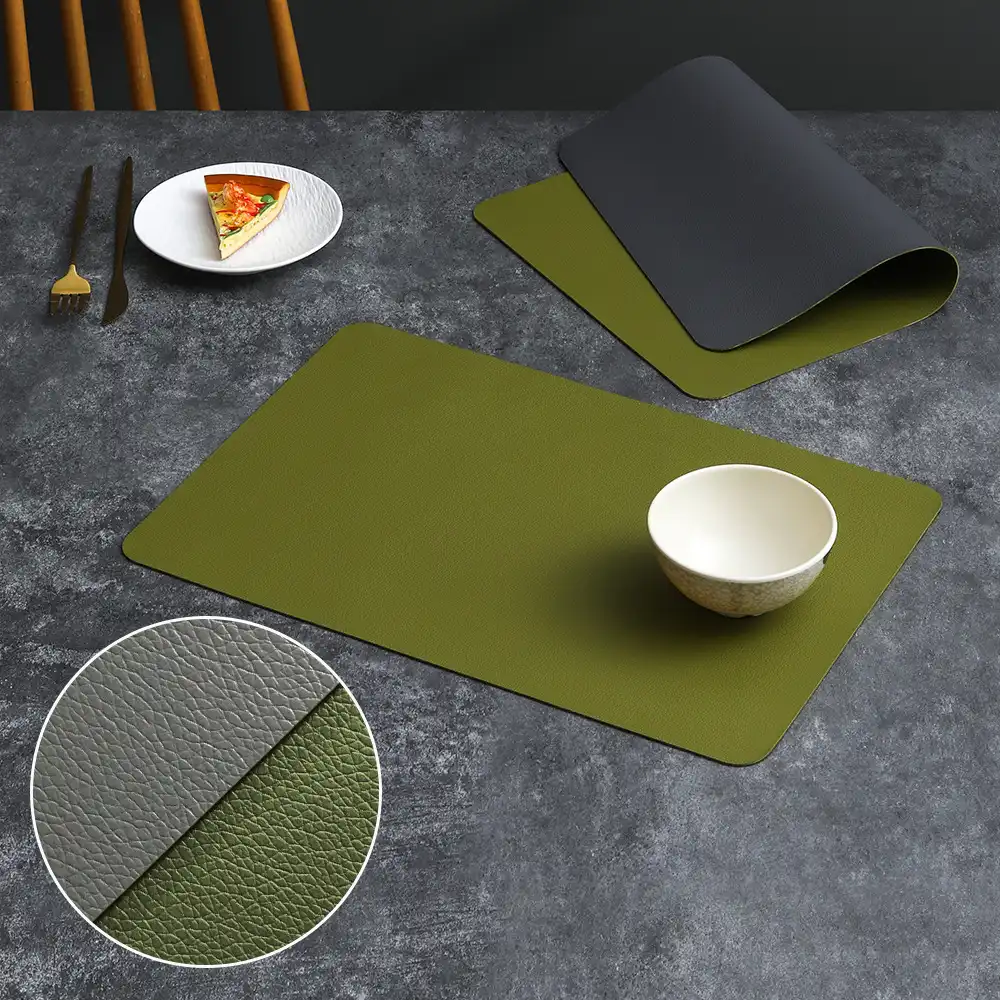
The double-sided construction allows buyers to combine two coordinated, contrasting or light-and-dark colors within one placemat. Turning the mat over changes the table mood without changing the place-setting size or arrangement.
Current combinations include neutral pairings, dark-and-light contrasts and stronger color relationships such as blue with yellow, black with red and green with gray. The available combinations should be confirmed through the current selector or an approved sample.
Because this design does not rely on a gold line or printed border, it is easier to coordinate with different cutlery finishes, table runners and interior styles. The color pairing remains the primary decorative feature.
Both sides should be reviewed together during sample approval. Grain consistency, edge appearance and the visibility of the opposite color along the edge can affect the finished presentation.
Layered Construction in a Practical Rectangular Format
The approximately 2.0 mm layered construction gives the placemat a more substantial feel than a thin single-layer mat while remaining flexible for everyday handling.
The standard 43 × 30 cm size provides room for many dinner plates, cutlery arrangements and drinking glasses. Rounded corners soften the outline and make the mats easier to align across rectangular, oval and many round tables.
Buyers using oversized charger plates, wide bowls or closely spaced seating should evaluate the complete place setting. Plate diameter alone does not show how much room is required for cutlery, drinkware and the space between neighboring guests.
The placemat may be loosely rolled for transport or temporary storage. Repeated sharp folding should be avoided because it may leave creases or affect the layered edge.
Cleaning and Everyday Use Boundaries
Routine water drops, drinks, sauces and light oily residue can usually be removed from the PU surface with a soft damp cloth. Mild detergent may be used when necessary, followed by a clean wipe or brief rinse.
Strongly colored sauces and oil should be removed promptly, particularly on pale surfaces and within the fine grain. Use a soft cloth rather than a stiff brush, abrasive pad or scraping tool.
Avoid prolonged soaking, machine washing, dishwashers, bleach, alcohol and strong solvent-based cleaners. Allow both sides and the edges to dry completely before stacking or storage.
The placemat can be used beneath normal dining plates, bowls, cups and warm serving ware. Cookware taken directly from a stove or oven should be placed on a separate trivet because no verified product-specific high-temperature rating has been confirmed.
Table contact can vary according to the tabletop material, finish, dust and moisture. A sample should be tested on the intended table when a project requires a defined level of grip.
A Reversible Placemat Solution for Color-Led Dining Programs
This design is suited to projects that need a simple, repeatable rectangular placemat but want more flexibility than a single-color surface can provide. Its value lies in the combination of two usable colors, a consistent lychee grain and straightforward daily care.
When Tableware Should Remain the Main Visual Focus
The unprinted surface and border-free design provide a restrained base beneath plates and food presentation. The lychee grain adds subtle texture without competing with patterned tableware, menus or centrepieces.
When One Placemat Must Support Two Table Moods
A lighter side can support breakfast, lunch or casual dining, while a darker reverse can provide a more grounded evening presentation. The table can change direction without introducing another placemat size or shape.
When Several Interiors Use the Same Core Product
Hotels, cafés and restaurant groups can retain one rectangular format while selecting different color combinations for guest rooms, breakfast areas, dining spaces or seasonal settings.
When Retail Collections Are Built Around Color Pairings
Homeware buyers can use the same grain and dimensions across several contrasting or tonal combinations. This creates a recognizable product family without relying on repeated decorative graphics.
Project note: Both selected colors should be checked with the intended tabletop, plates, cutlery and lighting before bulk production.
Custom Reversible Placemat Development and Sample Support
A reversible placemat must be developed as one finished product rather than as a decorative front with a secondary backing. We can help buyers review the two colors, grain appearance, edge construction, dimensions and logo position before production.
Two-Sided Color Selection
Color combinations can be developed as neutral pairs, tonal variations or stronger contrasts. Both surfaces should be assessed under the intended lighting because the same shade may appear different beside wood, stone, glass or fabric table settings.
Physical samples also help confirm how much of the reverse color remains visible along the edge when either side faces upward.
Grain and Edge Review
The lychee-grain depth and distribution should remain visually consistent across both surfaces. The finished edge should also be checked for alignment, color transition and resistance to routine handling.
Where the reverse side will be used regularly, both faces should meet the same visual expectations rather than treating one side only as structural support.
Logo Method and Position Planning
Available logo directions may include digital printing, screen printing, UV printing, debossing or debossing with foil, subject to artwork and sample review.
Fine lettering may lose clarity against a pronounced grain, while simpler artwork with stronger lines may remain easier to read. The logo process should therefore be selected together with the artwork size and chosen color.
A central mark may be covered by the plate. A smaller logo near a corner or outer edge can remain more visible, but its orientation should still work when either side is used.
Size and Place-Setting Review
The standard 43 × 30 cm format suits many common dining layouts. Alternative dimensions can be reviewed where plates are oversized, tables are narrow or neighboring seats are positioned closely together.
For an initial quotation, buyers can provide the expected quantity, intended application, preferred dimensions and color pairing, logo artwork when required, and delivery destination.
Sample Confirmation Before Bulk Production
A physical sample can be used to confirm the finished dimensions, thickness, two-sided colors, lychee-grain appearance, edge finish, logo clarity and artwork position.
Final production should follow the approved sample and confirmed order specification. Applicable material test documents can be shared upon request during project review, subject to the selected material and current specification.
Reversible Lychee-Grain Rectangular PU Faux Leather Placemat Frequently Asked Questions
What is a lychee-grain faux leather surface?
It is a fine, evenly distributed pebbled texture inspired by the appearance of lychee skin. The grain gives solid colors more depth and a leather-like visual effect without using genuine leather.
Can both sides of the placemat be used?
Yes. Both surfaces have a finished lychee-grain texture and are intended for use. The selected color pairing, edge appearance and any logo orientation should be confirmed through an approved sample.
Will a 43 × 30 cm placemat fit a standard place setting?
It suits many standard dinner plates with cutlery and a drinking glass. Oversized chargers, wide bowls and closely spaced seating should be tested as a complete table arrangement before ordering.
How does a PU faux leather placemat compare with a fabric placemat?
A fabric placemat may provide a softer textile feel and some liquid absorption, but it often requires laundering and wrinkle care. PU faux leather is less absorbent and is generally intended for wiping or brief hand rinsing.
How should spills be cleaned from the lychee-grain texture?
Remove spills promptly with a soft damp cloth. Mild detergent may be used for residue within the fine grain, followed by a clean wipe or brief rinse. Avoid stiff brushes, abrasive pads and strong solvents.
Does the placemat prevent sliding on every table?
No universal grip level can be guaranteed. Table contact depends on the surface material, finish, dust, moisture and which side faces downward. A sample should be tested when stability is an important project requirement.
Can hot cookware be placed directly on the placemat?
It can be used beneath normal dining plates, bowls, cups and warm serving ware. Cookware taken directly from a stove or oven should be placed on a dedicated trivet.