
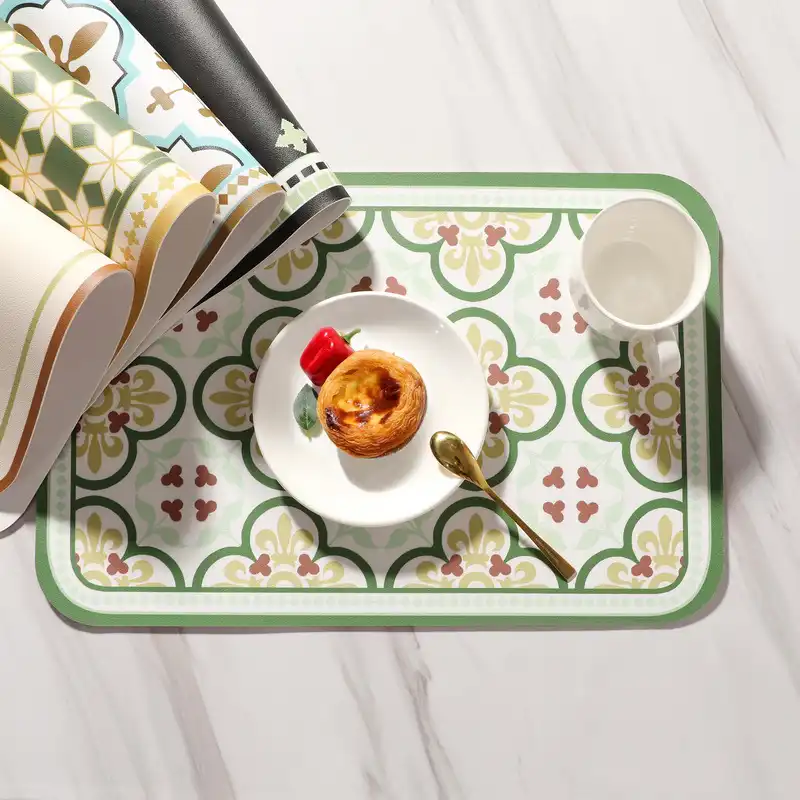
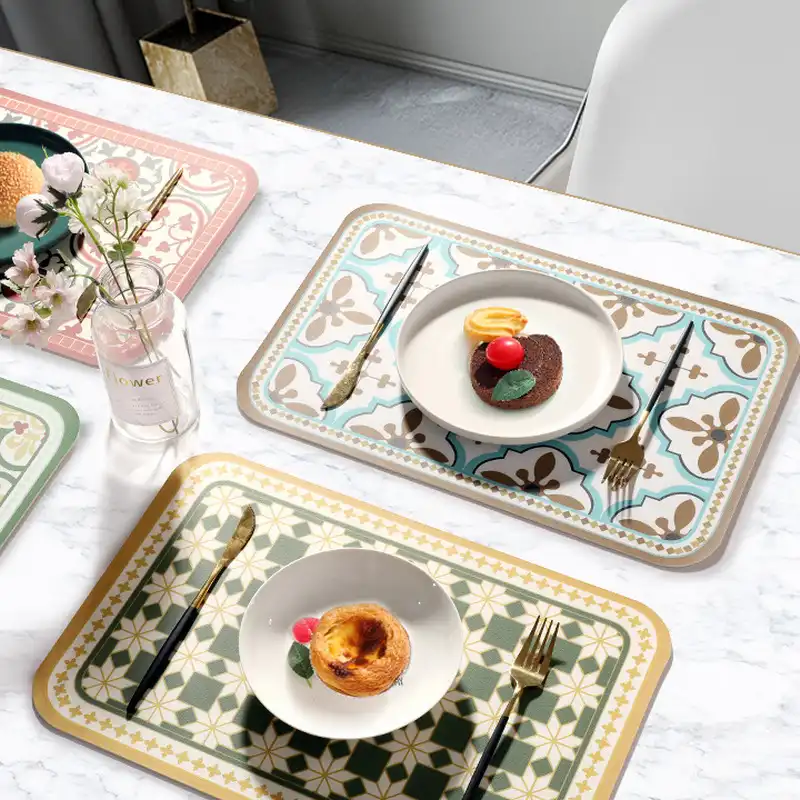
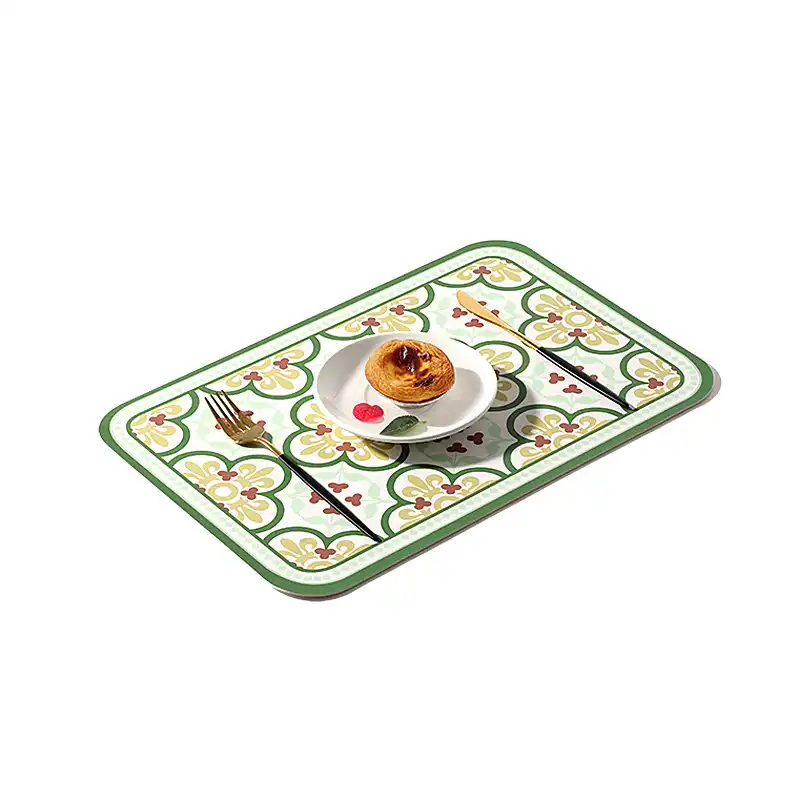
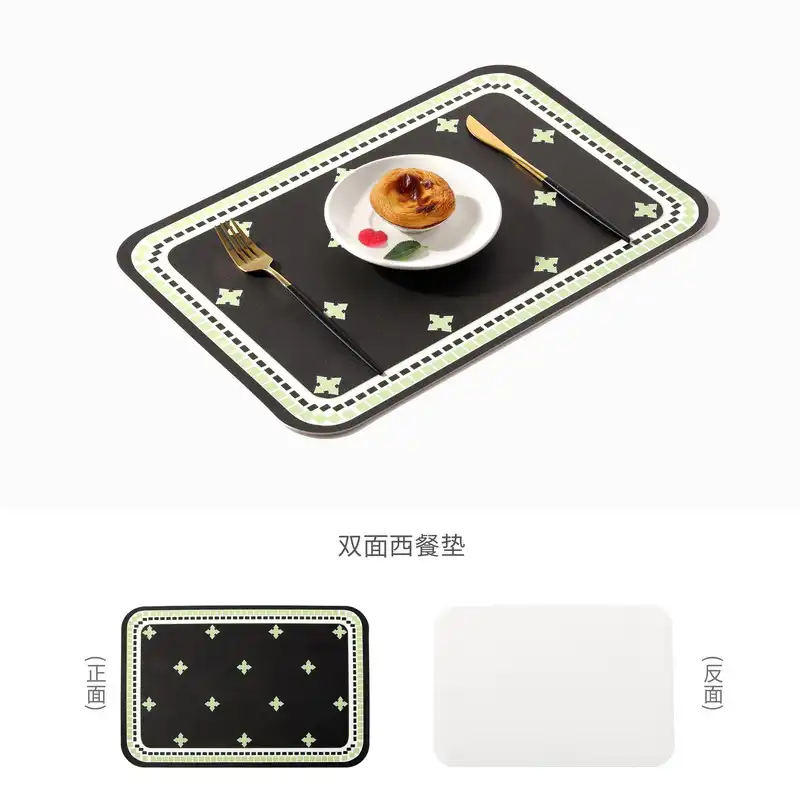
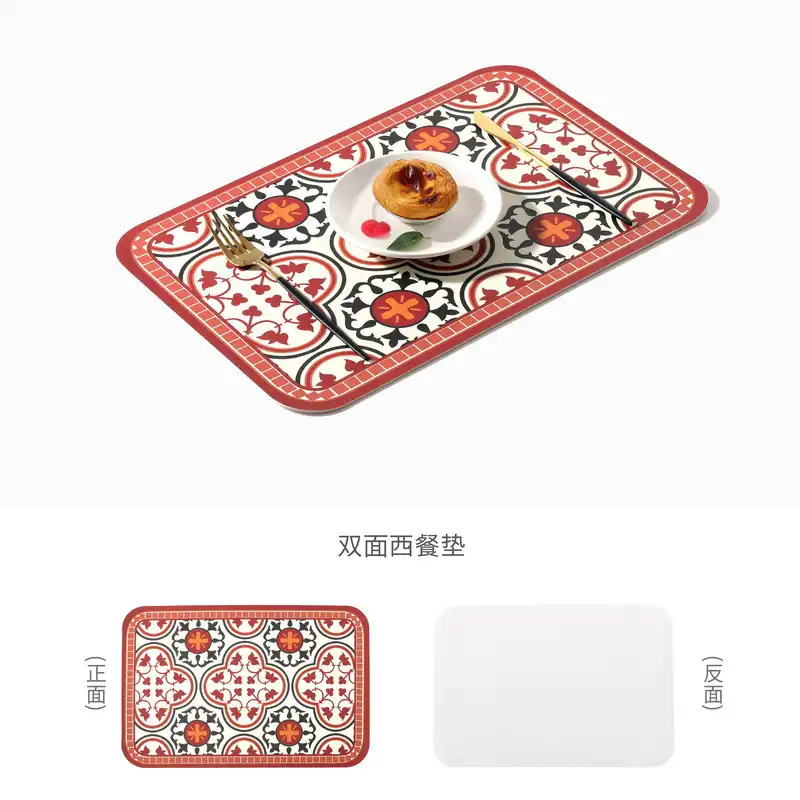
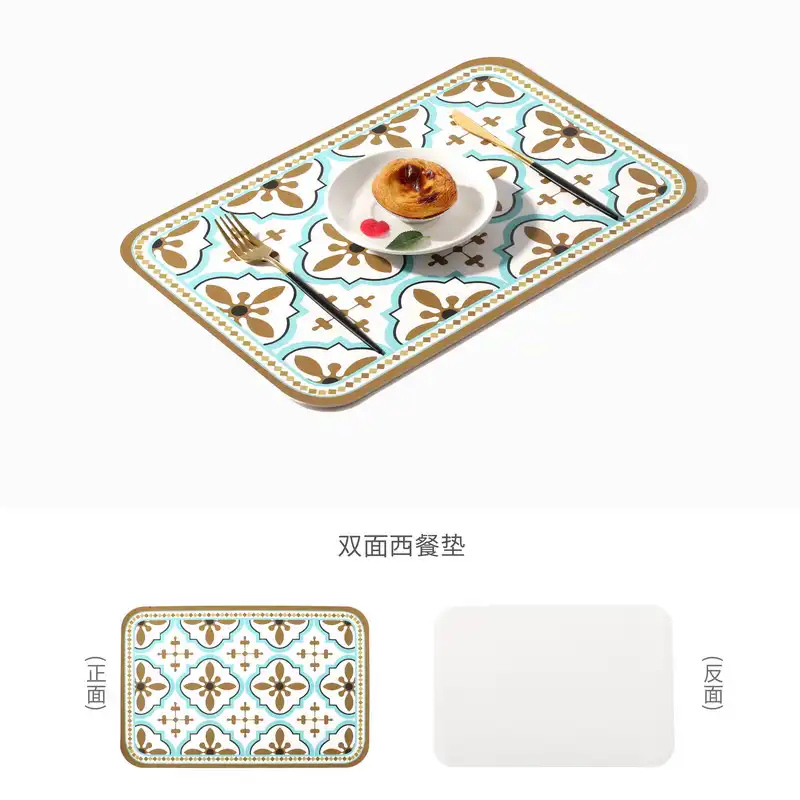
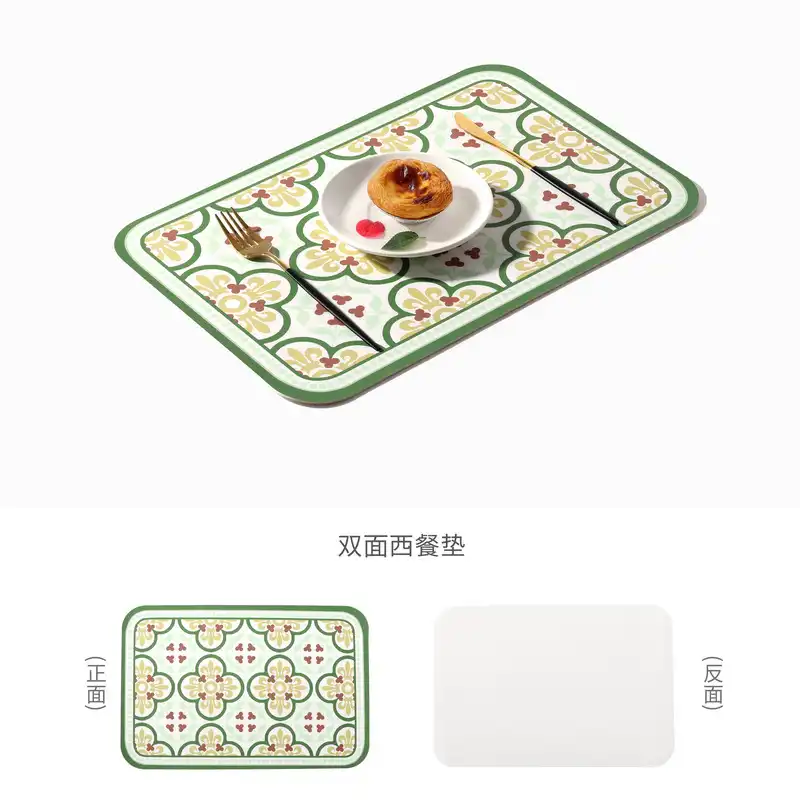
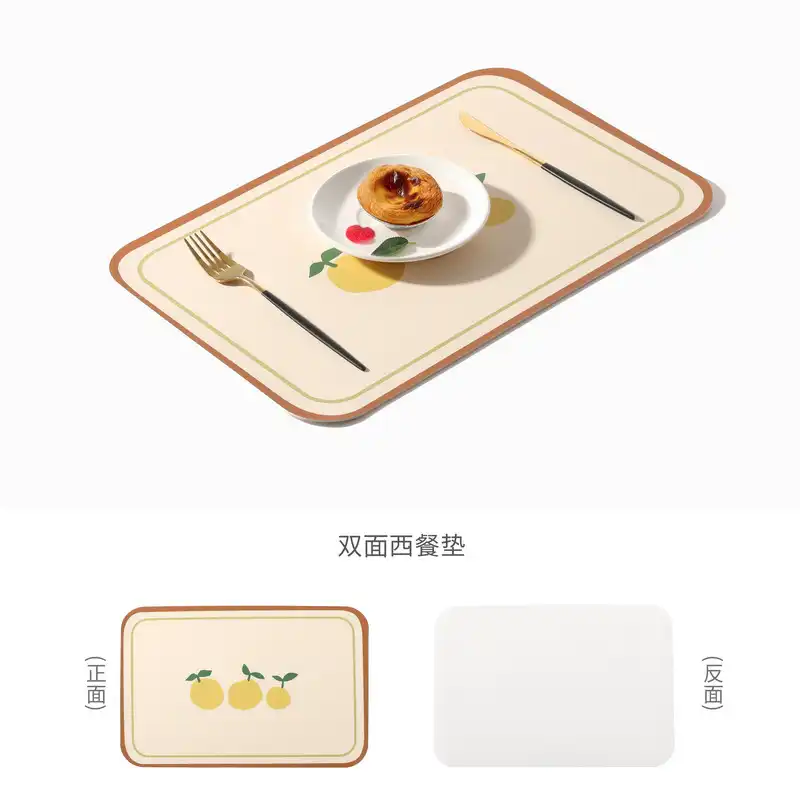
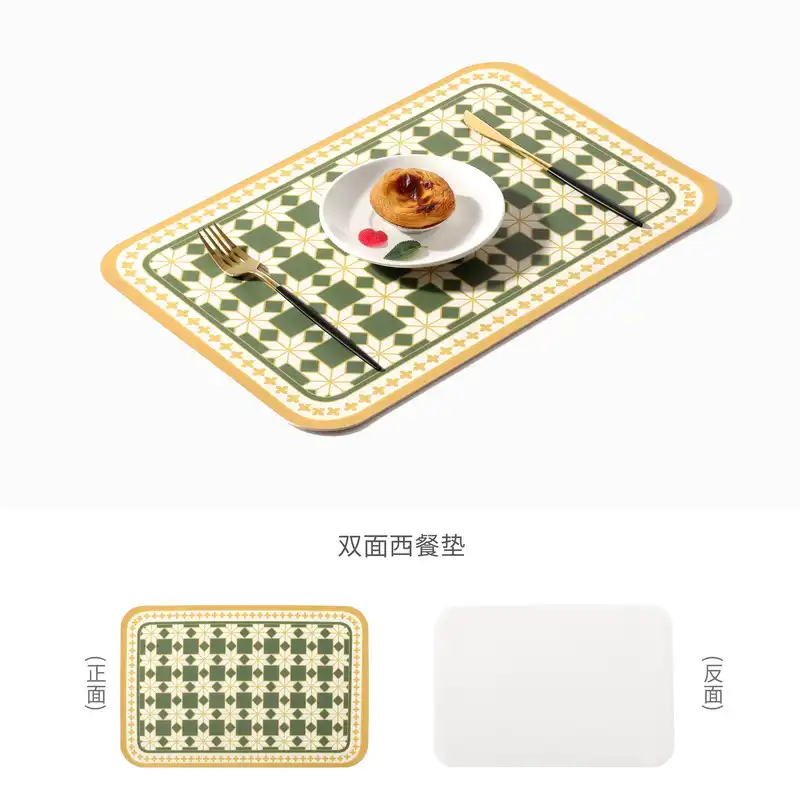
Decorative borders, floral elements and repeating geometric details give this rectangular PVC faux leather placemat the character of vintage ceramic tiles without using a rigid tile surface. Full-color printing allows each design to combine several coordinated colors while maintaining a clear frame around the plate and cutlery.
The standard 45 × 30 cm format is available in six existing pattern directions and can also support custom artwork development. It is suited to cafés, restaurants, boutique hotels, event tables and homeware collections that need a stronger visual identity than a plain solid-color placemat.
Product Details
| Item No. | F034 |
|---|---|
| Material | PVC Faux Leather |
| Shape | Rectangular with Rounded Corners |
| Standard Size | 45 × 30 cm |
| Reference Thickness | Approx. 2.0 mm |
| Decorative Surface | Full-Color Retro Tile-Inspired Print |
| Construction | Layered Structure with a Printed Decorative Front and Plain Finished Reverse |
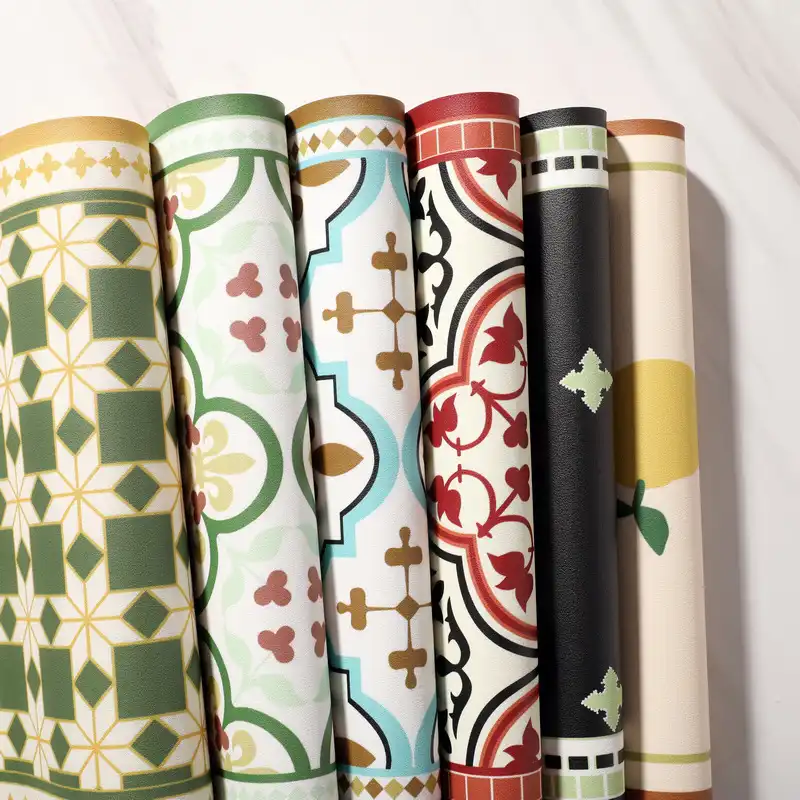
| Pattern Options | Black four-leaf motif, red four-leaf motif, coffee four-leaf motif, green four-leaf motif, three-orange motif and green grid motif |
| Care | Wipe clean or briefly rinse, then dry flat before storage |
| Customization | Dimensions, printed artwork, border layout and logo application can be reviewed for bulk projects |
Retro Tile-Inspired Artwork with Full-Color Detail
The decorative face uses full-color printing to reproduce the layered borders, floral forms and geometric repeats associated with vintage tile designs. Unlike an embossed placemat, the primary visual effect comes from printed color and pattern rather than raised relief.
Several designs use framed layouts that visually define the central plate area, while others rely on repeating geometric or botanical motifs across the surface. This gives buyers a choice between more structured place settings and patterns with a softer decorative rhythm.
The existing collection includes four-leaf motifs in several color directions, a three-orange design and a green grid pattern. Pattern names should be used together with the corresponding image because each option differs in more than background color.
Printed color can appear different under daylight, warm restaurant lighting and screen display. A physical sample is recommended when the placemat must coordinate closely with furniture, tableware, menus or an established brand palette.
Printed Decorative Front with a Plain Finished Reverse
The illustrated tile pattern is concentrated on the main decorative face. The reverse is shown as a plain finished surface and should not be described as a second tile-print design.
This construction differs from reversible two-tone placemats where both sides provide separate decorative color directions. Here, the printed front is intended to remain the primary presentation surface, while the reverse supports the layered structure and routine table contact.
The front, reverse and edge should still be reviewed together during sampling. Border alignment, corner radius, print position and the amount of reverse material visible along the edge all influence the finished appearance.
The placemat may be loosely rolled for transport or temporary storage. Repeated sharp folding should be avoided because it may leave creases or affect the printed surface and edge profile.
Practical 45 × 30 cm Place-Setting Format
The 45 × 30 cm dimensions provide room for many standard dinner plates, cutlery arrangements and drinking glasses. The slightly wider format also leaves useful space for decorative borders to remain visible around the tableware.
Rounded corners soften the outline and coordinate naturally with circular plates and bowls. They also reduce the sharp visual transition created by a square-corner rectangle.
The complete dining arrangement should be reviewed before production. Oversized charger plates, wide bowls, multiple utensils and closely spaced seating can reduce the amount of printed border visible during use.
For restaurants and hotels, placing several samples on the intended table helps confirm the relationship between the pattern, plate size, cutlery position and neighboring place settings.
Cleaning and Printed-Surface Care
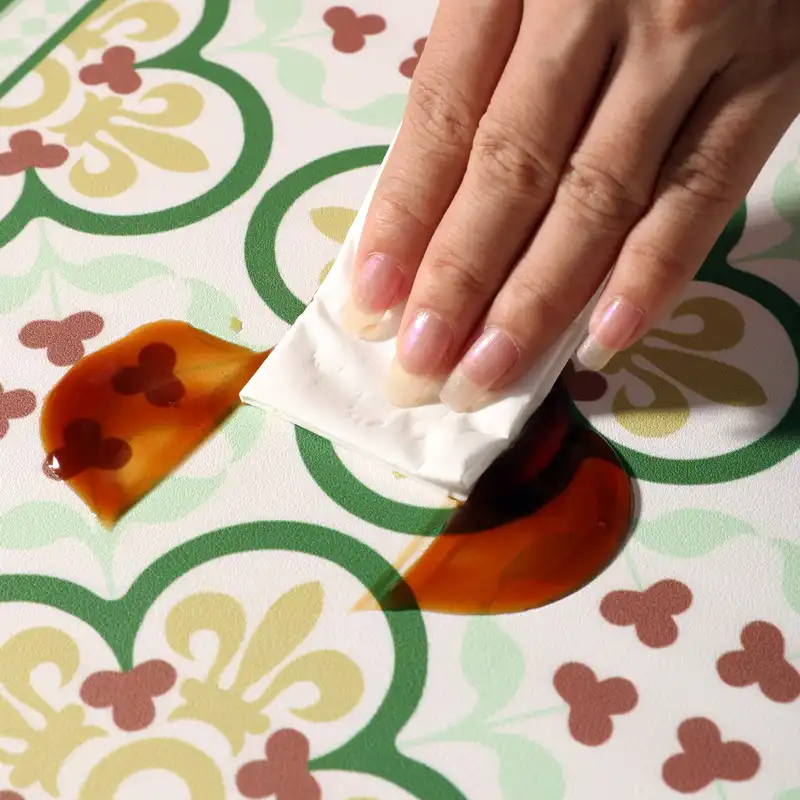
Routine water drops, beverages, sauces and light oily residue can usually be removed from the coated PVC surface with a soft damp cloth. Mild detergent may be used when necessary, followed by a clean wipe or brief rinse.
Strongly colored sauces, coffee and oily residue should be removed promptly, particularly from pale pattern areas. Allowing residue to remain on the surface may make later cleaning more difficult.
Clean the printed face gently. Avoid stiff brushes, abrasive pads, scraping tools, bleach, alcohol and strong solvent-based cleaners, as these may affect the printed colors or surface finish.
Do not leave the placemat soaking for an extended period or place it in a washing machine or dishwasher. Allow the front, reverse and edges to dry completely before stacking or storage.
The placemat can be used beneath normal dining plates, bowls, cups and warm serving ware. Cookware taken directly from a stove or oven should be placed on a dedicated trivet because the supplier’s general temperature claim has not been verified for the final selected specification.
Table contact varies with the tabletop material, finish, dust and moisture. A physical sample should be tested when a project requires a defined level of grip.
Tile-Print Placemat Solutions for Decorative Table Concepts
This design is intended for dining projects that want the placemat to contribute a recognizable visual theme rather than function only as a neutral background.
Boutique Cafés and Dessert Table Settings
The decorative borders and softer color combinations work naturally with pastries, coffee service, afternoon tea and small ceramic tableware. The placemat can help create a more photographed and recognizable table presentation without requiring additional table linen.
Restaurants with Mediterranean or Vintage-Inspired Interiors
Geometric and botanical tile motifs can support interiors that already use patterned floors, decorative wall tiles, warm wood or vintage accessories. The selected design should be compared with the existing interior to avoid combining several competing patterns.
Hotel Breakfast and Guest Dining Areas
Hotels can use one pattern consistently across breakfast tables, guest dining areas or selected room-service settings. The 45 × 30 cm format provides practical place-setting space while the printed border adds a repeated decorative detail.
Retail and Seasonal Tabletop Collections
The six current patterns allow homeware buyers to build a small collection around different color directions and motifs. Custom artwork can also support seasonal, regional or brand-specific tabletop themes.
Project note: Review the plate diameter, table dimensions, lighting, pattern scale, border visibility and surrounding interior before confirming the final design.
Custom Print Development, Wholesale and Sample Support
Custom printed placemats require more than placing an image onto a standard rectangle. Artwork scale, border alignment, cutting position, color reproduction and logo visibility must be reviewed together before bulk production.
Existing Pattern Selection
The six existing designs provide a more direct route for sampling and ordering. Buyers should identify the required pattern by its image and option name rather than referring only to a general color.
For projects using several designs, the collection can be reviewed for consistent border width, overall color balance and coordination with the intended tableware.
Buyer-Supplied Artwork and Pattern Development
Custom artwork can be reviewed for restaurant concepts, hotel groups, homeware brands and other volume purchasing projects. Suitable directions may include tile patterns, geometric artwork, botanical graphics or another buyer-developed design.
The artwork file should be reviewed for resolution, dimensions, color mode, repeat direction and safe cutting margins. Low-resolution images may lose clarity when enlarged to the full 45 × 30 cm surface.
A border-based design requires additional attention because even a small shift in printing or cutting can affect the visual distance between the line and the finished edge.
Logo Method and Artwork Integration
A logo can be incorporated directly into the printed artwork or reviewed as a separate application. Possible methods may include digital printing, screen printing, UV printing, debossing or debossing with foil, subject to the design and sample result.
A large central logo may be covered by the plate. Integrating a smaller mark into the border, corner or lower outer area usually provides better visibility during dining.
Logo contrast should be tested against the surrounding pattern. Fine lettering may become difficult to read when placed over detailed geometric or floral artwork.
Wholesale and Bulk Order Support
Wholesale and bulk orders can be reviewed for restaurants, cafés, hotels, distributors, tabletop retailers and homeware brands. Buyers may select an existing pattern or discuss custom artwork and dimensions according to project requirements.
For wholesale pricing, provide the estimated quantity, selected pattern or artwork file, required dimensions, logo requirements when applicable and delivery destination.
Repeat orders should reference the approved sample and confirmed specification so that the dimensions, pattern scale, border position, print colors and logo placement remain consistent.
Sample Confirmation Before Bulk Production
A physical sample can be used to confirm the finished 45 × 30 cm dimensions, approximately 2.0 mm construction, printed colors, pattern scale, border alignment, corner profile, reverse finish and logo result.
Final production should follow the approved sample and confirmed order specification. Applicable material documents can be discussed during project review when they correspond to the selected material and production option.
Retro Tile-Print Rectangular PVC Faux Leather Placemat Frequently Asked Questions
Is the tile pattern printed or embossed?
The main retro tile design is created through full-color surface printing. It is not a raised ceramic tile or deeply embossed pattern.
Is this placemat made from real leather or ceramic tile?
No. It is made from flexible PVC faux leather with a printed tile-inspired design. It should not be described as genuine leather, stone or ceramic.
Will a 45 × 30 cm placemat fit a standard place setting?
It suits many standard dinner plates with cutlery and a drinking glass. Oversized charger plates or elaborate place settings should be tested with a sample to confirm how much of the decorative border remains visible.
Can both sides be used as tile-print decorative surfaces?
No. The tile artwork is displayed on the primary decorative face. The reverse is a plain finished surface and should not be promoted as a second printed design.
How should a printed faux leather placemat be cleaned?
Remove spills promptly with a soft damp cloth. Mild detergent and a brief rinse may be used when necessary. Avoid abrasive tools, bleach, alcohol, strong solvents and prolonged soaking.
Can the tile pattern or border colors be customized?
Yes. Custom artwork, pattern scale, border layout, dimensions and logo integration can be reviewed for bulk projects. Final feasibility depends on the artwork quality, quantity, printing process and approved sample.
Can these printed placemats be ordered wholesale?
Yes. Wholesale and bulk orders can be reviewed for existing patterns or buyer-supplied artwork. Pricing depends on the quantity, dimensions, print requirements, logo application and delivery destination.