
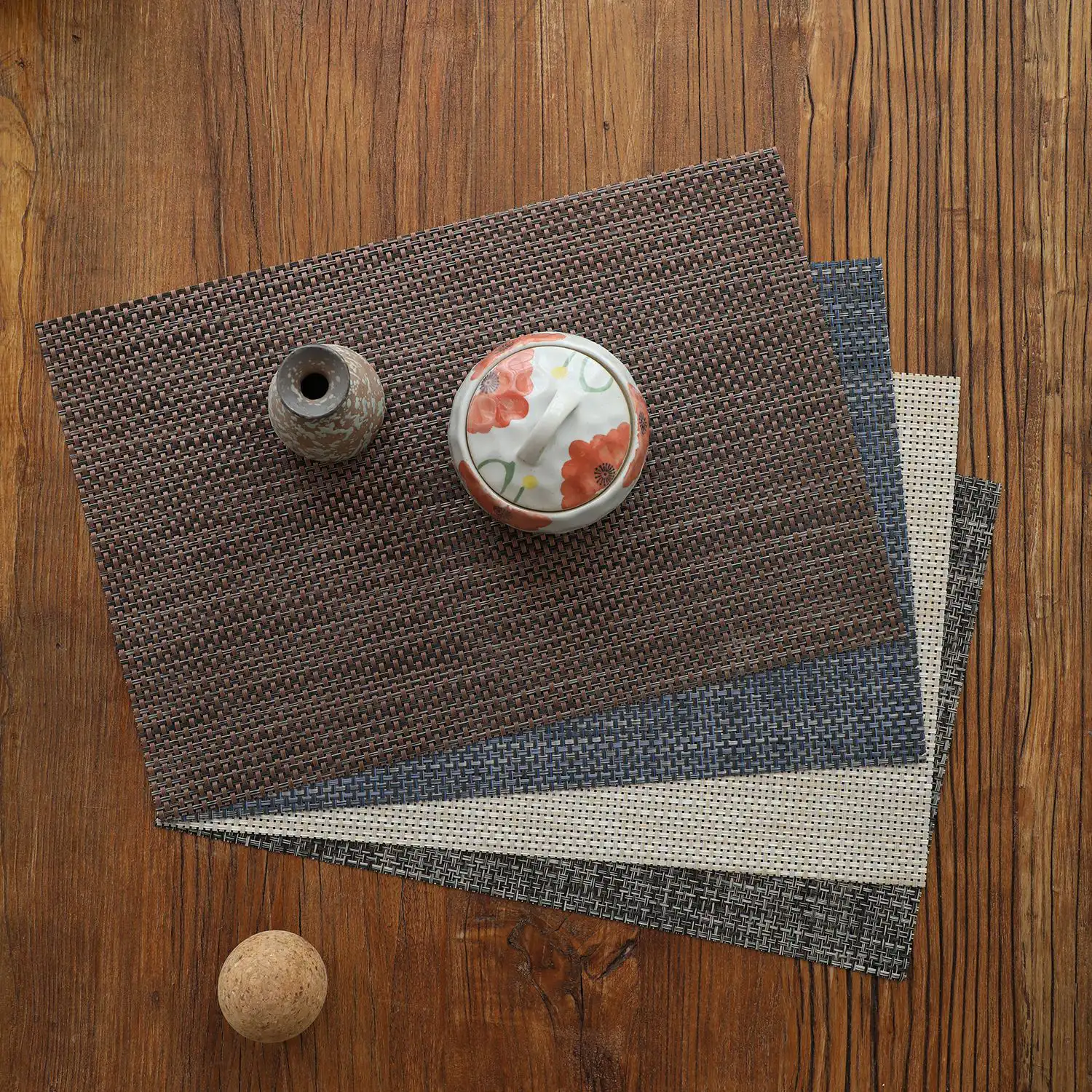
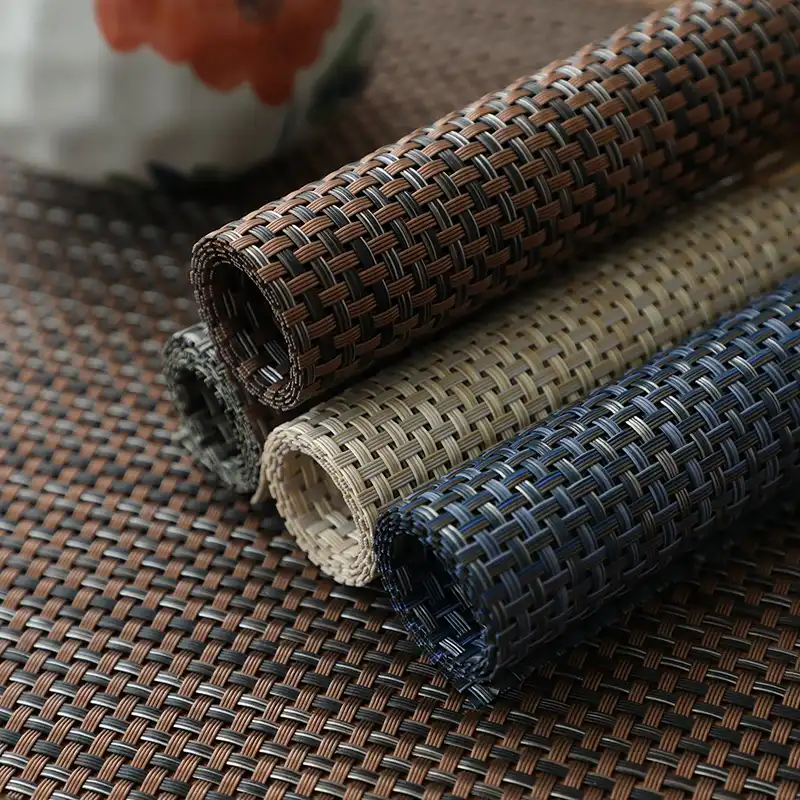
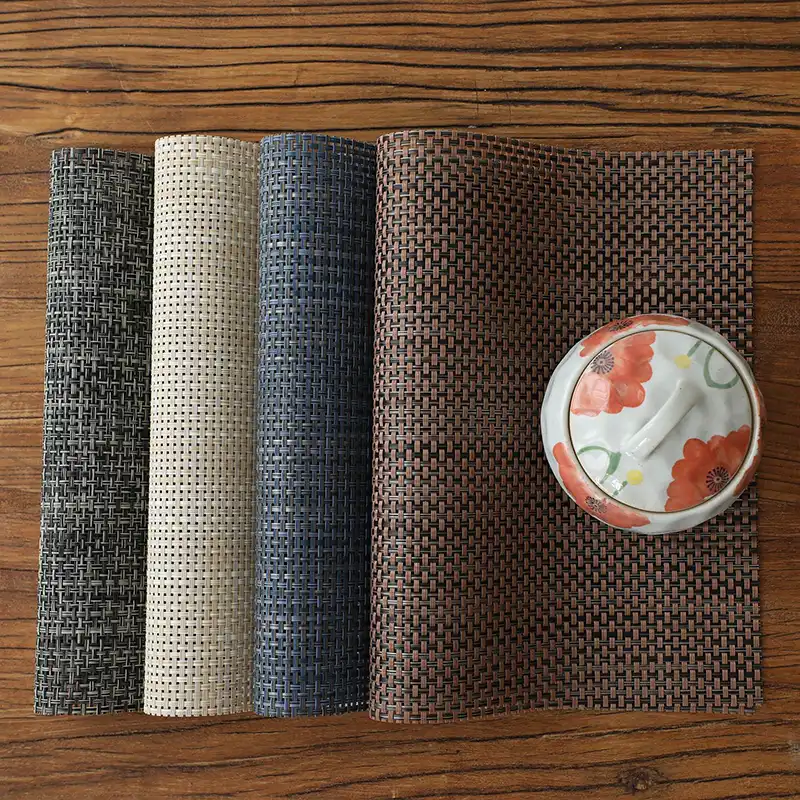
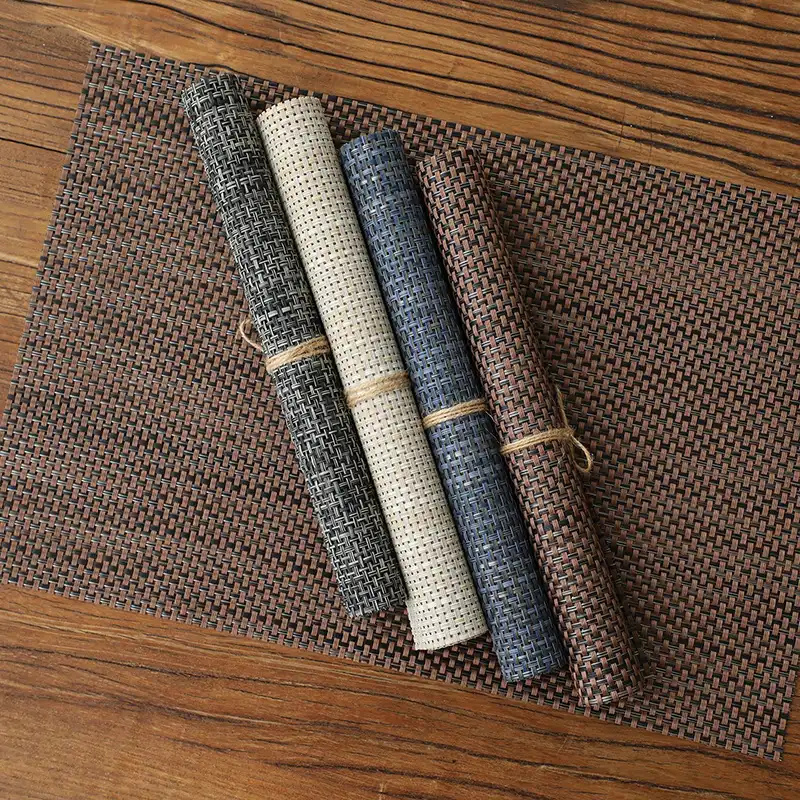
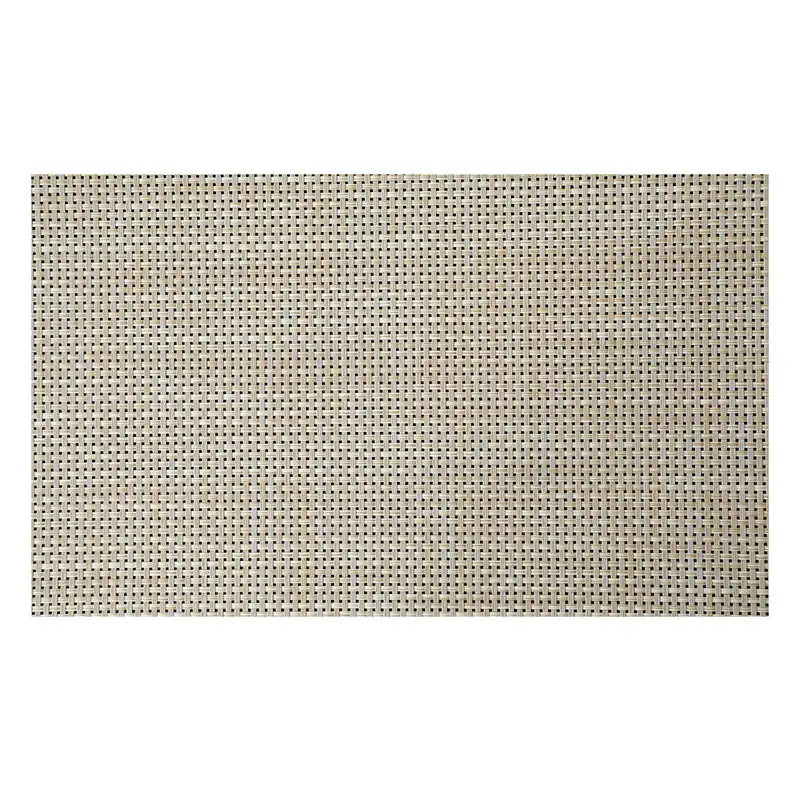
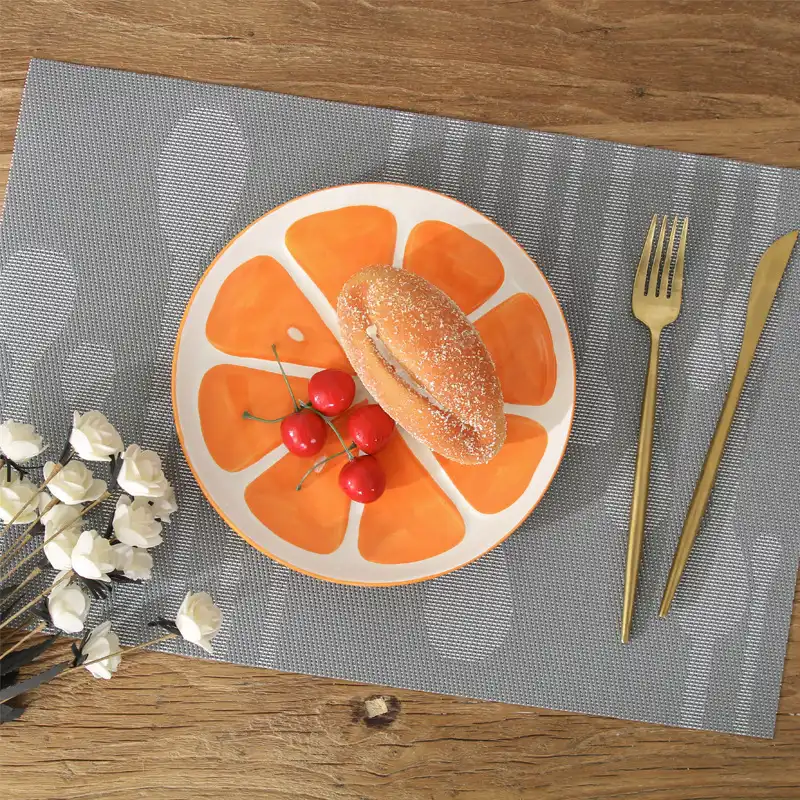
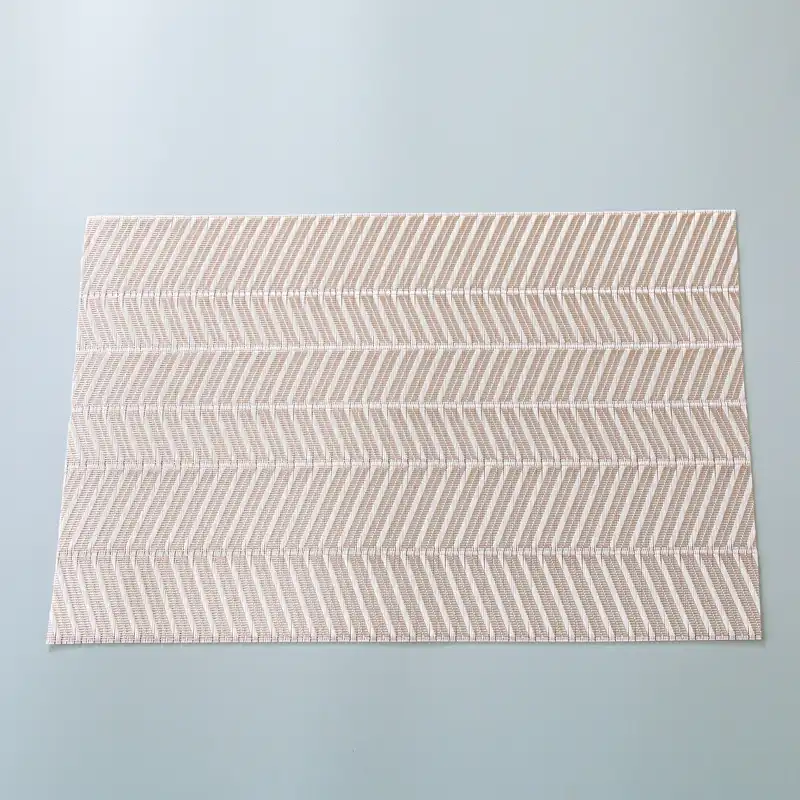
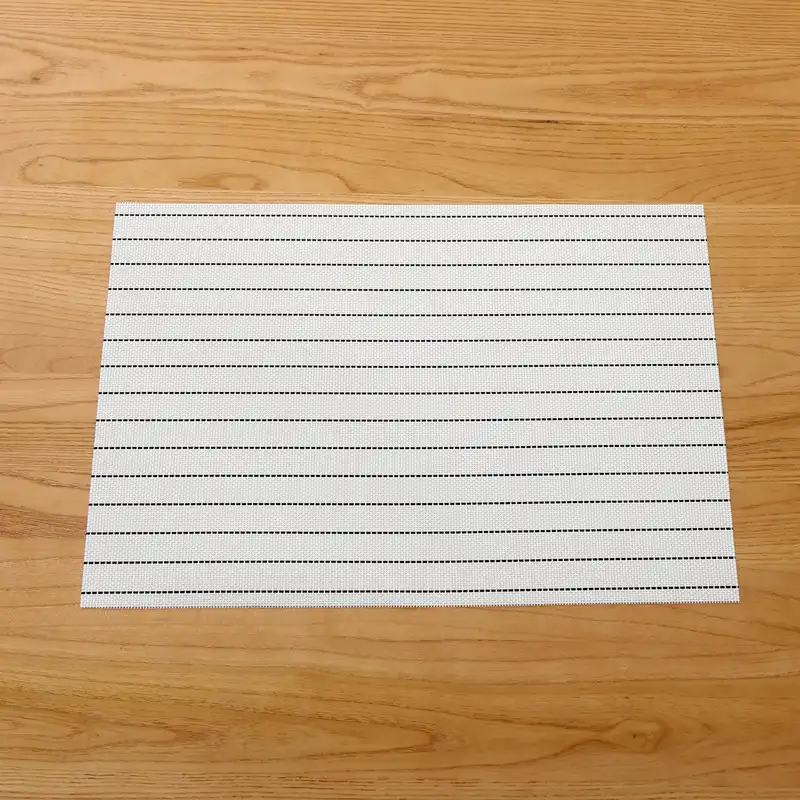
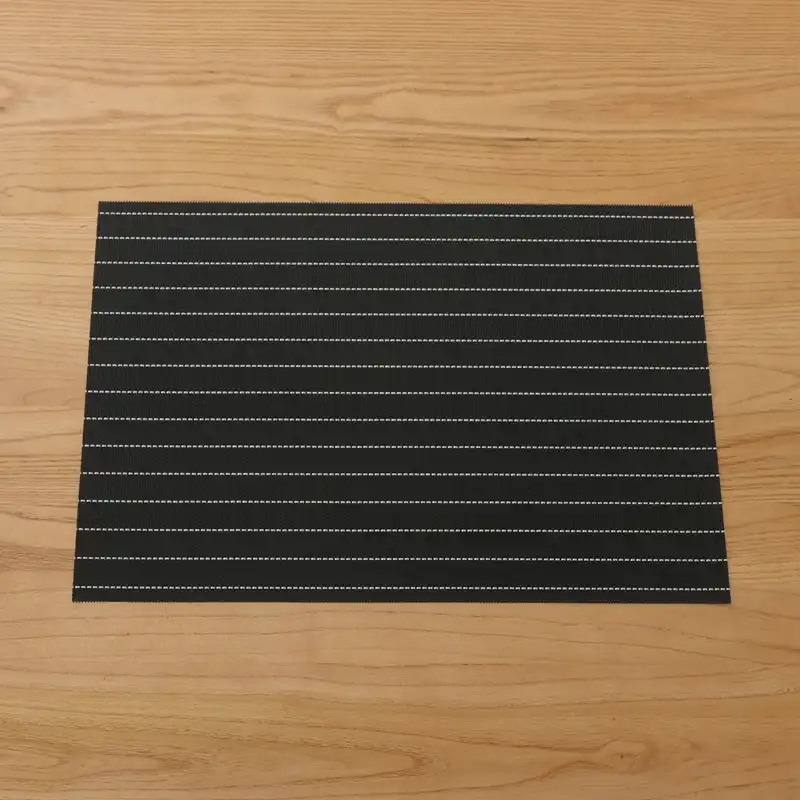
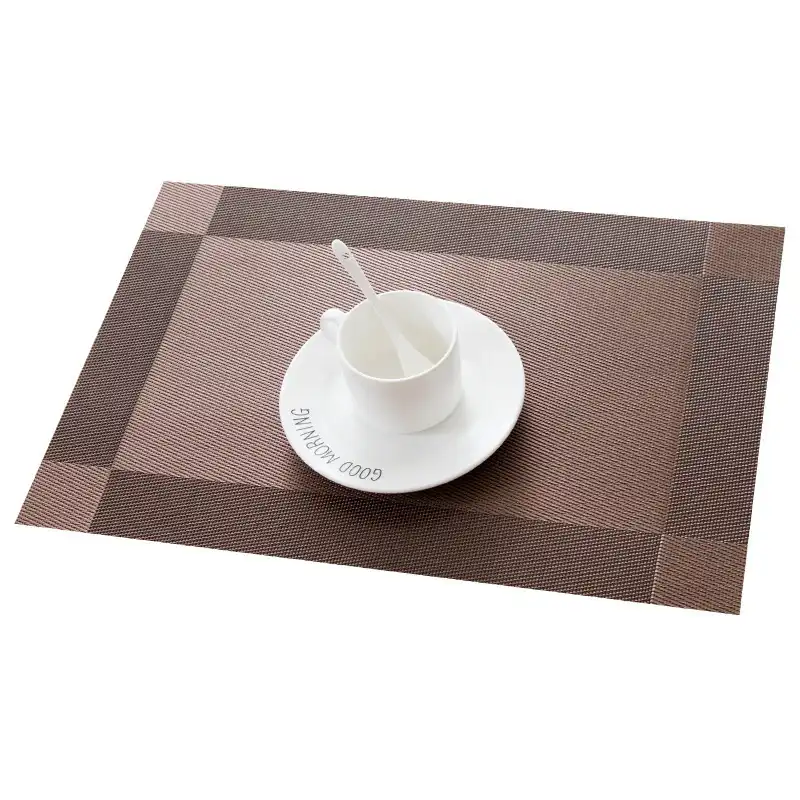
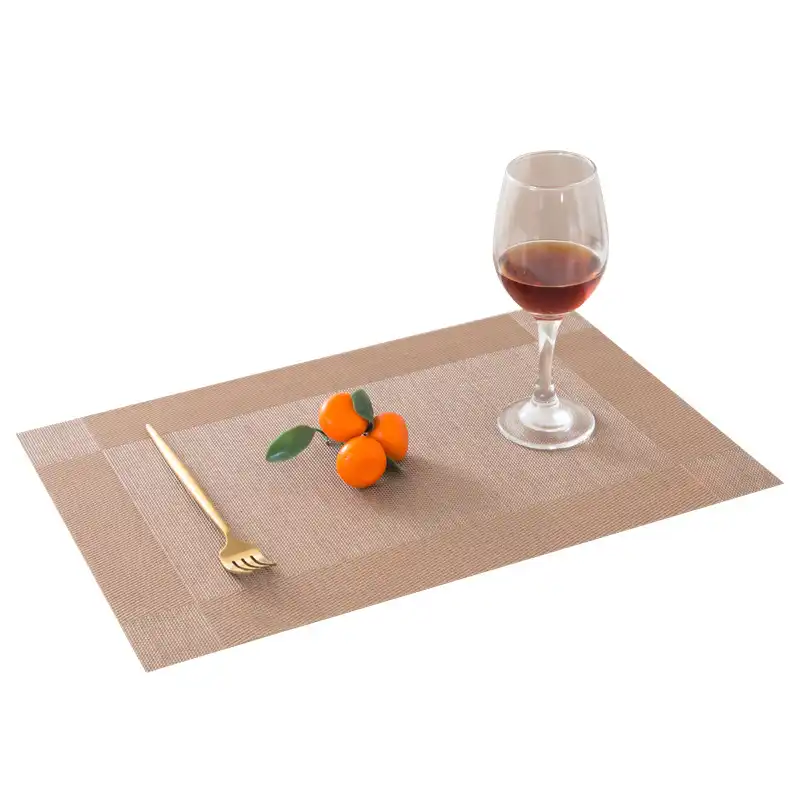
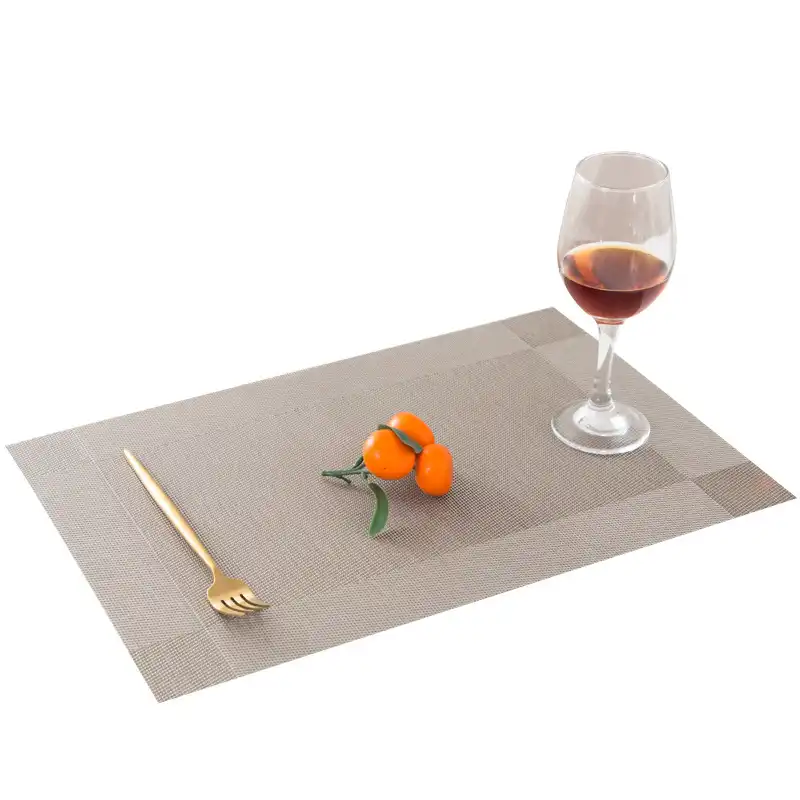
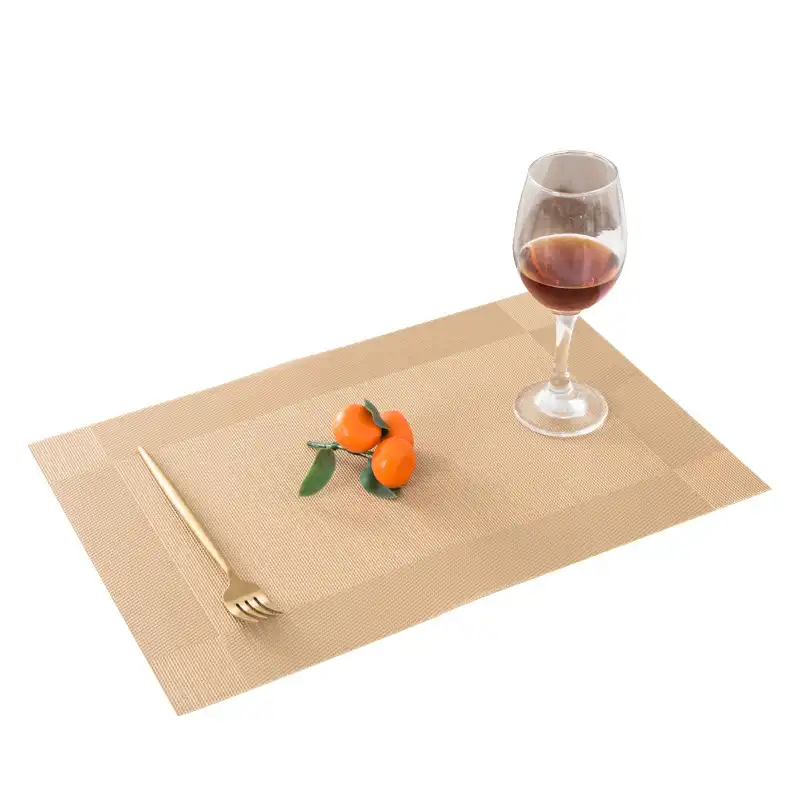
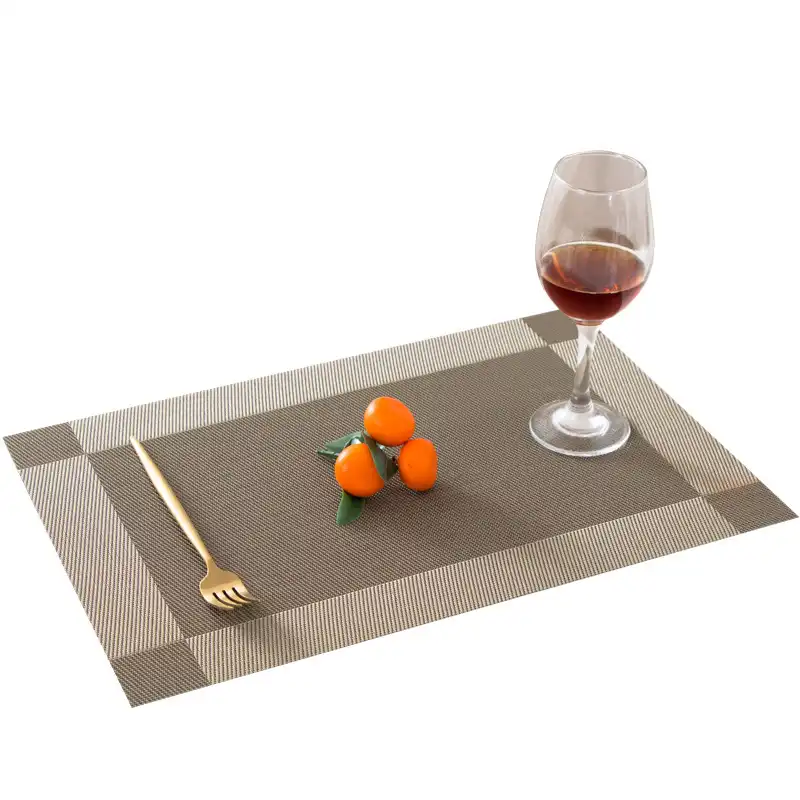
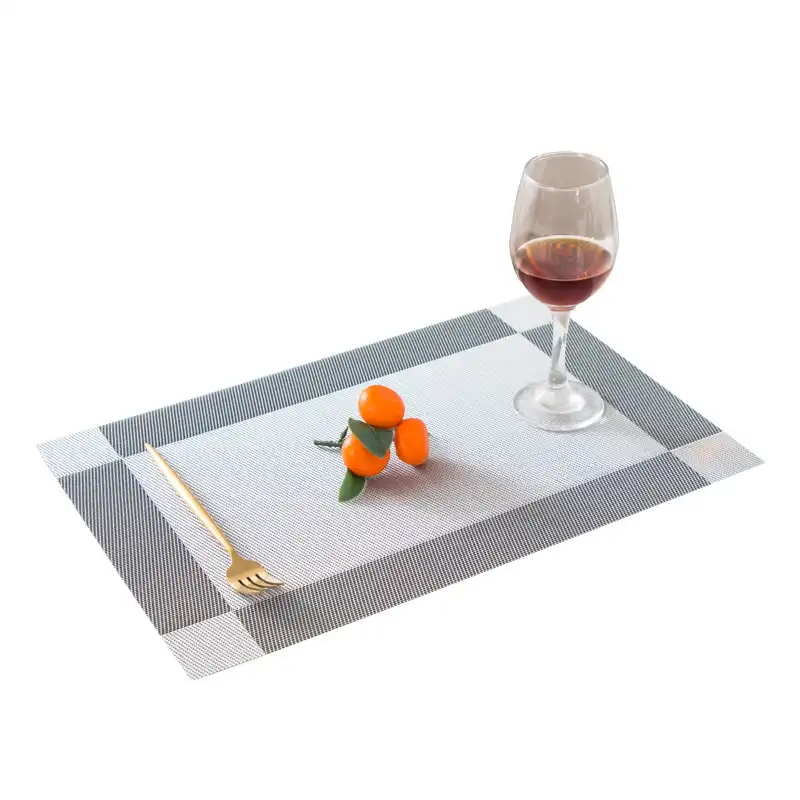
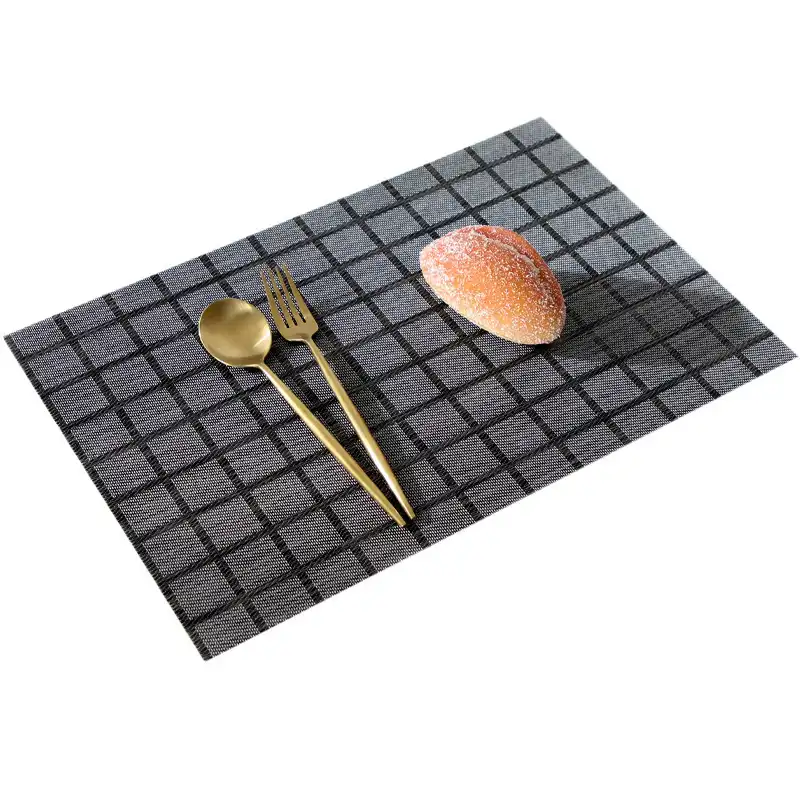
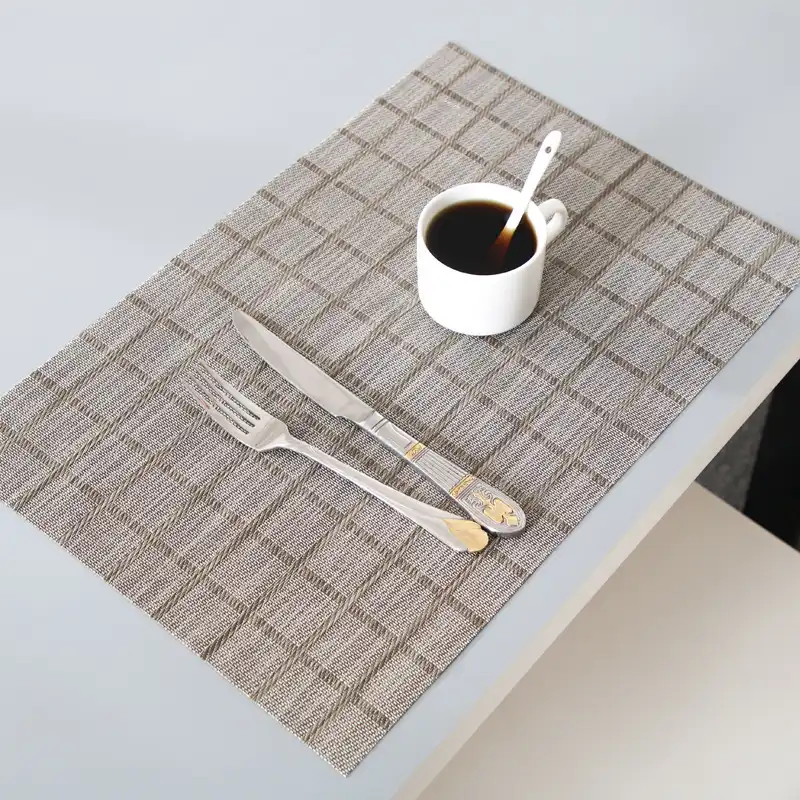
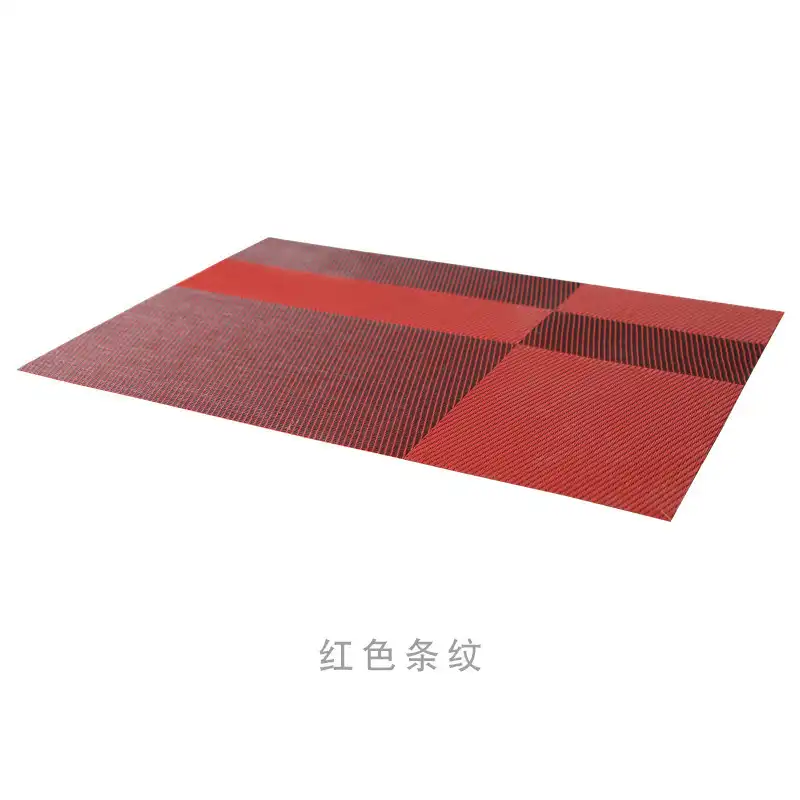
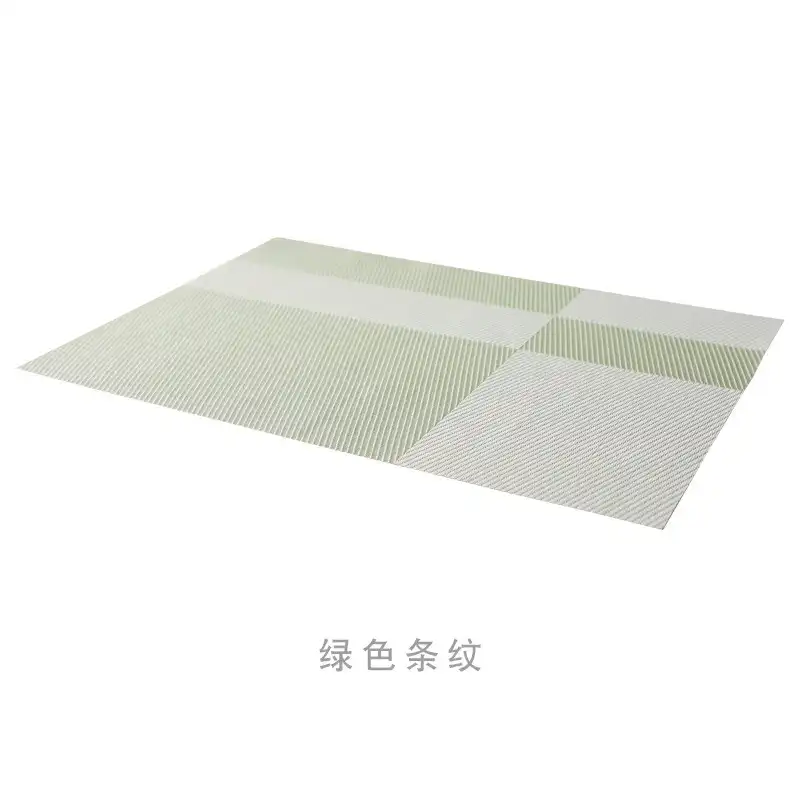
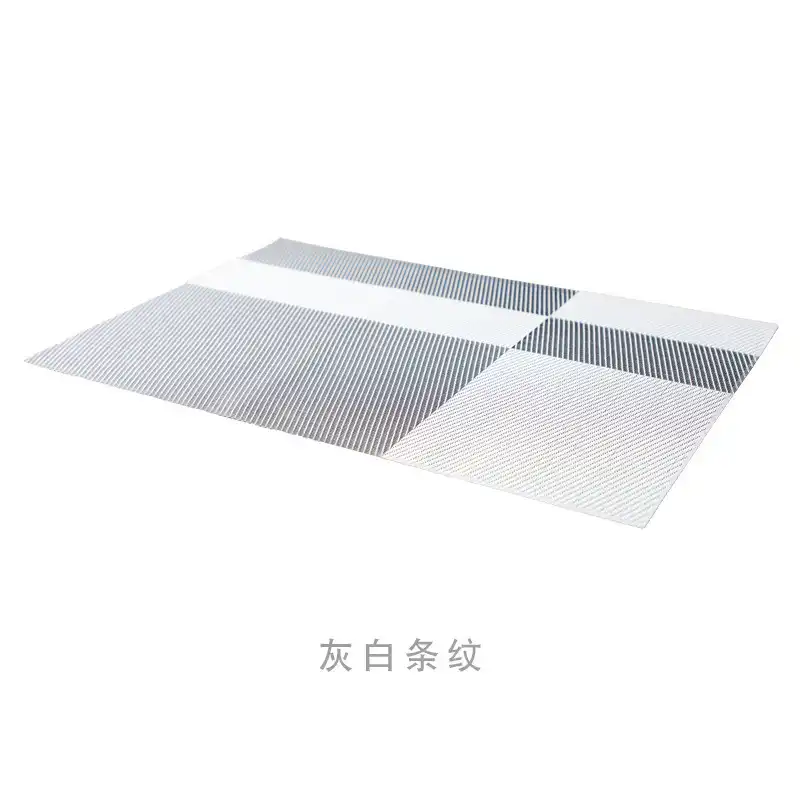
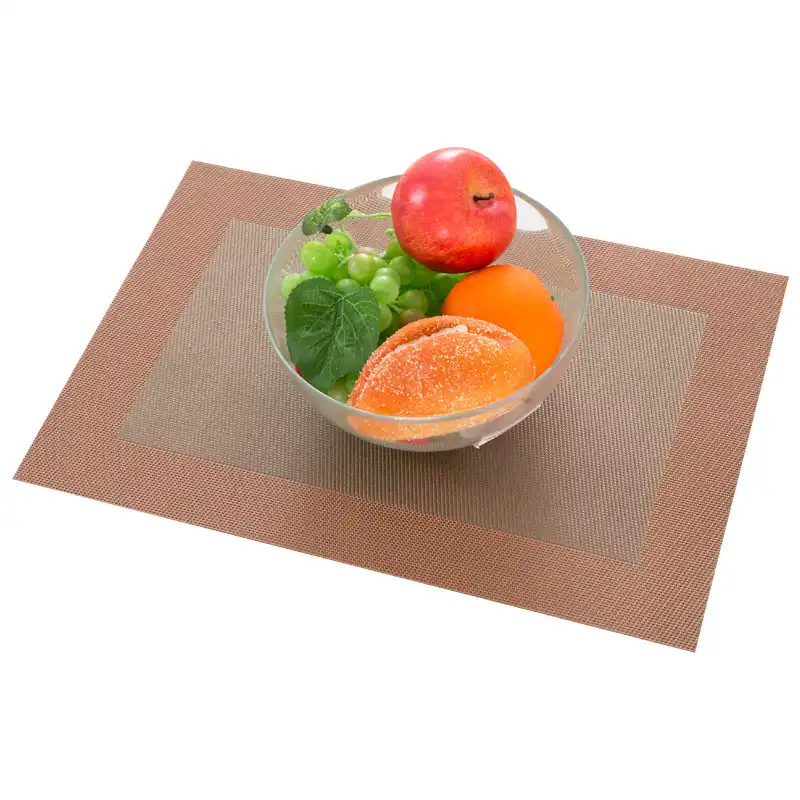
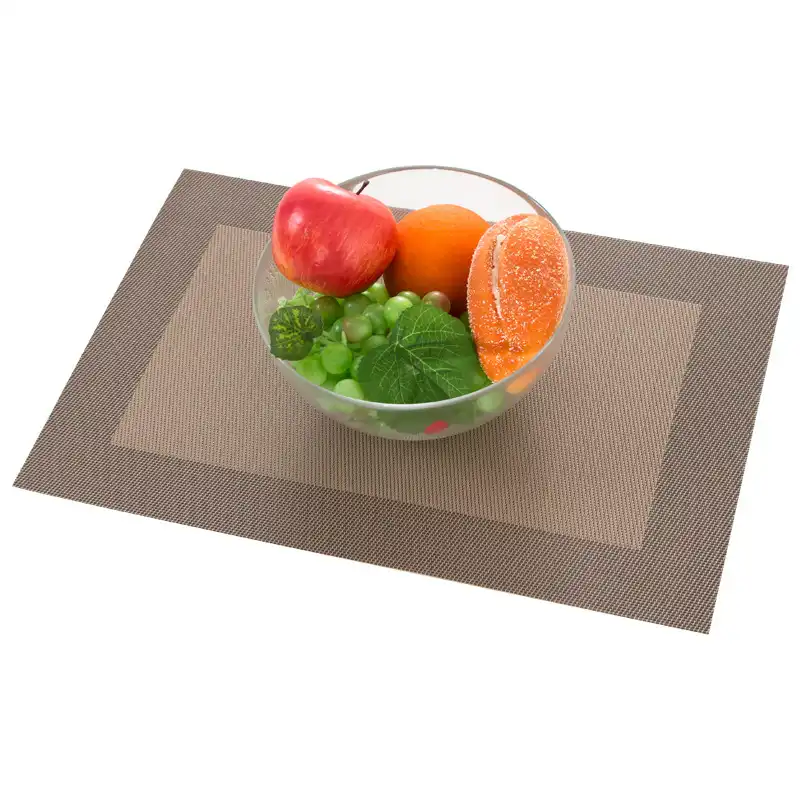
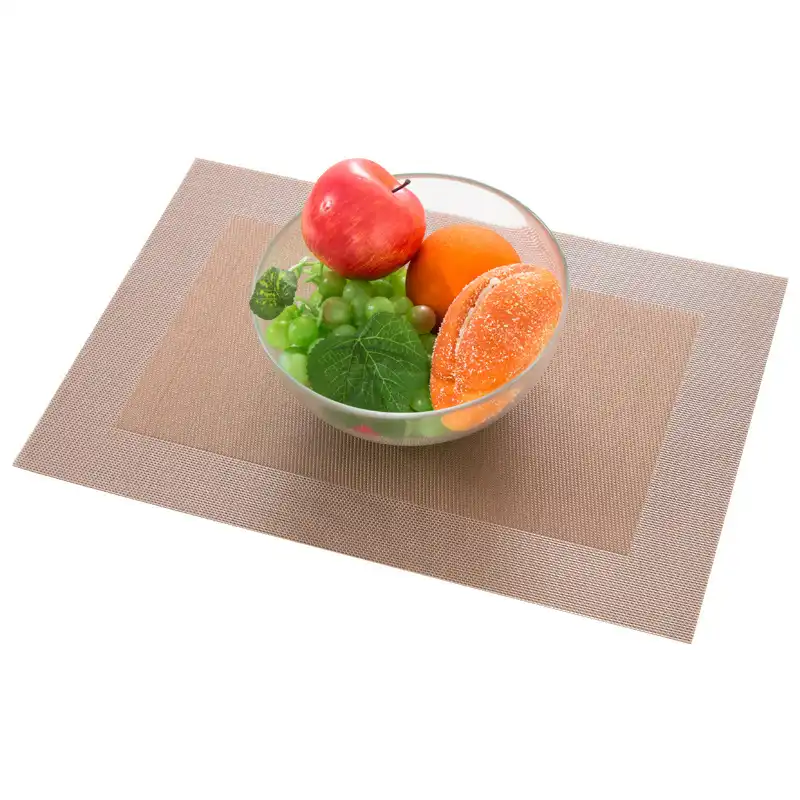
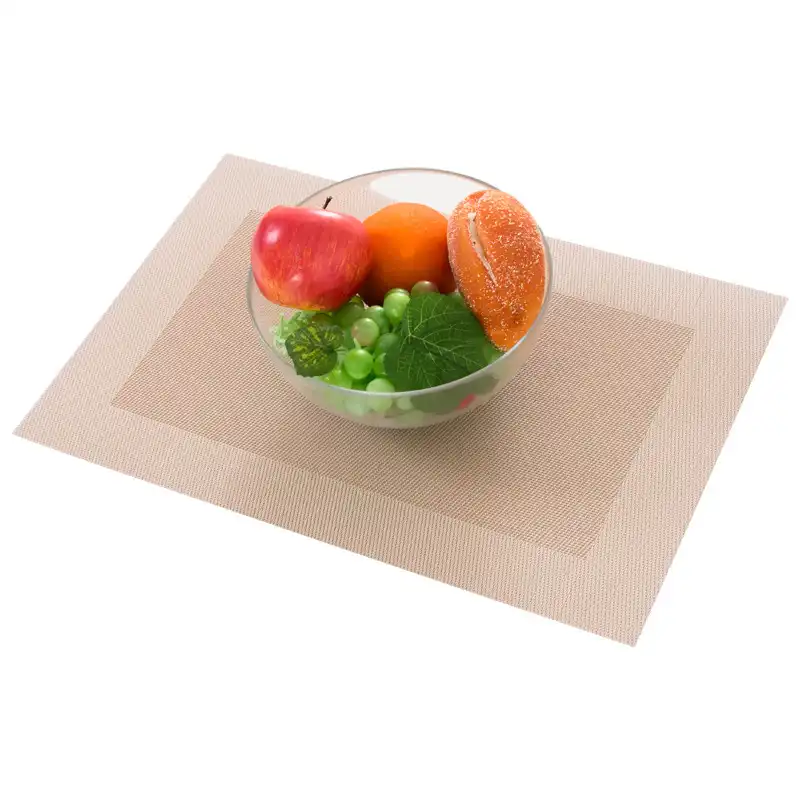
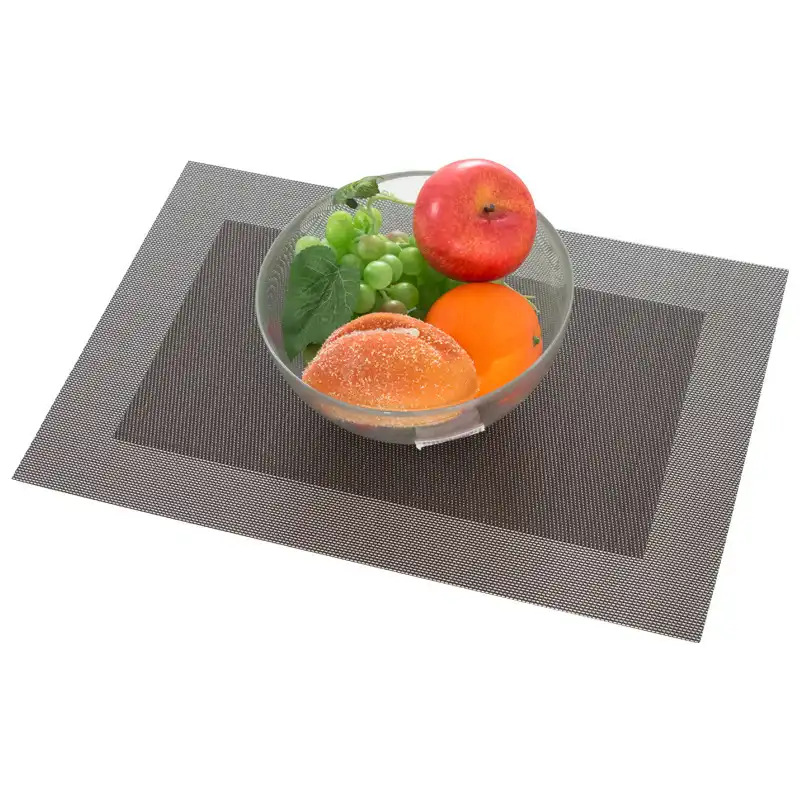
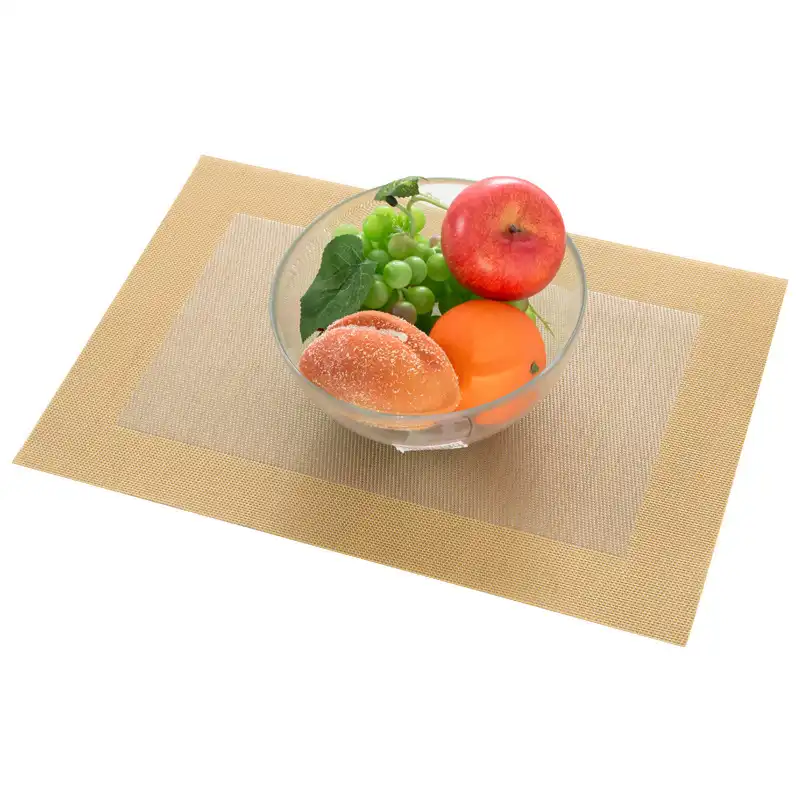
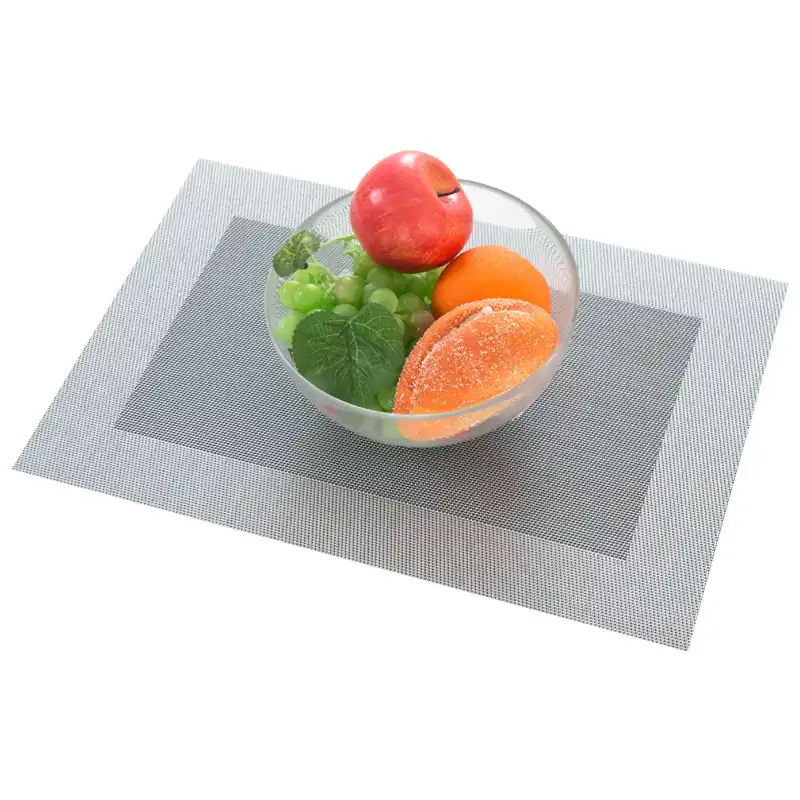
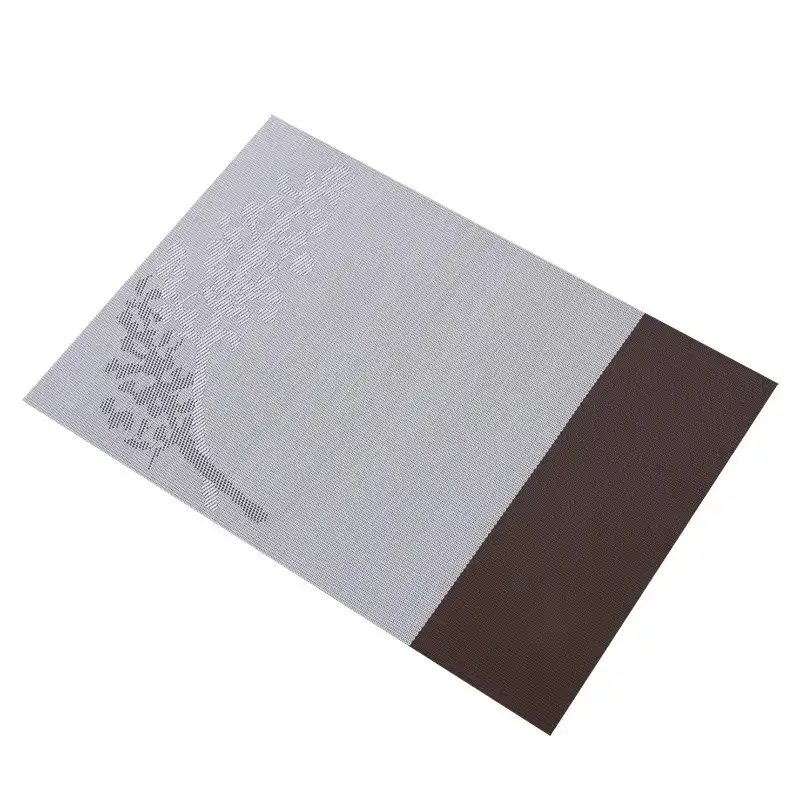
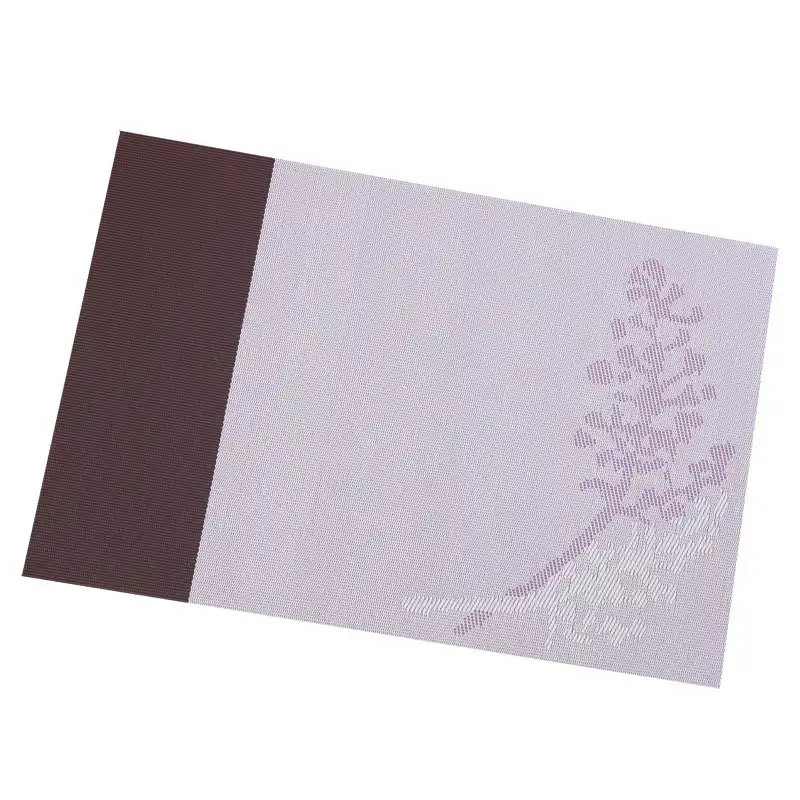
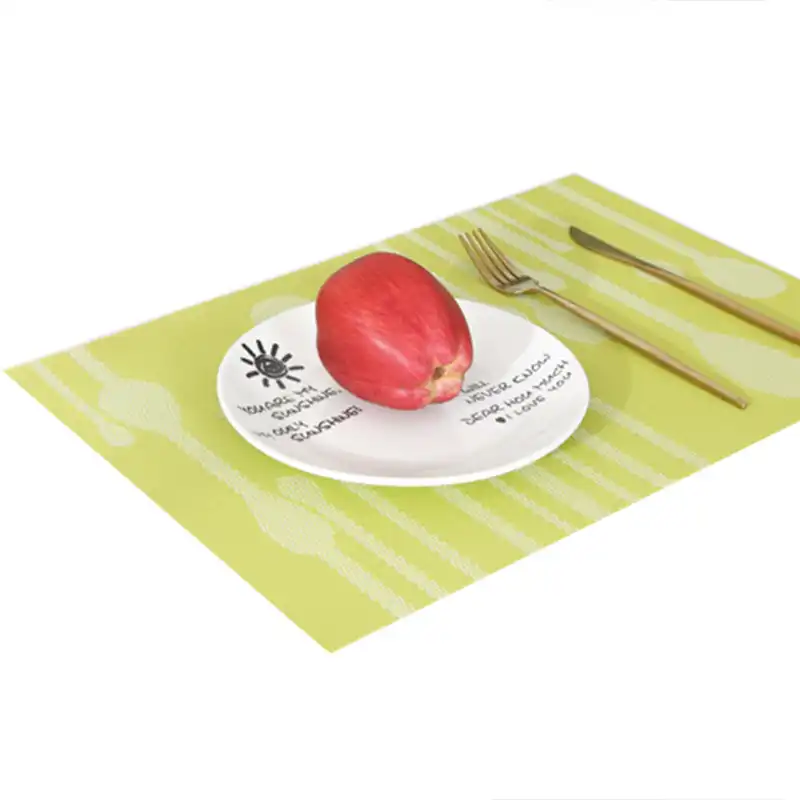
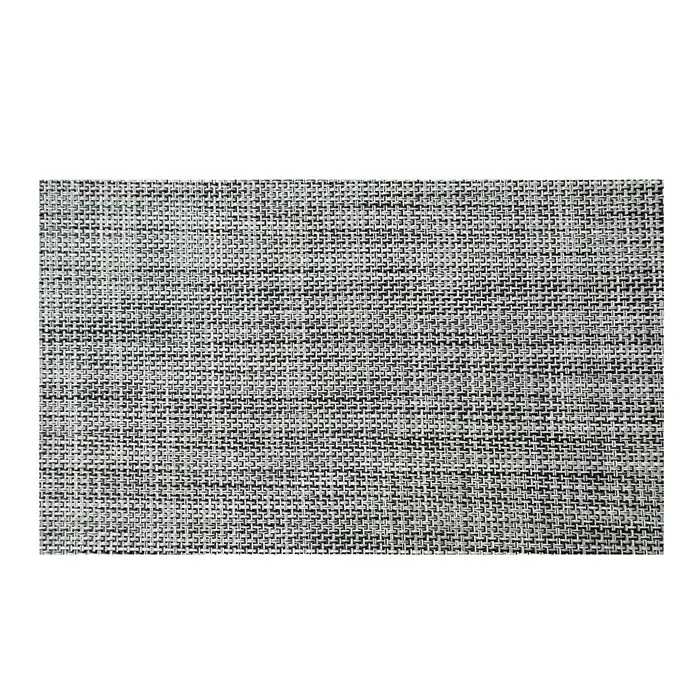
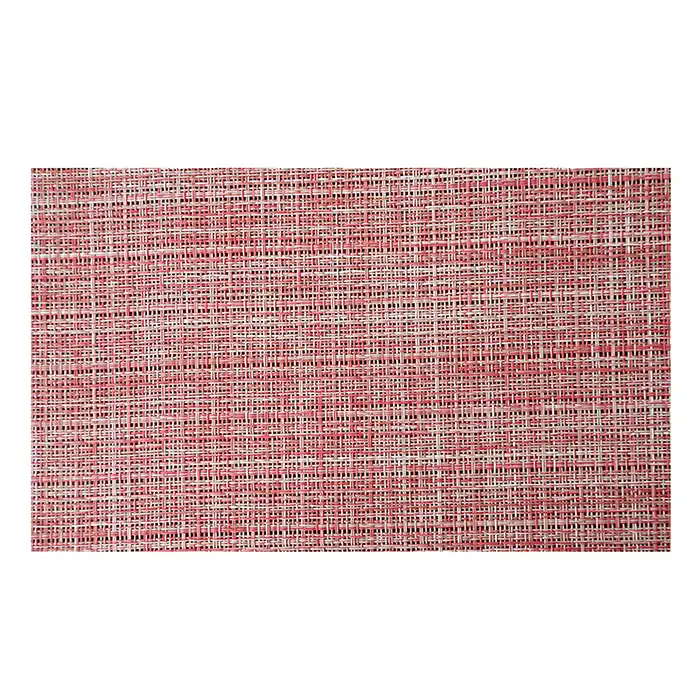
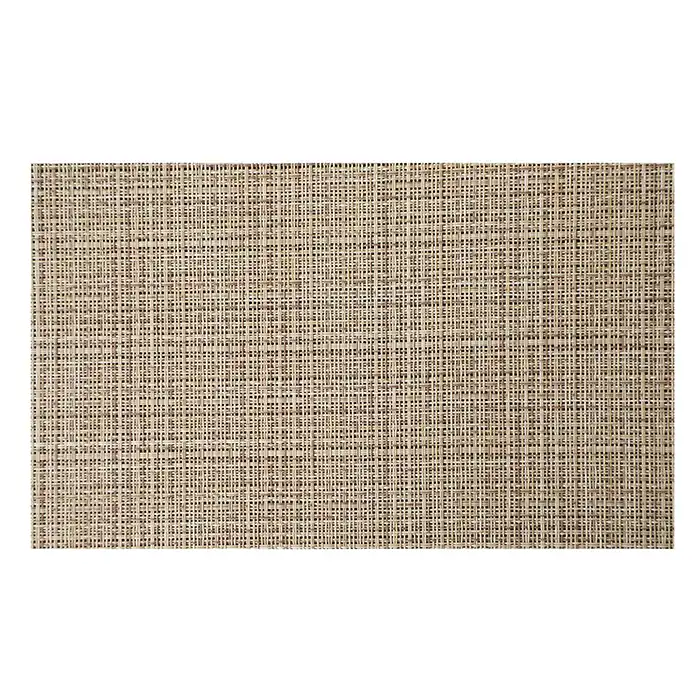
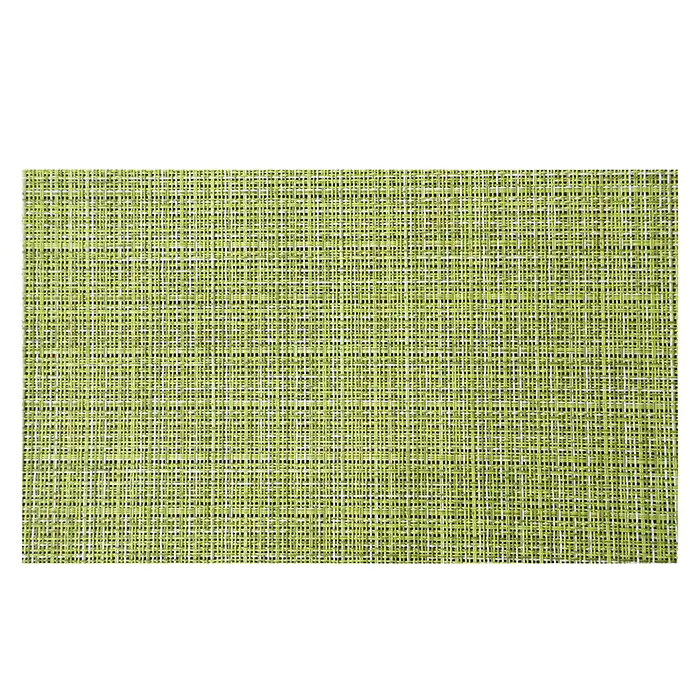
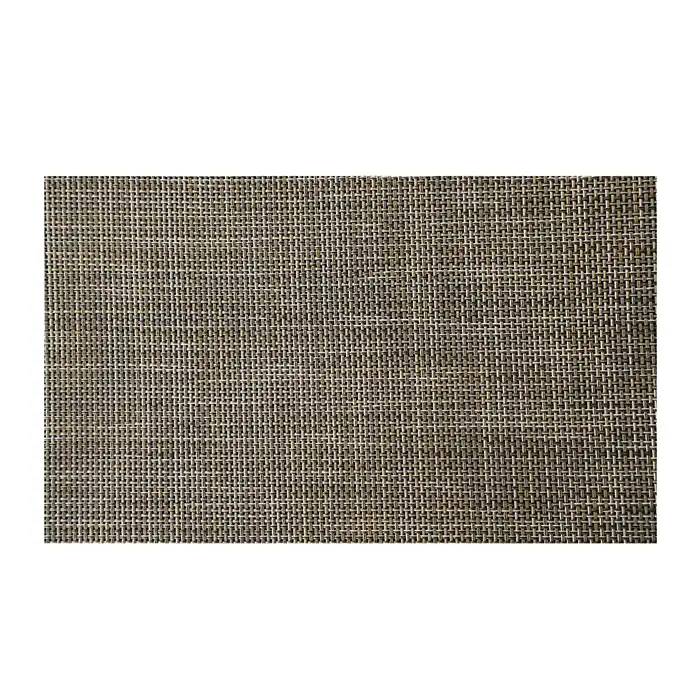
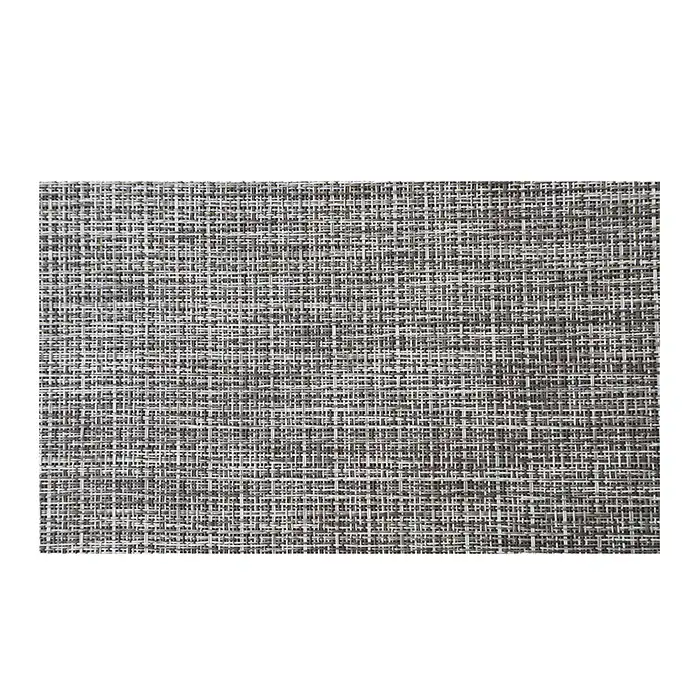
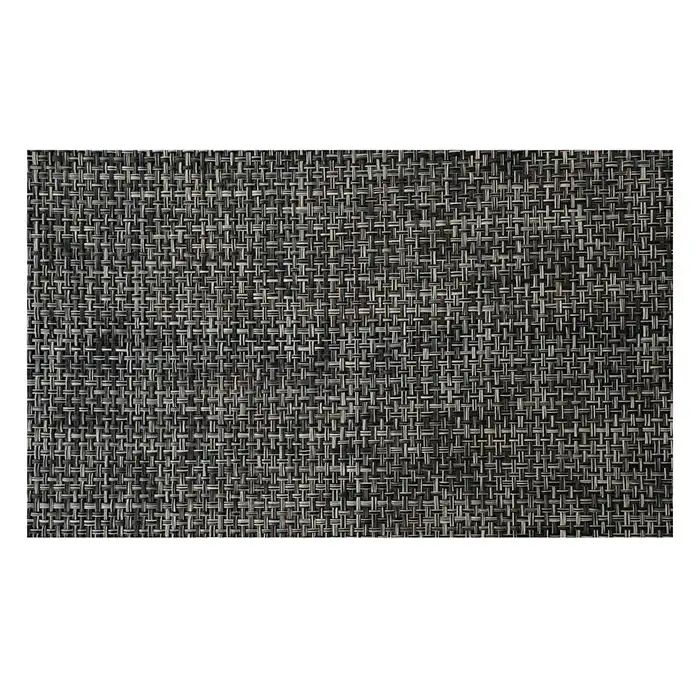
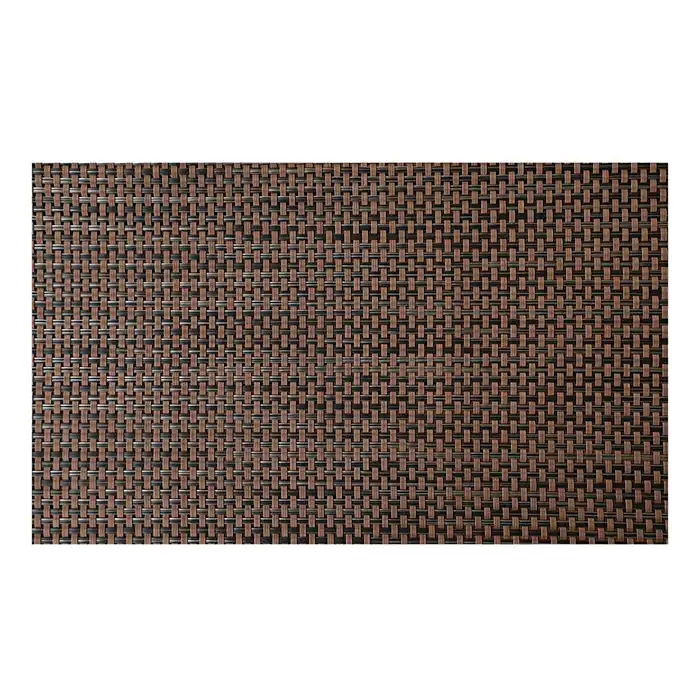
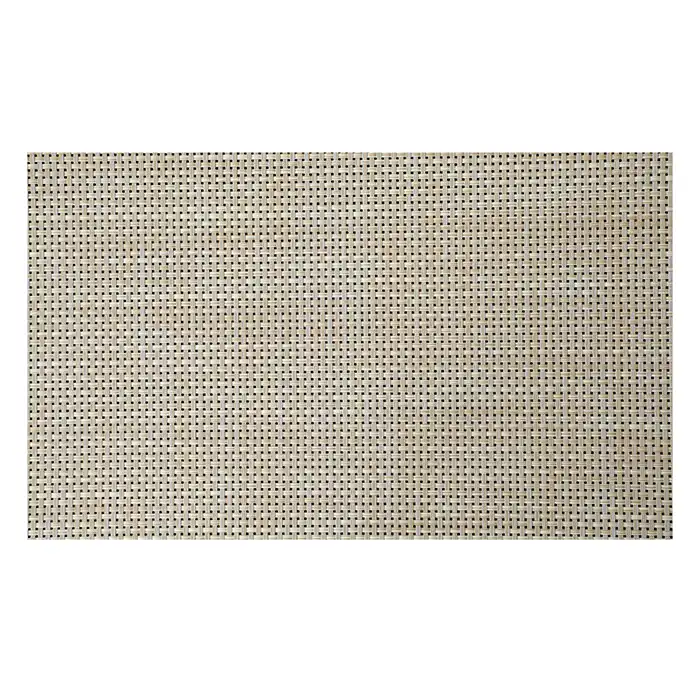
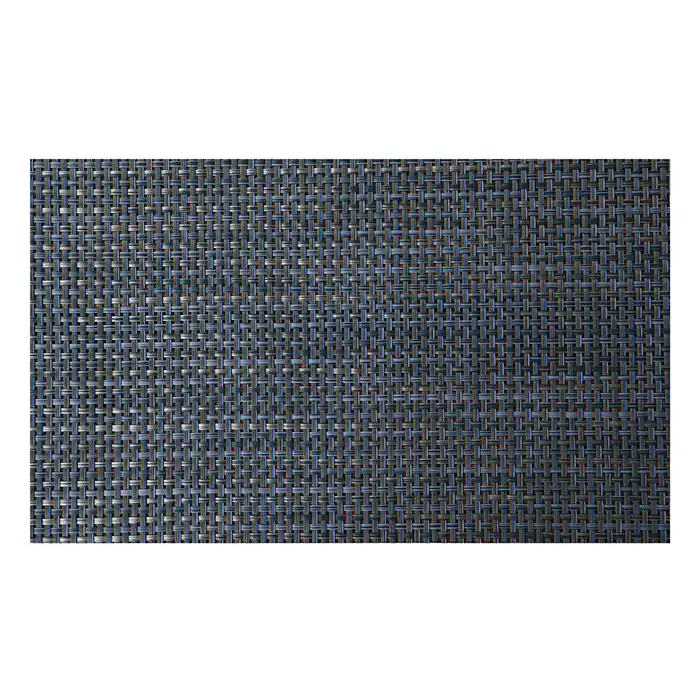
Interlaced PVC strands create a textile-like surface with more visual depth than a flat plastic placemat. The woven structure coordinates naturally with ceramic tableware, glassware, wood tables and casual dining interiors while retaining the straightforward care associated with coated synthetic materials.
The standard 45 × 30 cm rectangular format is available in a broad range of colors and weave directions, including fine textures, basketweave effects, bordered designs, plaid patterns and grid-based styles. This flexibility makes it suitable for hospitality, catering and homeware projects that need one practical construction across several visual collections.
Product Details
| Item No. | T003 |
|---|---|
| Material | Woven PVC |
| Shape | Rectangular |
| Standard Size | 45 × 30 cm |
| Surface | Textile-Look Woven Texture |
| Construction | Flexible Open-Weave Structure |
| Available Styles | Fine weave, basketweave, bordered, plaid and grid-based designs, subject to the current selection |
| Color Options | Multiple neutral, metallic-look, blue, green, red and brown directions; refer to the current color selector |
| Care | Wipe or briefly rinse, then dry flat before storage |
| Customization | Color, dimensions, weave direction, pattern selection and logo application can be reviewed for bulk projects |
Woven Texture with a More Natural Table Presence
The interlaced surface gives the placemat the appearance of woven fabric while retaining a defined, easy-care PVC structure. Alternating strands create small changes in color and reflection, helping neutral shades look more dimensional than a completely smooth solid surface.
Different weave directions produce noticeably different table moods. Fine crosshatch textures feel restrained and contemporary, while broader basketweave, plaid and bordered patterns create a stronger decorative identity.
The material should be described as woven PVC rather than linen, cotton, rattan or natural fabric. Its textile-like character comes from the woven construction, not from natural absorbent fibers.
A Practical 45 × 30 cm Format for Dining Layouts
The 45 × 30 cm rectangular size provides room for many standard dinner plates, cutlery arrangements and drinking glasses. It offers slightly more horizontal space than smaller 43 cm placemats, which can be useful when cutlery is positioned on both sides of the plate.
Suitability still depends on the complete dining layout. Buyers using oversized charger plates, wide bowls or closely spaced seating should compare the placemat width with the table dimensions and the distance between neighboring settings.
The rectangular outline works naturally on long dining tables, hotel breakfast tables, café counters and shared canteen layouts where repeated alignment is more important than a highly decorative shape.
Open-Weave Cleaning and Table Protection
The woven structure is easier to wipe or rinse than many absorbent textile placemats. Routine crumbs, light sauces and dining residue can usually be removed with a soft damp cloth, while a more thorough clean may be completed with mild detergent and a brief water rinse.
Because the surface contains small openings between the woven strands, spilled liquid may pass through and reach the tabletop. The placemat should therefore be lifted after a spill so that both the mat and the table beneath it can be cleaned and dried.
Avoid leaving food residue trapped inside the weave. Use a soft cloth or gentle brush rather than sharp tools or aggressive scrubbing that may damage or separate the strands.
Do not place the placemat in a washing machine or dishwasher unless a specific construction has been approved for that cleaning method. Avoid bleach, strong solvents and prolonged soaking, and allow the mat to dry flat before stacking.
Normal dining plates, cups, bowls and warm serving ware can be placed on the surface. Cookware taken directly from a stove or oven should be used with a separate trivet because no product-specific high-temperature rating has been confirmed.
Woven Placemat Solutions for Faster Table Resetting
This woven design is most useful for projects that want the visual warmth of a textile placemat but need a cleaning routine that does not depend on frequent laundering, ironing or wrinkle management.
When Dining Areas Need a Textile Look with Simpler Care
Hotels, cafés and restaurants can use the woven texture to soften ceramic tableware and hard tabletop surfaces. After routine service, the placemat can normally be wiped or briefly rinsed instead of being treated like conventional linen.
When Tables Are Cleared and Reset Repeatedly
Breakfast areas, casual restaurants, cafés, schools and company dining spaces may reset the same table several times each day. The lightweight woven construction is easy to lift, clean and return to the place setting once both the mat and tabletop are dry.
When One Collection Needs Several Pattern Directions
Fine weave, basketweave, plaid, bordered and grid-based designs allow buyers to develop different visual ranges around the same rectangular size. Neutral shades can support hotel and restaurant interiors, while stronger colors and metallic-look strands can be used for seasonal or retail collections.
When Spill-Through Must Be Included in the Service Routine
The open weave does not form a completely sealed barrier. For cafés, canteens and family dining, staff or users should lift the placemat after larger spills and wipe the tabletop beneath it rather than assuming all liquid remains on the surface.
Project note: Table size, plate diameter, seat spacing, selected weave, cleaning routine and the visibility of the tabletop through the open structure should be reviewed before bulk production.
Custom Woven Placemat Development and Sample Support
Woven placemat projects involve more than selecting a color. We can help buyers review the weave density, visual pattern, finished dimensions and dining application so that the selected product works with the intended table layout and service routine.
Weave and Pattern Selection
Fine and tightly arranged strands create a quieter texture, while broader basketweave and grid structures appear more decorative. Bordered and plaid designs can define the place setting more clearly, but their pattern alignment should be checked together with the finished dimensions.
The current style selector includes several weave families and color combinations. Buyers should identify the required pattern as well as the color, because the same shade can appear different when used in another weave structure.
Size and Table-Layout Review
The standard 45 × 30 cm size works with many common place settings, but another dimension may be reviewed where tables are narrow, charger plates are oversized or seat spacing is limited.
For an initial quotation, buyers can provide the required quantity, intended application, preferred dimensions, selected weave and color, logo artwork when required, and delivery destination.
Logo Application and Visibility Planning
Logo application on an open woven surface requires more review than on a smooth placemat. Very fine lettering and small graphic details may be interrupted by the texture, while simpler artwork with stronger lines may remain clearer.
A central logo may be covered by the plate. Positioning the artwork toward an outer corner or edge may improve visibility, but the final process and placement should be confirmed through a physical sample.
Sample Confirmation Before Bulk Production
A sample can be used to confirm the finished size, weave density, color combination, pattern alignment, edge finishing, logo clarity and table contact before production.
Final production should follow the approved sample and confirmed order specification. Applicable material test documents can be discussed during project review when they are available for the selected material and current specification.
Woven PVC Rectangular Placemat Frequently Asked Questions
Is a woven PVC placemat the same as a fabric placemat?
No. It has a fabric-like woven appearance, but the material is PVC rather than linen, cotton or another absorbent textile. It is generally intended for wiping or rinsing rather than conventional fabric laundering.
Will a 45 × 30 cm placemat fit a standard place setting?
It suits many dinner plates with cutlery and a drinking glass. Buyers using oversized charger plates, wide bowls or closely spaced seats should test the complete place setting before ordering.
Can liquid pass through a woven vinyl placemat?
Yes. Small openings between the woven strands may allow water, drinks or sauce to reach the tabletop. Lift the mat after a spill and clean both the placemat and the surface underneath.
How should a woven PVC placemat be cleaned?
Shake off crumbs, wipe the weave with a soft damp cloth, or briefly rinse it with mild detergent when necessary. Remove residue trapped between the strands and allow the placemat to dry flat before storage.
Can woven PVC placemats be placed in a washing machine or dishwasher?
Machine washing and dishwashing are not recommended unless the selected construction has been specifically approved for those methods. Routine wiping or brief hand rinsing provides a safer cleaning approach.
Do woven PVC placemats slide on the table?
The textured weave may provide useful contact with some clean and dry surfaces, but grip varies according to the tabletop material, finish, dust and moisture. A physical sample should be tested when a project requires a specific level of stability.
Can hot cookware be placed directly on the placemat?
It can be used beneath normal dining plates, cups, bowls and warm serving ware. Use a dedicated trivet for cookware taken directly from a stove or oven because no specific high-temperature rating has been confirmed.