
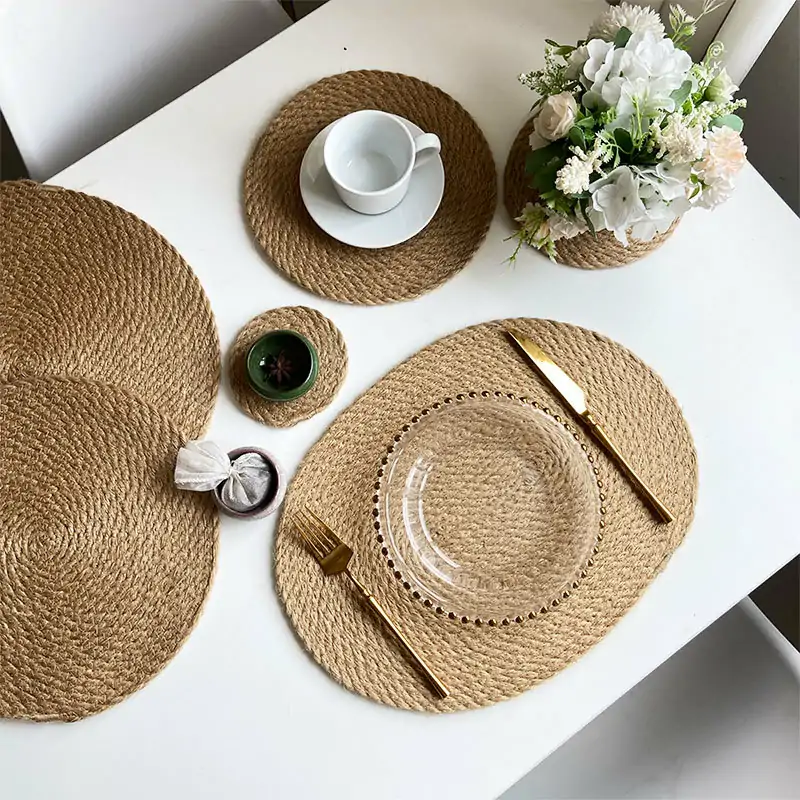
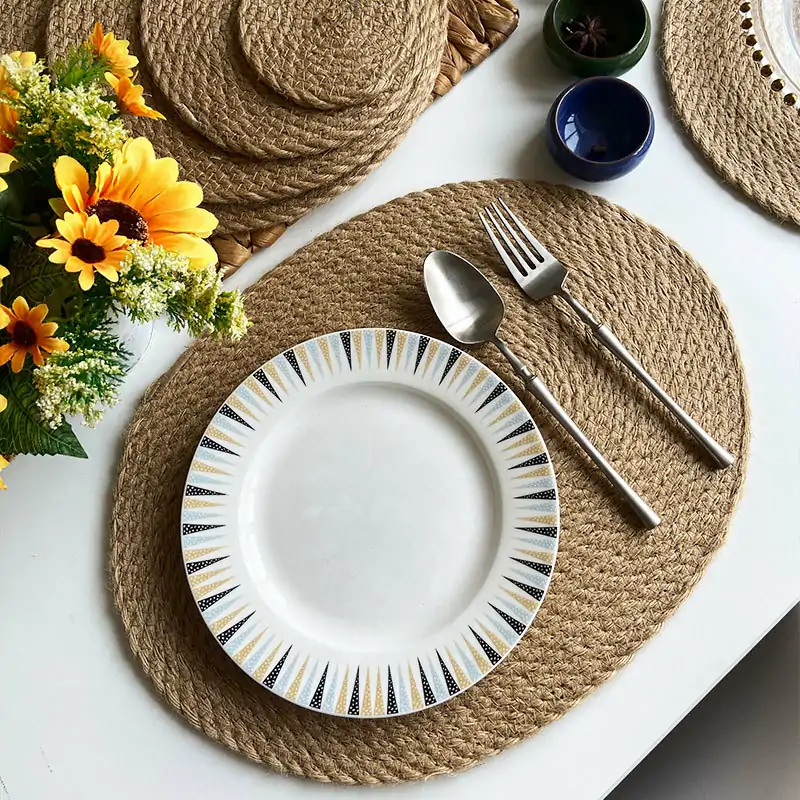
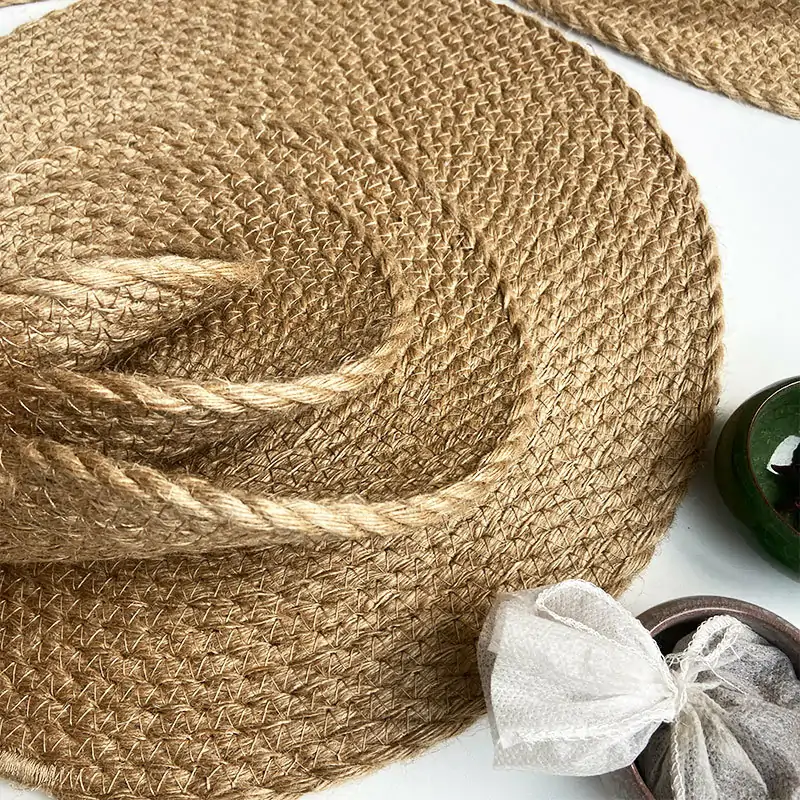
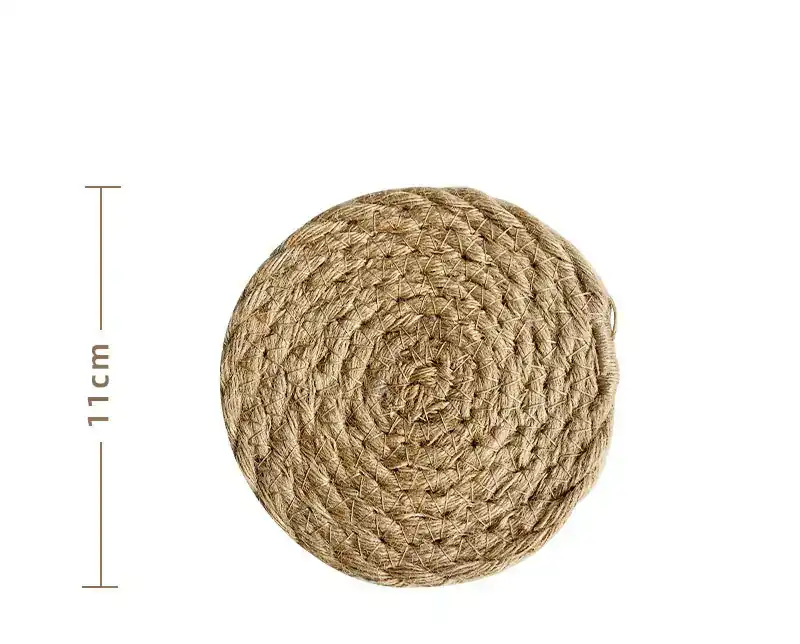
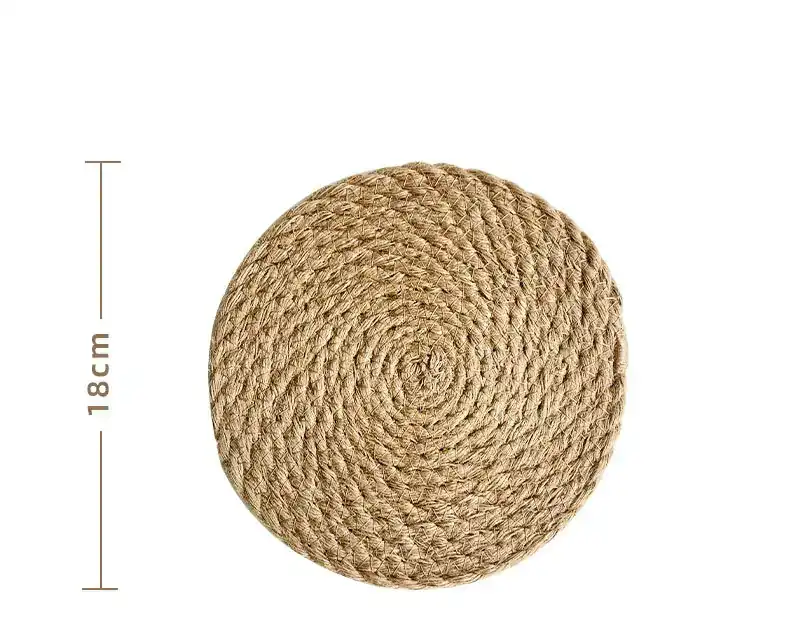
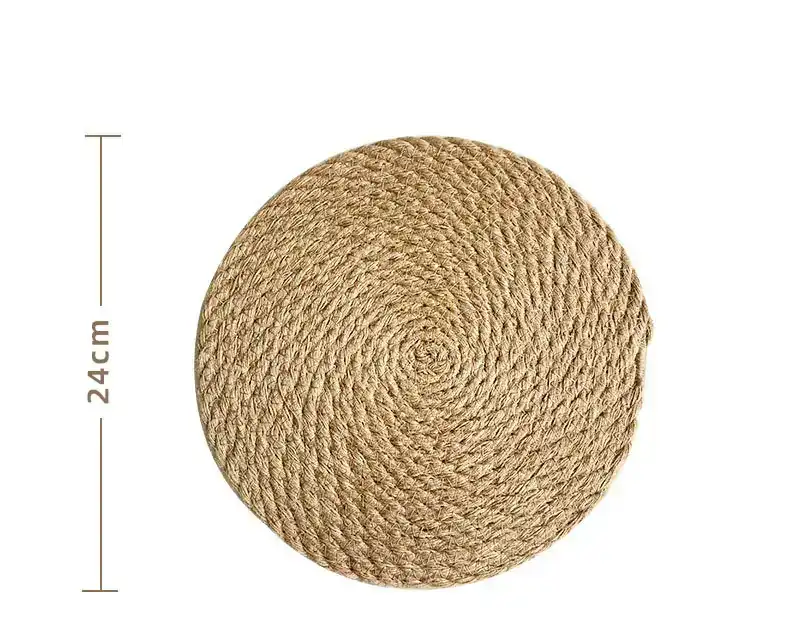
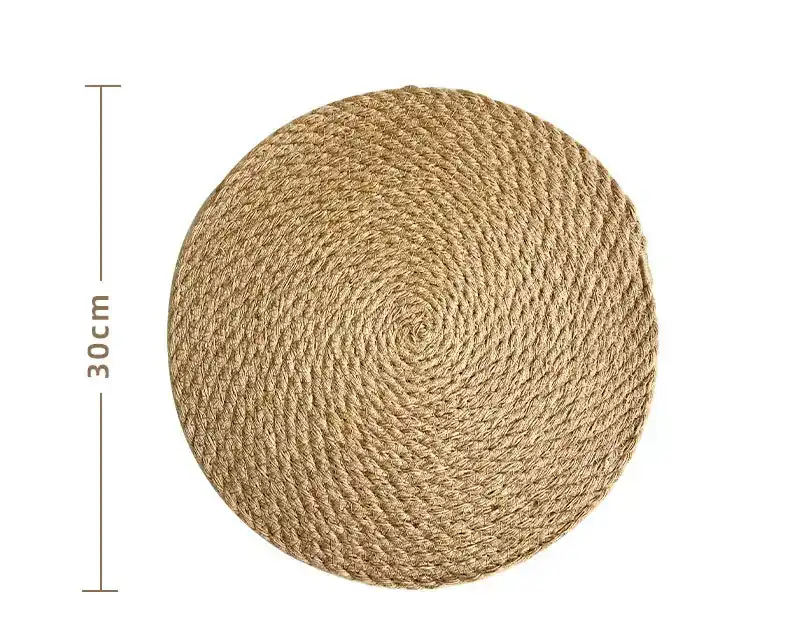
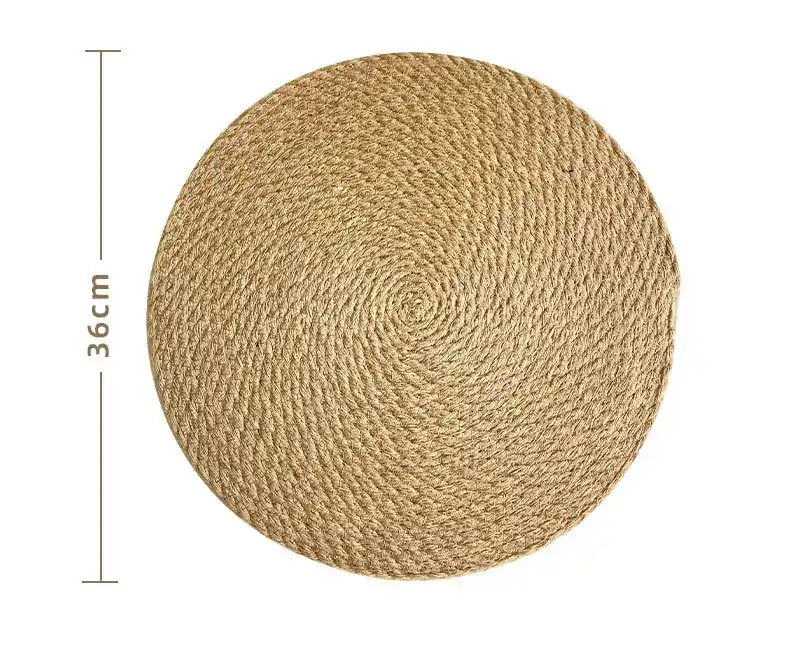
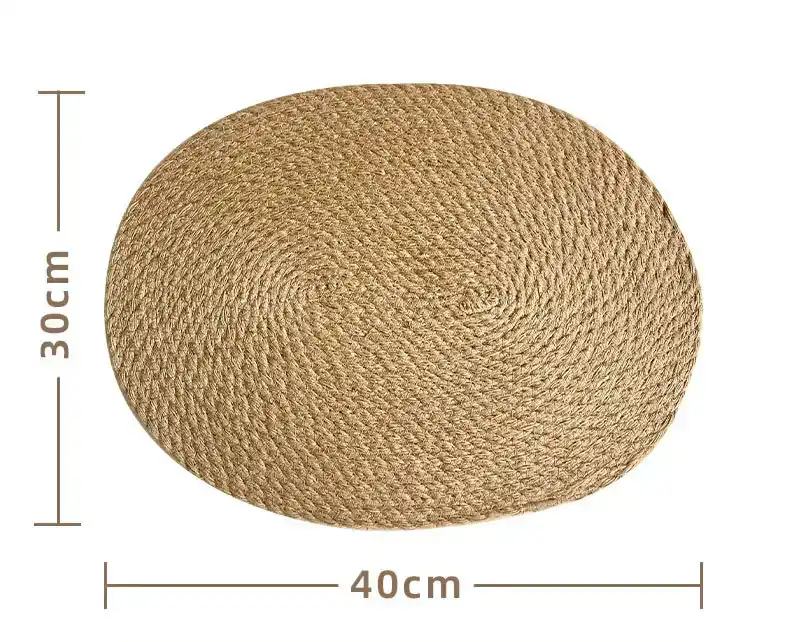
Natural jute rope is braided into a dense spiral surface, giving T032 a warm, tactile character that feels more architectural than a flat fabric placemat. The undyed fiber tone brings softness to white ceramics, glass tableware and metal accents while allowing the braided structure to remain the main visual detail.
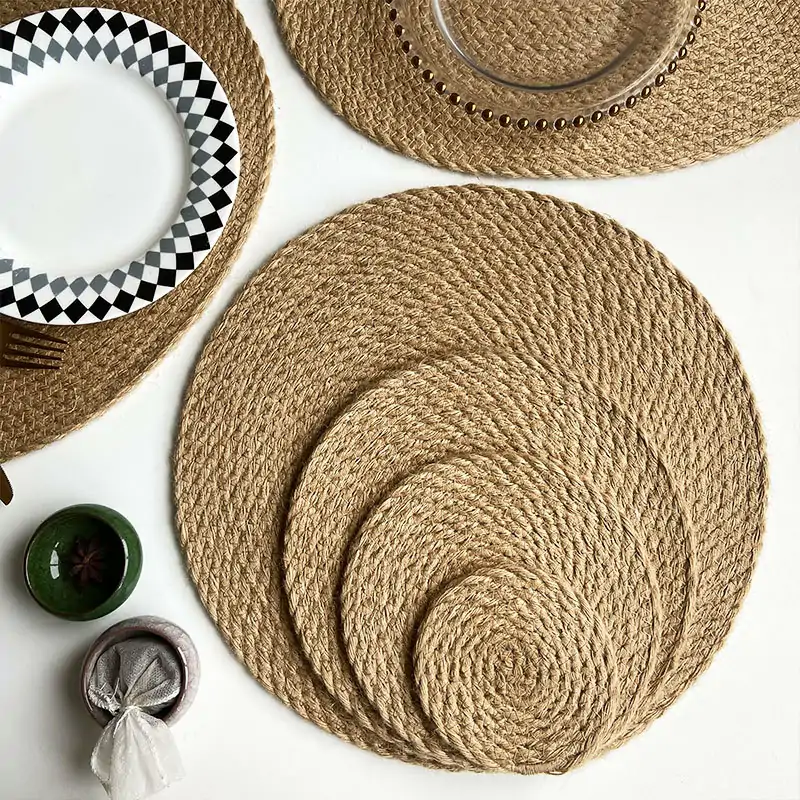
Six available sizes extend the same material language from small cup mats and decorative pads to full place settings. Buyers can use one size alone or combine several diameters to create a coordinated tabletop collection.
Product Details
| Material | Natural Jute |
|---|---|
| Construction | Spiral Braided and Stitched Structure |
| Thickness | Approx. 7 mm |
| Available Shapes | Round and Oval |
| Round Sizes | 11 cm, 18 cm, 24 cm, 30 cm and 36 cm |
| Oval Size | 30 × 40 cm |
| Approximate Weights | 30 g, 80 g, 130 g, 200 g, 290 g and 290 g, depending on size |
| Natural Appearance | Warm Jute Tone with Visible Fiber Variation |
| Care | Dry Clean or Spot Clean; Avoid Soaking |
| Customization | Selected Sizes, Sets, Labels and Packaging Subject to Review |
Choosing the Right Size
T032 is a coordinated size family rather than one single placemat. The smaller formats work as accessories, while the larger pieces provide enough visible surface to frame plates and complete individual place settings.
| 11 cm Round | Coffee cups, glasses, candles and small decorative objects |
|---|---|
| 18 cm Round | Teapots, small bowls, plant pots and serving accessories |
| 24 cm Round | Dessert plates, serving bowls and decorative tabletop layering |
| 30 cm Round | Compact breakfast settings, bowls and smaller plates |
| 36 cm Round | Standard individual dining settings and charger-style presentation |
| 30 × 40 cm Oval | Dinner plates with cutlery and more complete place settings |
For restaurants or multi-seat tables, buyers should compare the selected size with the plate diameter, cutlery arrangement and space between neighboring settings. The 36 cm round and 30 × 40 cm oval formats are the most practical starting points for full dining layouts.
Styling the Natural Jute Texture
This placemat looks best when the surrounding table allows its coarse braided texture to provide contrast. It should feel like a deliberate natural layer rather than one more rustic item added to an already crowded setting.
Warm Minimal and Modern Organic Interiors
Pair the jute with a warm-white tablecloth, pale oak table, off-white stoneware and clear glassware. Brass, brushed gold or matte-black cutlery introduces a cleaner structural accent against the rough natural fiber.
Use only a restrained amount of greenery or one simple floral arrangement. This keeps the setting contemporary and prevents the natural material from becoming overly rustic.
Farmhouse and Harvest Table Settings
On medium or dark wood tables, the natural jute tone works well with cream linen napkins, amber glassware, ceramic plates and seasonal flowers. Orange, deep green and muted burgundy accents can create an autumn or holiday atmosphere without changing the placemat itself.
Avoid combining it with too many rope accessories, fringed runners, wicker baskets and heavily distressed decorations at once. One or two woven elements are enough to create warmth; additional layers should come from ceramics, glass or linen.
Coastal, Resort and Casual Hospitality
The braided fiber complements light wood, limestone tones, white ceramics and soft blue or sea-green accents. This makes it suitable for resort breakfasts, garden cafés, coastal dining rooms and relaxed boutique hospitality projects.
For a more refined resort presentation, combine the jute with smooth glass plates or glazed ceramics. The contrast between the transparent or polished tableware and the rough woven surface keeps the arrangement from feeling too informal.
Tabletop Displays and Product Photography
The different sizes can create visual hierarchy in retail displays and styled photography. Use a 36 cm or oval mat beneath a plate, an 18 cm piece under a vase, and an 11 cm coaster beneath a cup or candle.
This layered approach is especially useful for homeware collections because the repeated spiral texture connects several objects without requiring identical colors or printed patterns.
Pairings That Work Best
White, cream, sage, terracotta and muted blue table linens
White stoneware, handmade ceramics and clear glass charger plates
Light oak, walnut, painted white and natural stone tabletops
Brass, brushed gold, black or antique-finish cutlery
Linen napkins, simple candles and restrained seasonal greenery
Highly patterned tablecloths can compete with the dense spiral texture. Very glossy chrome accessories, neon colors and heavily ornamental tableware may also feel disconnected from the warm natural fiber unless they are used as a controlled contrast.
Natural Variation and Everyday Care
Jute is a natural plant fiber, so minor differences in tone, fiber thickness, braided alignment and finished dimensions should be expected. These variations contribute to its material character but should be reviewed through an approved sample when consistency is important.
Shake away crumbs and dry debris after use. Liquid spills should be blotted promptly with an absorbent cloth rather than rubbed deeper into the braid. For localized marks, use a lightly damp cloth with a small amount of mild detergent and allow the mat to dry completely in a ventilated area.
Do not machine wash, bleach or soak the placemat. Excess moisture may affect the natural fibers and the finished shape. Store the mats flat in a dry environment and avoid stacking them while damp.
The thick braided construction provides separation beneath plates, bowls and serving pieces, but it should not automatically be treated as a high-temperature trivet. Cookware taken directly from a stove, oven or open flame requires material-specific testing.
Customization and Wholesale Orders
Wholesale projects may combine several sizes into coaster, trivet and placemat sets. Available options may include selected dimensions, mixed-size packaging, paper sleeves, woven labels, hangtags and customized outer cartons.
Fine direct printing is generally unsuitable for the coarse braided surface. Branding is better applied through a sewn label, leather-look tag, printed sleeve or outer packaging, depending on the required style and order quantity.
When requesting a quotation, provide the required sizes, quantity per size, set configuration, labeling requirements, packaging format and delivery destination. A sample is recommended for checking the actual fiber tone, thickness, edge shape and fit with the intended tableware.
Frequently Asked Questions
Which size is best for a full place setting?
The 36 cm round and 30 × 40 cm oval options are the most suitable for dinner plates and individual place settings. Smaller sizes are better used as coasters, bowl mats or decorative accessories.
Can the jute placemat be washed with water?
It should not be soaked or machine washed. Shake off dry debris, blot spills promptly and spot clean with a lightly damp cloth before drying it completely.
Can it be used beneath hot pots?
The thick braid provides separation beneath normal tableware and warm serving pieces. Use beneath cookware taken directly from a stove or oven should only be confirmed after suitable heat testing.
Will every placemat look exactly the same?
Minor differences in fiber tone, braid alignment and dimensions are normal for natural jute products. An approved sample should be used when a project requires close visual consistency.
Can different sizes be packed as one coordinated set?
Mixed-size sets, labels, paper sleeves and customized outer packaging may be developed for bulk orders. The final configuration depends on the selected sizes, quantity and packaging requirements.