
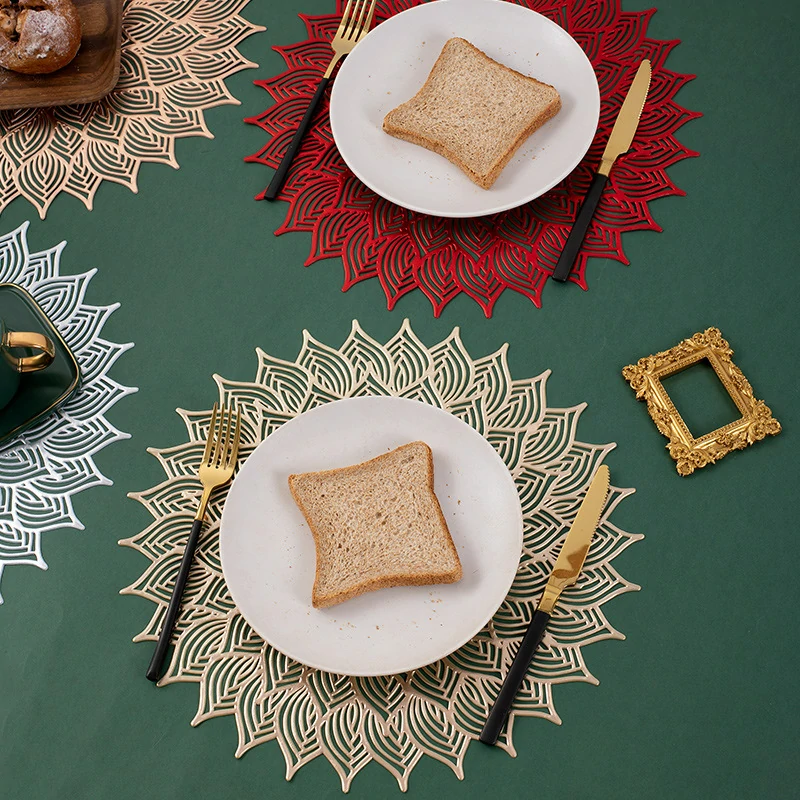
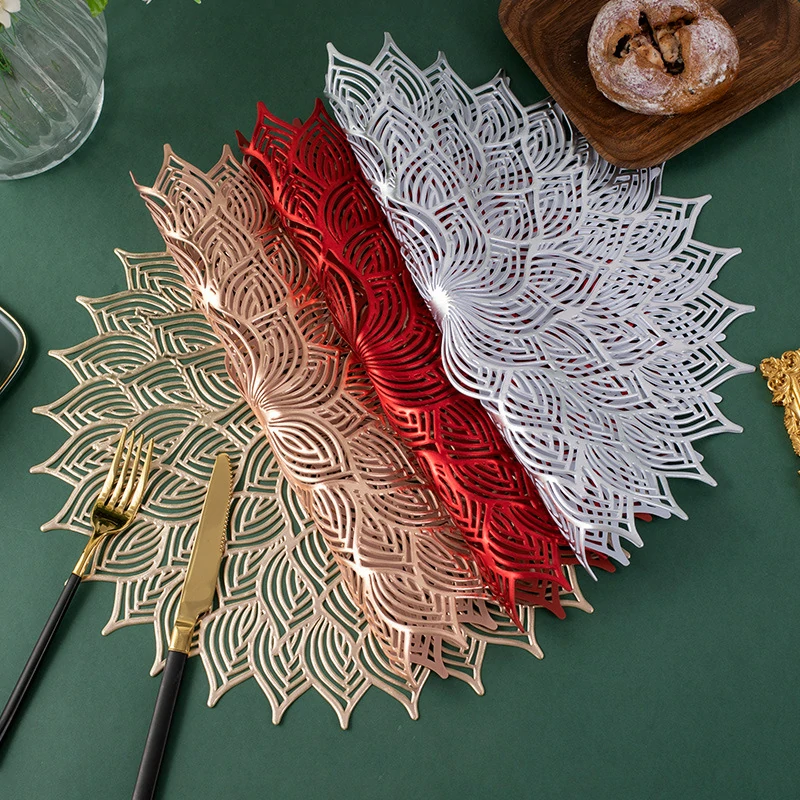
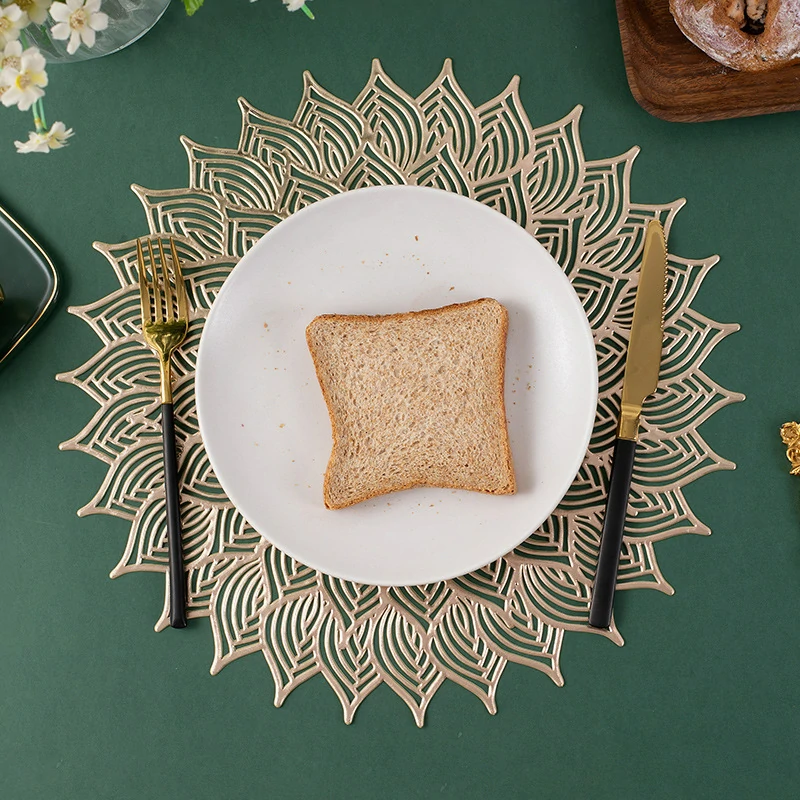
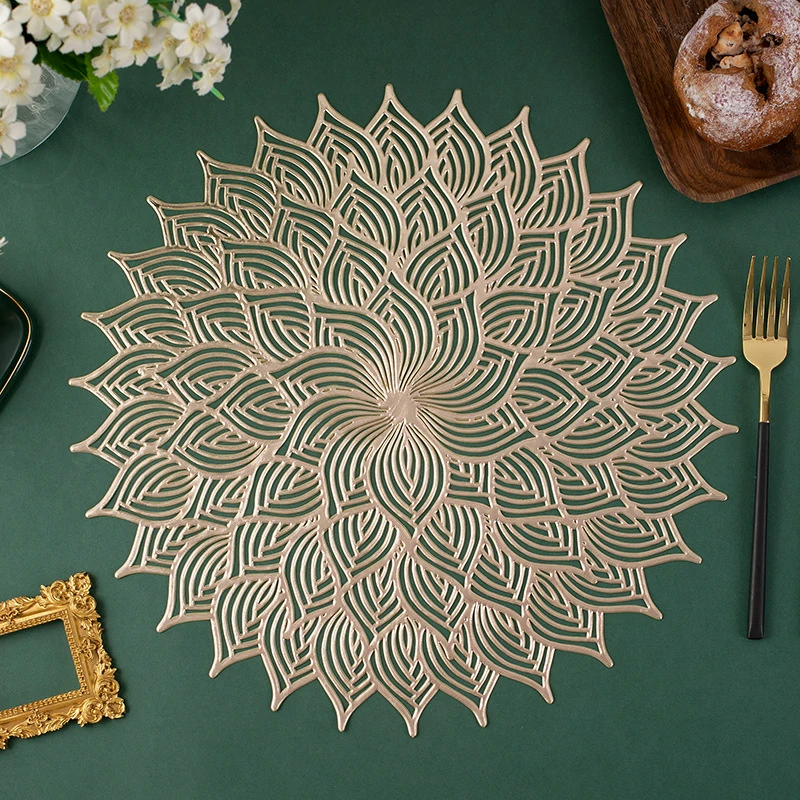
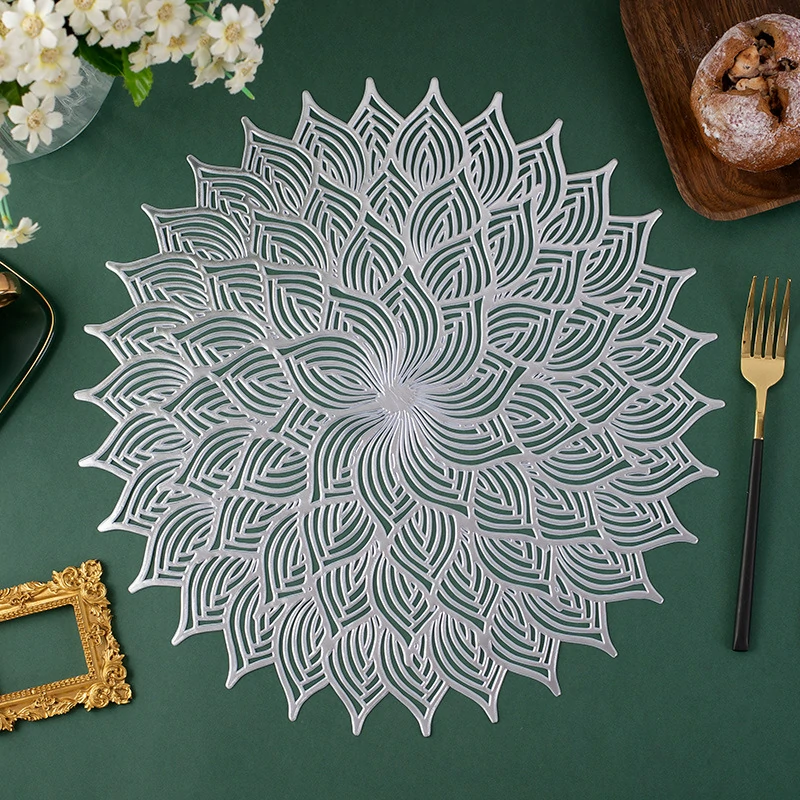
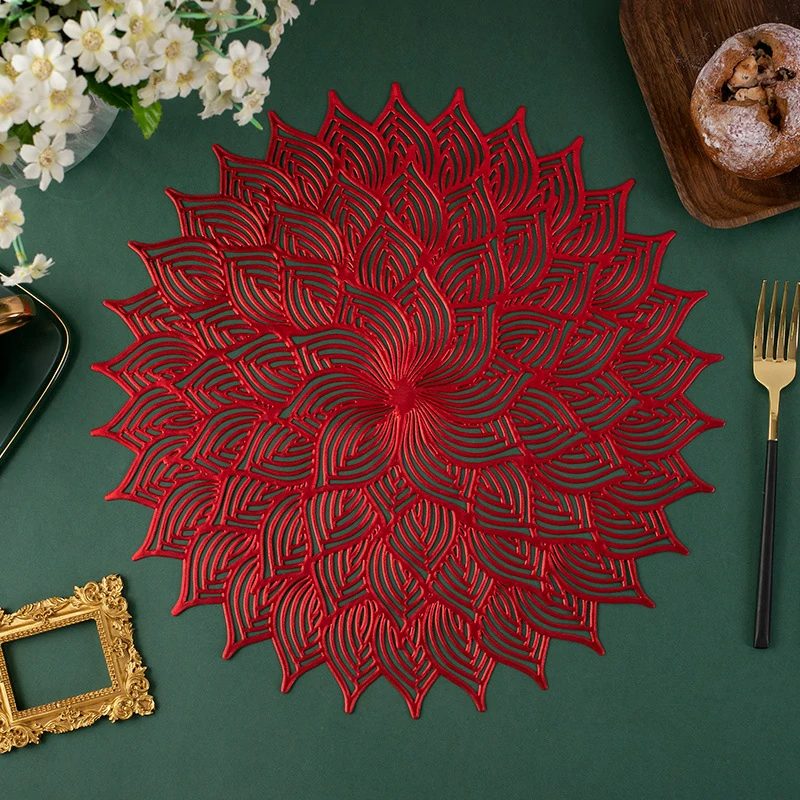
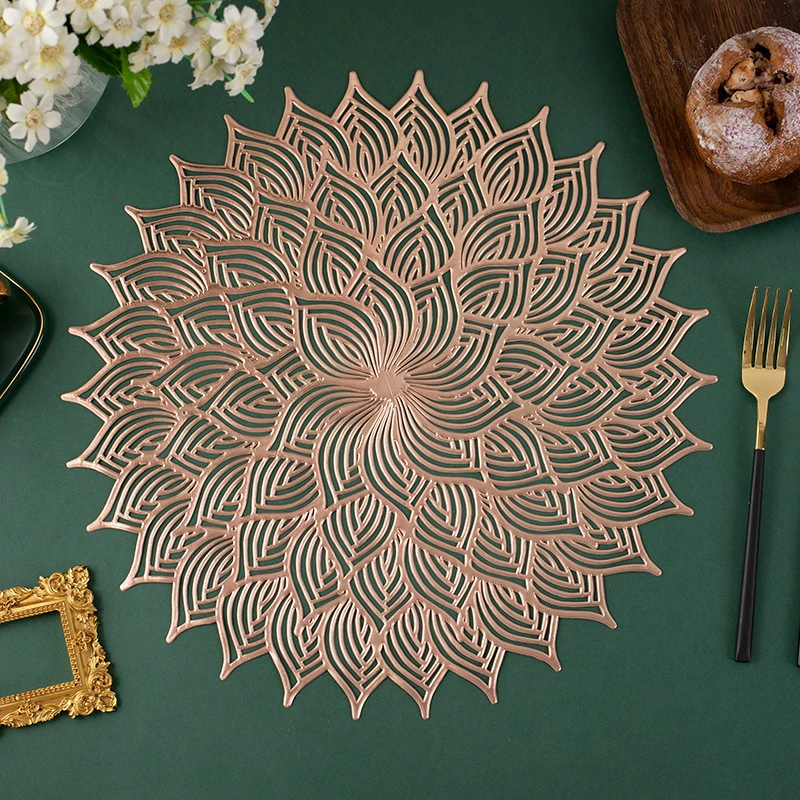
This is not a background placemat designed to disappear beneath the plate. Its radiating peacock-feather pattern is intended to remain visible, turning each place setting into part of the table decoration.
The openwork design allows the table surface or tablecloth beneath it to show through the pattern. Gold, silver, red and rose-gold finishes can therefore be combined with different background colors for weddings, banquets, afternoon tea service, seasonal dining and decorative displays.
Product Details
| Material | 70% PVC and 30% Polyester Yarn |
|---|---|
| Shape | Round Openwork Silhouette |
| Standard Size | Approx. 38 cm Diameter |
| Pattern | Radiating Peacock-Feather Design |
| Surface Appearance | Metallic-Look Decorative Finish |
| Color Options | Gold, silver, red and rose gold |
| Construction | PVC-Coated Polyester with Decorative Openwork |
| Primary Use | Decorative Place Settings, Events and Centerpiece Displays |
| Care | Wipe or rinse gently, then dry flat before storage |
| Customization | Color, dimensions and suitable logo applications may be reviewed for bulk projects |
| Documentation | Applicable material test documents may be provided for selected specifications upon request |
A Peacock-Feather Pattern Designed to Remain Visible
The design begins with a compact centre and expands outward through repeated feather-like sections. Each layer turns slightly as it moves toward the edge, producing a circular pattern with more movement than a conventional flower or plain round placemat.
Placing a plate in the centre leaves much of the radiating pattern visible around it. The outer feather points form a decorative frame, while the open areas prevent the design from becoming a solid metallic block beneath the tableware.
The pattern can be read in different ways depending on the table setting. From a distance, it resembles a circular ornamental motif. Viewed more closely, the repeated pointed sections reveal the peacock-feather inspiration.
Because the outline is detailed, the mat should be approved as a complete finished piece. A small material sample can confirm color, but it cannot show whether the pattern centre, outer points and overall circular balance meet the project requirements.
The Tablecloth Becomes Part of the Design
The openwork construction allows the surface beneath the placemat to remain visible. Instead of treating the tablecloth only as a background, buyers can use it as a second color within the finished pattern.
A gold placemat over dark green, navy, burgundy or black creates stronger contrast and a more formal atmosphere. The same gold finish over cream or white produces a lighter wedding or afternoon-tea presentation.
Silver works well over charcoal, white, blue and cool gray backgrounds. Rose gold can be combined with ivory, blush pink, taupe or warm stone colors, while red creates a stronger seasonal or celebration-focused result.
The tablecloth should be tested together with the placemat before a large event order. Very similar colors may reduce the visibility of the openwork, while an overly strong background can compete with the plate and food presentation.
Four Metallic Color Directions for Different Themes
Gold for Ceremonial and Formal Table Settings
Gold creates the clearest sense of occasion. It is suited to wedding receptions, anniversary dinners, festive banquets and private dining rooms where warm lighting and metallic cutlery are already part of the interior.
White or cream plates keep the setting balanced and allow the feather pattern to remain visible without making the table appear overly ornate.
Silver for Cooler Contemporary Interiors
Silver gives the detailed pattern a cleaner and more modern appearance. It can be paired with white porcelain, clear glassware, black cutlery or gray table linens for hotel dining, product launches and contemporary event spaces.
It is also the most adaptable option where the buyer wants a decorative outline without introducing a warm gold tone.
Rose Gold for Weddings and Afternoon Tea
Rose gold softens the metallic effect and works naturally with blush, ivory, champagne and warm neutral table palettes.
Its lighter character makes it useful for bridal events, dessert displays, afternoon tea service, boutique cafés and seasonal retail presentations.
Red for Celebrations and Seasonal Displays
Red creates the strongest color statement in the range. It is suited to holiday dining, cultural celebrations, themed restaurants and promotional displays where the table setting is expected to attract immediate attention.
For a more controlled result, combine it with plain white tableware and a dark or neutral tablecloth rather than adding several competing patterns.
Metallic-looking surfaces can appear brighter or darker under different lighting. Final color should be approved from a physical sample in lighting similar to the intended venue.
Focused Table Solutions for Decorative Service
Wedding Receptions and Banquet Place Settings
A wedding table often needs more than a basic protective mat, but not every project requires a separate charger plate, embroidered linen and multiple decorative layers.
This openwork placemat creates a defined metallic frame around a standard dinner plate while allowing the selected tablecloth color to remain visible. It can help connect cutlery, candleholders, chair details and floral arrangements without introducing another printed motif.
For multi-seat banquet layouts, confirm the 38 cm diameter together with the plate size, cutlery position and distance between neighboring settings. Large chargers or narrow banquet tables may require additional spacing tests.
Boutique Hotels and Afternoon Tea
Afternoon tea and dessert service use smaller plates, cups and serving pieces, leaving more of the peacock-feather pattern exposed than a full dinner setting.
Gold and rose gold can support warmer, more decorative presentations, while silver works with cooler hotel interiors. The mat may be placed beneath an individual tea setting or used under a shared cake stand where the pattern remains visible around the base.
Private Dining and Feature Restaurant Tables
This design is better suited to selected feature tables than to a high-volume dining room where every table requires a completely neutral background.
A restaurant can use it in private rooms, tasting-menu service, window tables or celebration packages. Limiting it to a defined area makes the decorative pattern feel intentional rather than repetitive.
Holiday and Themed Events
The four colors allow the same pattern to be adapted to different event directions. Gold may support formal celebrations, red can suit festive dining, silver works for winter themes, and rose gold fits softer wedding and spring presentations.
Because the peacock-feather motif is already visually detailed, accompanying napkins, plates and table runners should generally remain simpler.
Centerpieces, Flowers and Dessert Displays
The mat does not have to be used only beneath a dinner plate. Its circular composition also works as a base beneath a flower arrangement, candle group, decorative bowl, cake stand or product display.
When used as a centerpiece base, the object should not cover the entire pattern. A narrower vase or stand allows the feather layers to radiate outward and remain part of the presentation.
Retail Windows and Photography Styling
The metallic outline and recognizable shape make the placemat useful for homeware displays, seasonal windows, catalogue photography and social-media table styling.
Retailers can display the four colors as a coordinated decorative series rather than presenting them as four unrelated products.
Project note: Confirm the tablecloth color, plate diameter, cutlery layout, lighting and spacing between settings before approving a large event or hospitality order.
Where This Design Is Less Suitable
The detailed openwork pattern is not intended to replace a plain, sealed table-protection mat in every situation.
For school dining, staff canteens, children’s daily meals or other environments with frequent liquid spills, a continuous PVC faux leather surface may provide a simpler cleaning routine.
The feather-like openings can collect crumbs, and liquid can pass through to the tabletop or tablecloth below. The mat and the surface beneath it should therefore both be checked after service.
Its decorative character may also be unnecessary where patterned tableware, printed tablecloths and elaborate centrepieces are already used together. In those settings, reducing the number of competing elements usually creates a more controlled presentation.
Understanding the Openwork Construction
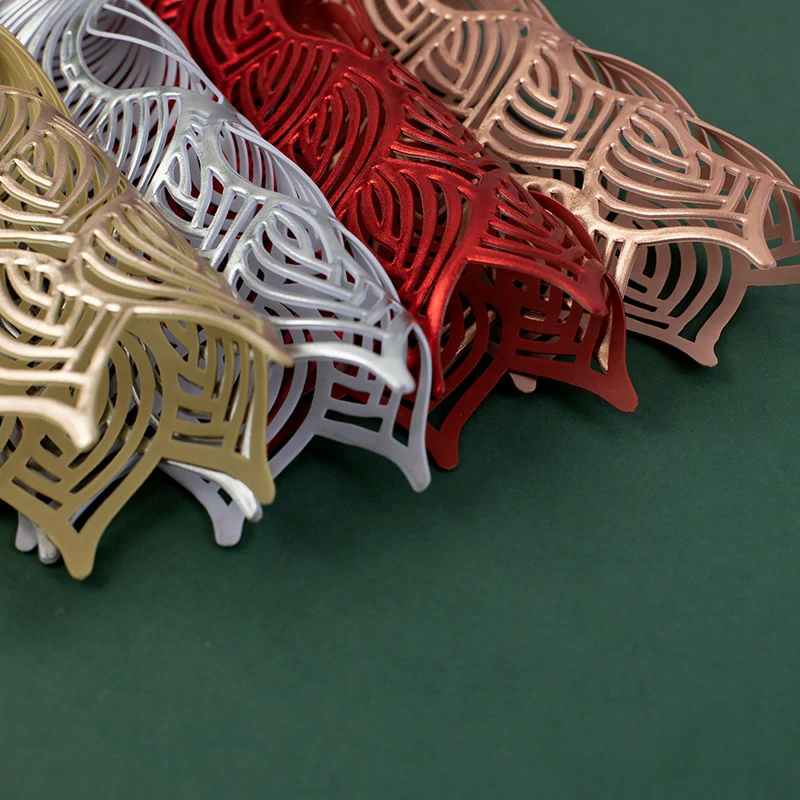
The placemat is made from a PVC and polyester-based material with a decorative openwork pattern. It is flexible rather than a rigid metal charger.
The word “metallic” describes its visual finish. Gold, silver and rose-gold versions are not made from solid metal and should not be handled or cleaned as metal tableware.
The openings are an intentional part of the design. They allow the background color to participate in the finished arrangement, but they also mean that the placemat is not a sealed barrier against water, sauces or oil.
If a spill occurs, remove the plate, lift the mat and clean the table or tablecloth underneath. Leaving moisture trapped beneath a decorative mat may mark sensitive wood, lacquered or polished surfaces.
Cleaning the Feather-Like Openwork
Shake away loose crumbs after use. Wipe the surface with a soft damp cloth or sponge, following the direction of the openwork sections rather than pressing residue further into the narrow spaces.
For residue caught between the pattern openings, use mild detergent and a soft brush. Work gently from both sides and avoid pulling individual sections of the design.
A brief rinse may be used when necessary. After rinsing, remove excess water and dry the placemat flat before stacking or returning it to the table.
Avoid abrasive pads, metal brushes, sharp scrapers, bleach, alcohol and strong solvents. These may scratch the metallic-looking surface or damage the narrow openwork details.
Do not machine wash, tumble dry or leave the mat soaking for long periods. Store it flat whenever possible. Loose rolling may be acceptable for short-term transport, but sharp folding can crease or distort the feather points.
Use the mat beneath normal plates, cups and serving pieces. Cookware taken directly from a stove or oven should be placed on a dedicated heat-resistant trivet.
Custom Development for Events and Decorative Collections
For this product, successful customization depends on maintaining the relationship between the centre, the repeating feather sections and the finished outer diameter.
Color Selection and Project Matching
Current options include gold, silver, red and rose gold. Additional color directions may be reviewed according to order quantity, material availability and production feasibility.
Color approval should include the intended tablecloth or tabletop. The same placemat may look significantly different over white, black, green or burgundy backgrounds because those colors remain visible through the open areas.
Custom Diameter Review
The standard diameter is approximately 38 cm. Other sizes may be discussed for dessert service, centrepieces or larger decorative table settings.
Changing the diameter requires more than enlarging or reducing the outer edge. The feather width, spacing, centre proportion and stability of the openwork sections must also be reviewed.
Logo Application
Logo placement is more limited than on a solid placemat because much of the surface is open. A mark should not interfere with the radiating pattern or be positioned where the plate will cover it.
Depending on the available solid area and artwork, simple foil stamping, screen printing or another suitable method may be reviewed. Fine lettering and complex logos require sample testing.
For event branding, a separate removable tag, table card or printed menu may sometimes provide better visibility than forcing a large logo into the decorative pattern.
Wholesale and Event Orders
Bulk orders can be reviewed for wedding planners, banquet suppliers, hotels, restaurants, event-rental companies, homeware distributors and decorative tabletop brands.
For quotation, provide the required quantity, selected color, preferred diameter, intended table setting, required delivery date, logo artwork when applicable and delivery destination.
Large event orders should allow time for sample confirmation before production. The final sample should be checked with the actual plate, table linen and venue lighting whenever possible.
Repeat-Order Control
Repeat orders should reference the approved sample and confirmed specification so that the color, surface appearance, pattern scale, centre alignment and finished diameter remain consistent.
Final production should follow the approved sample. Customization applies to the placemat itself; custom packaging is not included.
Metallic Peacock-Feather Openwork PVC Placemat Frequently Asked Questions
Is this placemat made from real peacock feathers?
No. Peacock feather describes the radiating decorative pattern. The placemat is made from a PVC and polyester-based material.
Does metallic mean the placemat is made of metal?
No. Metallic refers to the gold, silver, red or rose-gold visual finish. The placemat remains flexible and is not a rigid metal charger plate.
Can the placemat be used for a wedding reception?
Yes. Its openwork feather pattern and metallic finish are particularly suitable for wedding place settings, banquet tables and themed centrepieces. The selected color should be tested with the tablecloth, plates and venue lighting.
Can it be used as a centerpiece mat?
Yes. It can be placed beneath a flower arrangement, candleholder, cake stand or decorative bowl. Use an object with a narrower base so that enough of the feather pattern remains visible.
Is a 38 cm placemat large enough for a dinner plate?
It accommodates many standard dinner plates while leaving part of the decorative pattern visible. Oversized chargers, wide plates or closely spaced banquet seating should be tested before ordering.
Will the openwork placemat stop liquids from reaching the table?
No. Water, sauces and other liquids can pass through the open sections. Lift the placemat and clean the surface beneath it promptly after spills.
Can it be placed over a tablecloth?
Yes. A tablecloth is often useful because its color shows through the openings and becomes part of the finished design. Check the color combination in advance to ensure enough contrast.
How should the narrow feather sections be cleaned?
Use a soft damp cloth, sponge or soft brush with mild detergent. Clean gently from both sides, avoid sharp tools and dry the mat flat before storage.
Which color is best for weddings and formal events?
Gold creates a traditional formal appearance, rose gold suits softer wedding palettes, and silver works well with modern or cool-toned settings. The final choice should be based on the table linen, lighting and other metallic details in the venue.
Can the color, size or logo be customized for bulk orders?
These options may be reviewed according to quantity, material availability, artwork and production feasibility. Because the surface is openwork, logo position and method require sample confirmation.