
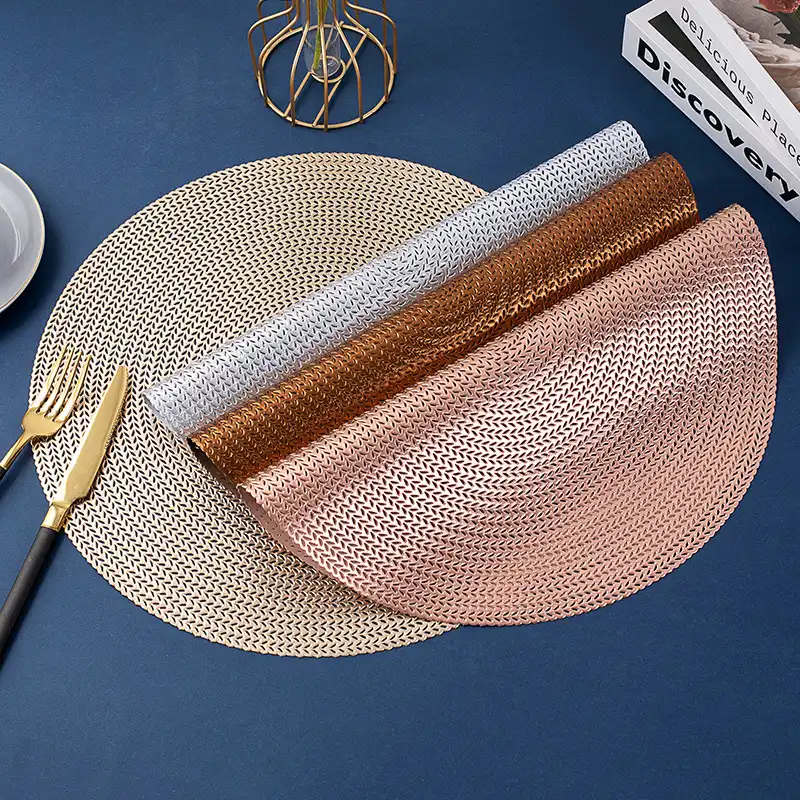
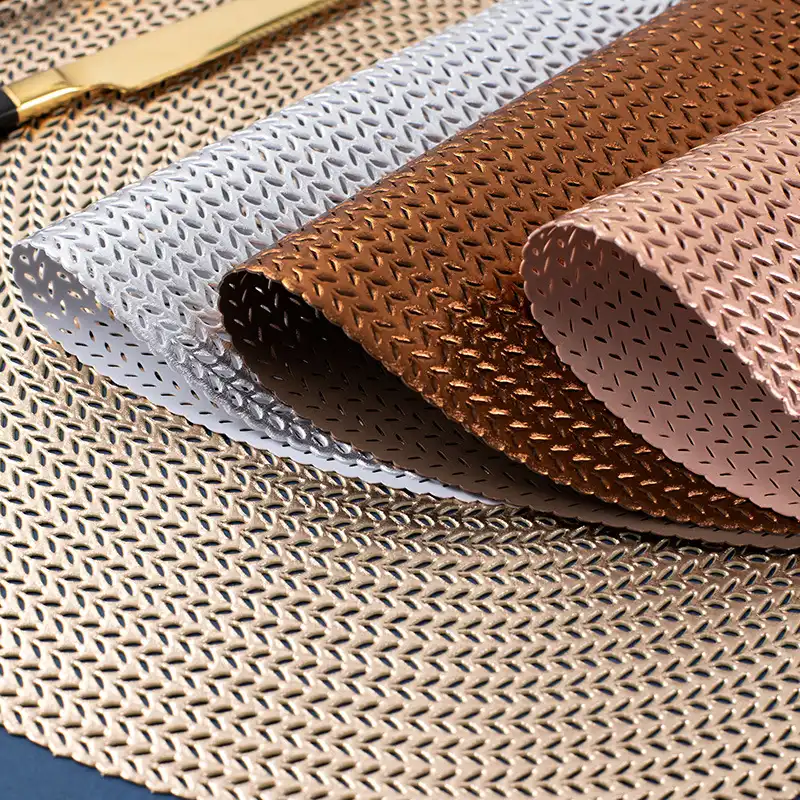
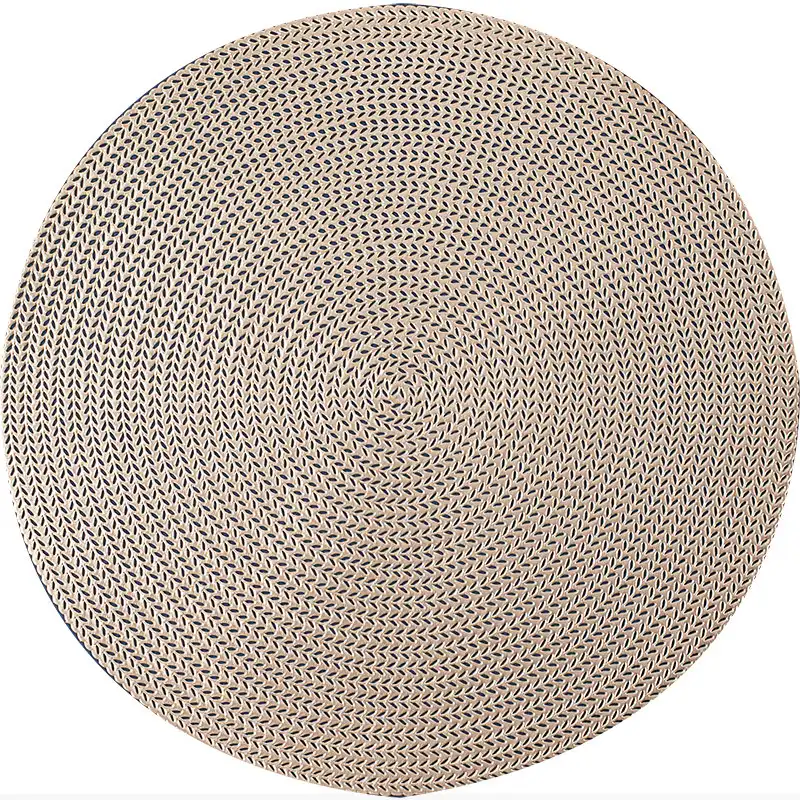
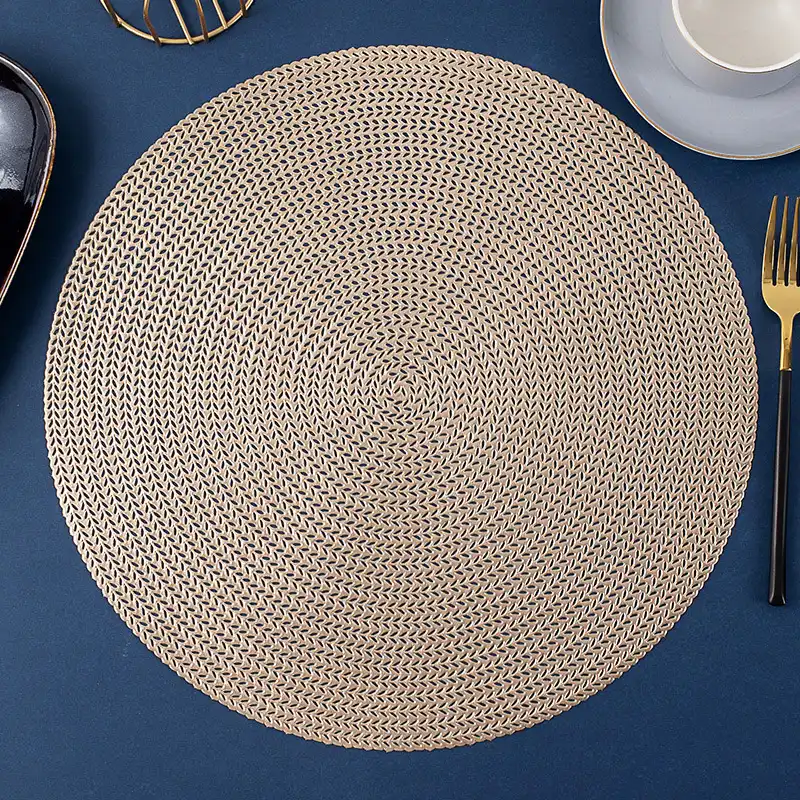
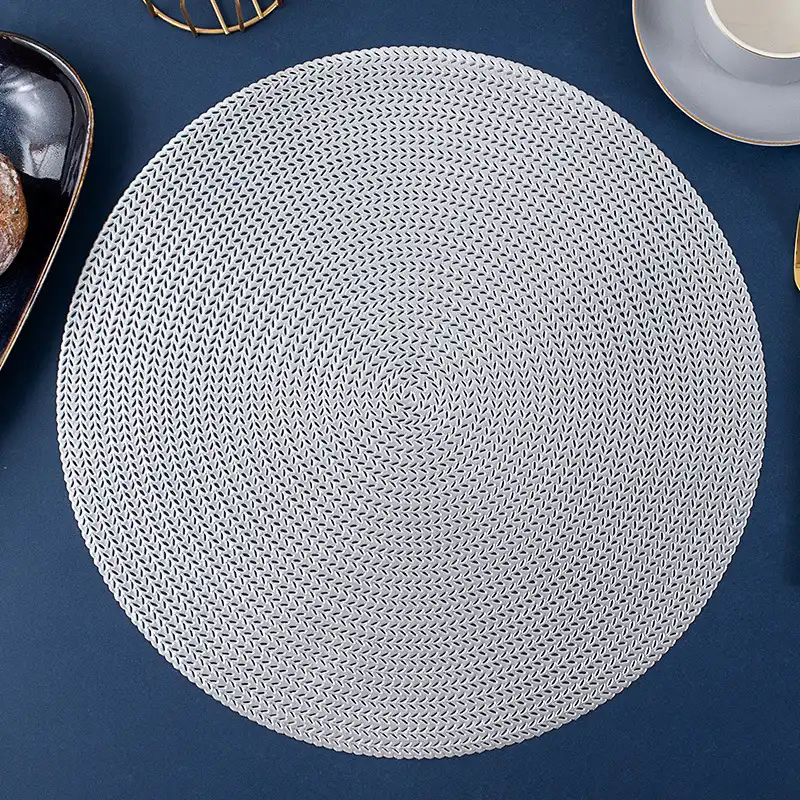
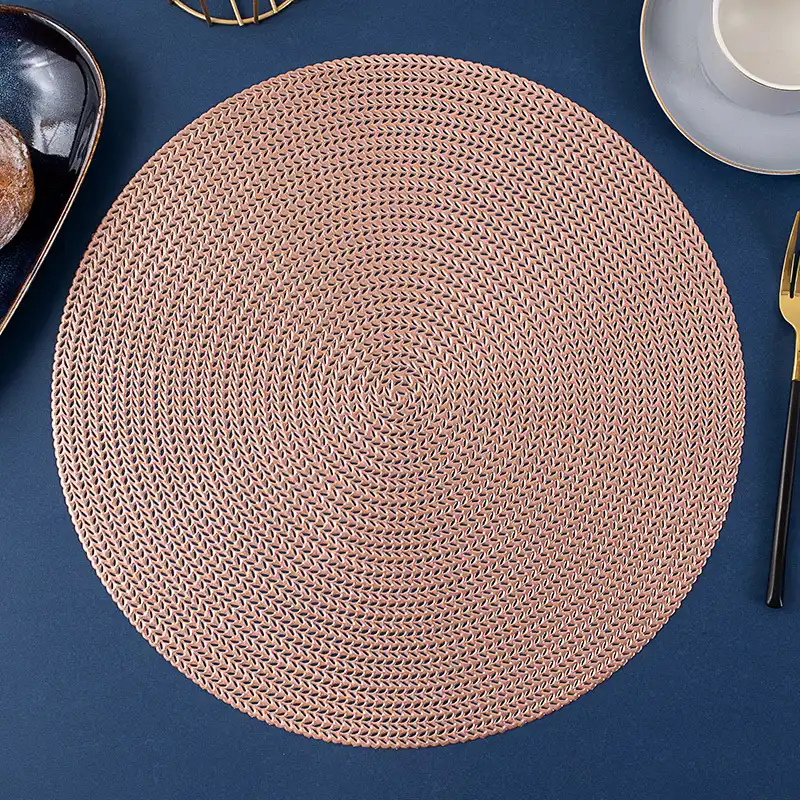
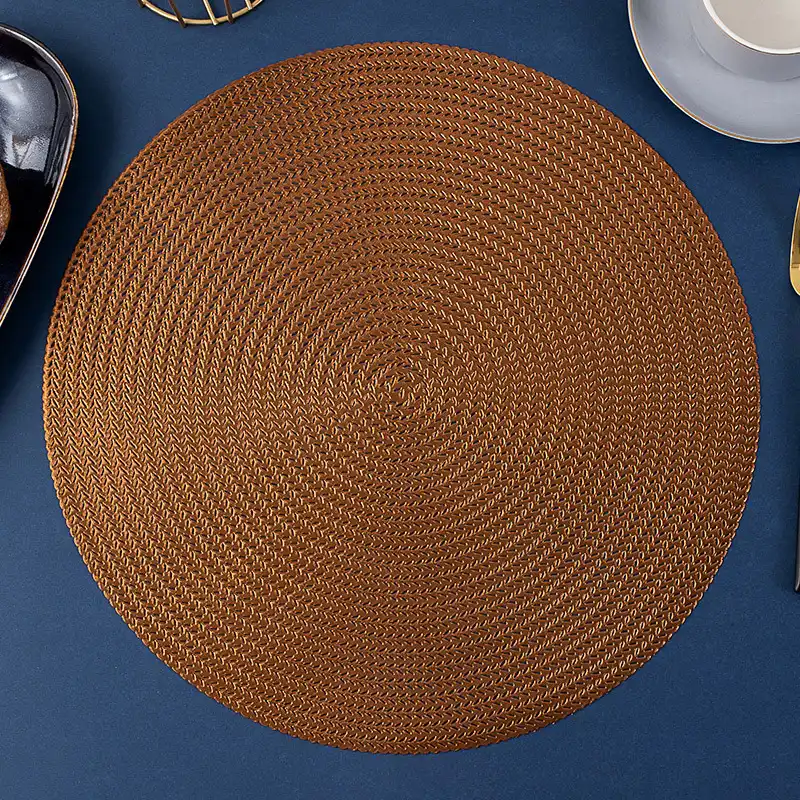
From a distance, the surface looks almost woven. Up close, each small wheat-ear-shaped opening joins the next in a continuous spiral, allowing the tabletop color to appear through the pattern.
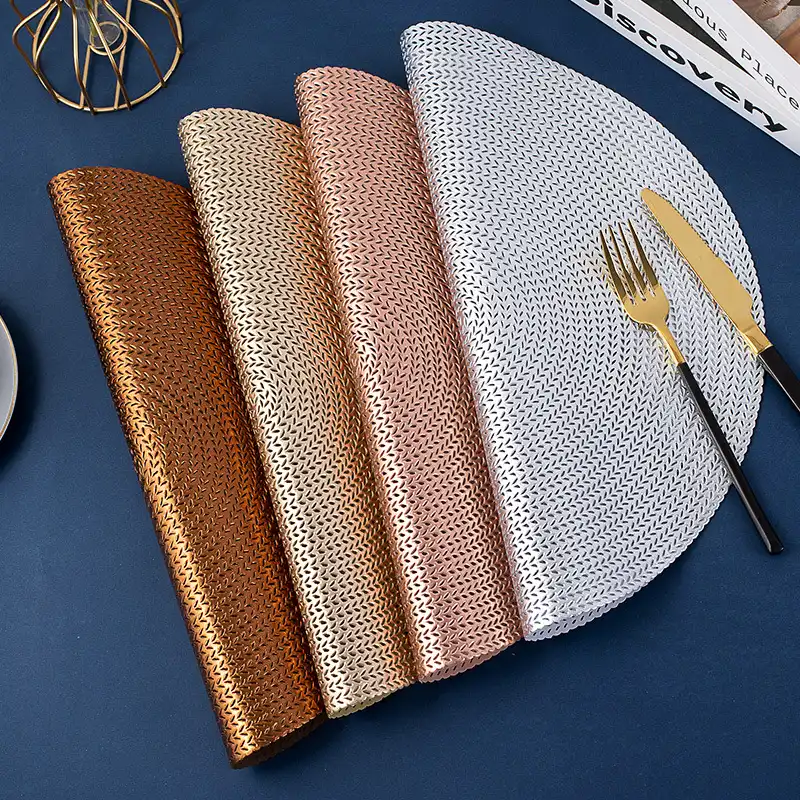
The result is lighter and more decorative than a solid round mat. Gold, silver, rose gold and antique bronze give the same design four very different moods, from bright celebration tables to quieter, vintage-inspired dining arrangements.
Product Details
| Item No. | T018 |
|---|---|
| Material | PVC |
| Shape | Round |
| Standard Size | 38 cm Diameter |
| Surface Design | Continuous Wheat-Ear Openwork Pattern |
| Construction | Flexible Open-Lattice PVC Structure |
| Color Options | Gold, silver, rose gold and antique bronze |
| Care | Wipe or rinse gently, then dry flat before storage |
| Customization | Color, diameter and selected product details may be reviewed for bulk projects |
The Table Becomes Part of the Pattern
A solid placemat hides the surface beneath it. This openwork design behaves differently: the table remains visible through hundreds of small openings, changing the finished appearance according to the background color.
Gold appears warmer and more traditional on dark blue, black or walnut tables. Silver creates stronger contrast against charcoal and dark wood. Rose gold introduces a softer decorative tone, while antique bronze suits rustic interiors and warmer natural finishes.
The pattern is arranged in circular movement from the centre outward. That direction helps the mat feel balanced beneath round plates while giving the edge a finer, lace-like appearance.
Because the openwork itself is the main design feature, the placemat should not be described as printed fabric, metallic mesh or handwoven material. It is a flexible PVC table mat with an open-lattice decorative structure.
A Metallic Frame Around Simple Tableware
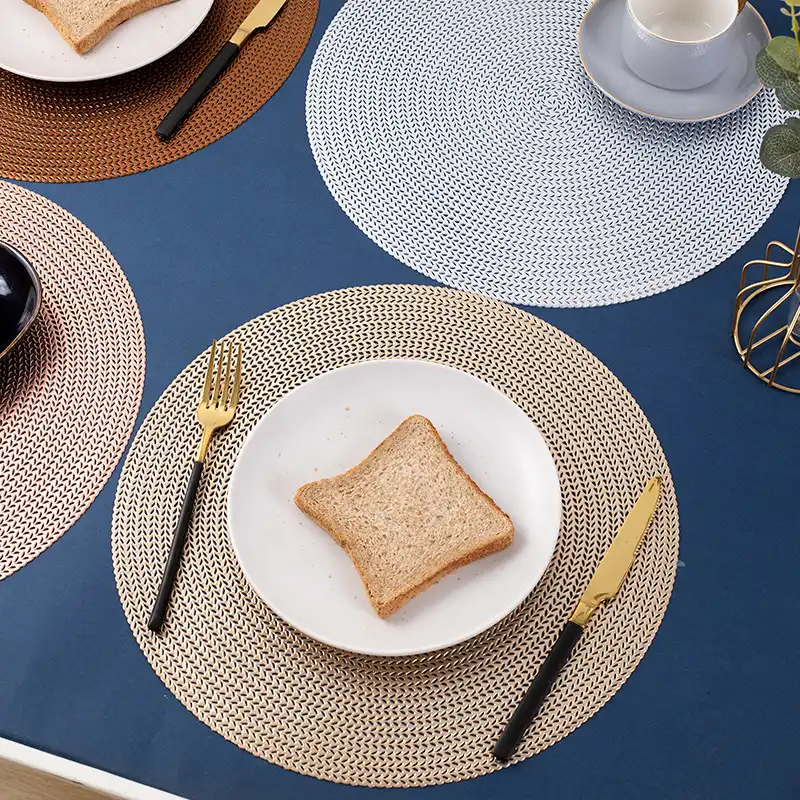
This design works best when the tableware leaves some of the outer pattern exposed. White porcelain, dark ceramic and plain glassware allow the repeating metallic detail to remain visible without making the table look crowded.
A standard dinner plate covers the centre while leaving a broad decorative ring around it. Dessert plates, tea ware and small serving dishes reveal more of the spiral pattern. Oversized charger plates may cover most of the design and should be tested before bulk selection.
The 38 cm round footprint can soften the straight lines of rectangular tables and create a clear individual dining position. On round tables, buyers should also check the distance between neighboring mats so that the edges do not overlap.
Four Metallic Directions with Different Uses
Gold for Celebration and Formal Dining
Gold provides the strongest traditional decorative effect. It works well with dark table surfaces, white plates and gold-tone cutlery for banquets, holiday dining and formal evening settings.
Silver for Contemporary Interiors
Silver feels cooler and cleaner. It can coordinate with gray stone, glass, white porcelain and modern hotel or restaurant interiors without introducing a warm color cast.
Rose Gold for Softer Event Styling
Rose gold adds warmth with less visual weight than bright yellow gold. It suits weddings, afternoon tea, dessert tables and interiors using blush, ivory, taupe or muted green.
Antique Bronze for Rustic and Vintage Tables
Antique bronze produces a deeper, aged-metal appearance. It works naturally with wood, dark ceramics and interiors where polished gold or silver would feel too bright.
Metallic finishes can look different under daylight, warm restaurant lighting and event spotlights. Final color selection should be based on a physical sample viewed in the intended environment.
Where the Openwork Format Adds the Most Value
Minimal Restaurant and Hotel Place Settings
A plain plate and simple cutlery can look unfinished on a large bare table. The metallic openwork ring adds a defined dining position without requiring a patterned tablecloth or heavily decorated charger.
For repeated hospitality layouts, staff should test the mat with the actual plate, glass and cutlery arrangement. The open pattern makes alignment visible, especially when several mats are placed in one row.
Wedding and Event Color Themes
One pattern can support several event palettes simply by changing the metallic finish. Gold works with formal evening themes, silver with cooler modern venues, rose gold with softer celebrations and antique bronze with rustic or autumn settings.
The openwork construction also allows the color of the tablecloth or tabletop to show through, helping the same mat coordinate differently across multiple venue styles.
Afternoon Tea and Dessert Service
Small plates and cups leave more of the wheat-ear pattern exposed. This makes the placemat especially effective for hotel lounges, bakery cafés, dessert presentations and tea settings where decorative details remain visible around the tableware.
Decorative Bases Beyond Individual Place Settings
The round mat can also sit beneath a small vase, menu stand, table number, gift tray or lightweight decorative arrangement. Used this way, it introduces a metallic layer without covering the entire table surface.
Do not place it beneath open flames, burning candles without a protective holder, or cookware taken directly from a stove or oven.
Project note: Confirm the plate diameter, visible openwork area, table color, seat spacing and lighting before approving a bulk order.
What the Open Structure Does Not Do
The openings are part of the visual design, but they also create an important practical boundary. This placemat is not a sealed barrier.
Water, coffee, sauces, crumbs and fine food residue can pass through the openings and reach the table. Spills should therefore be removed from both the mat and the surface underneath.
This is particularly important on unfinished wood, lacquered tables and other surfaces that may mark when moisture remains trapped below an object.
The open pattern may provide friction on some dry tabletops, but grip will vary with the table material, surface finish, dust and moisture. A physical sample should be tested when movement resistance is important for a restaurant or event project.
Cleaning Between the Openwork Details
Loose crumbs can be shaken away before wiping. For routine marks, use a soft damp cloth or sponge with mild detergent.
If residue becomes caught in the small openings, rinse the mat briefly and clean gently with a soft brush. Work in the direction of the repeated pattern rather than scraping across the surface.
Avoid abrasive pads, sharp tools, bleach, alcohol and strong solvents. These may scratch the PVC or reduce the clarity of the metallic-looking finish.
After rinsing, dry both sides completely before stacking. Prolonged soaking, machine washing and dishwashers are not recommended.
The flexible mat may be loosely rolled for temporary transport. Store it flat whenever possible and avoid sharp folding, which may leave creases or distort the circular edge.
Custom Development and Wholesale Orders
The apparent color of an openwork placemat is created by two surfaces working together: the metallic PVC and the table beneath it. Sample review is therefore more useful than choosing a color from an isolated product image.
Metallic Color Selection
Current directions include gold, silver, rose gold and antique bronze. Alternative tones may be reviewed according to order quantity, material availability and production feasibility.
Buyers should evaluate each option on the intended wood, stone, glass or tablecloth background because the visible contrast changes significantly.
Diameter and Place-Setting Review
The standard diameter is 38 cm. Custom dimensions may be discussed for dessert service, compact café tables, charger plates or larger decorative displays.
Changing the diameter also changes the scale and visible density of the openwork pattern. A custom version should be reviewed as a complete sample rather than approved only from a size measurement.
Branding on an Openwork Surface
Logo application is more limited than on a solid PVC mat because the surface contains many openings. Fine lettering and small marks may lose clarity across the lattice.
A simple logo may be reviewed in a planned solid area, on an outer tab or through another product-level solution, subject to sampling. The logo method should be confirmed before quotation rather than assumed from artwork alone.
Wholesale and Repeat-Order Support
Bulk orders can be reviewed for hotels, restaurants, wedding suppliers, event companies, distributors, tabletop retailers and homeware brands.
For quotation, provide the estimated quantity, selected metallic color, required diameter, intended application, logo requirements when applicable and delivery destination.
Repeat orders should reference the approved sample and confirmed specification so that the metallic tone, opening size, pattern density, diameter and edge finish remain consistent.
Sample Confirmation
A physical sample can be used to evaluate color, flexibility, pattern consistency, opening size, edge quality, flatness and appearance against the intended table surface.
Final production should follow the approved sample and confirmed product specification. Customization applies to the placemat itself; custom packaging is not included.
Metallic Openwork Round PVC Placemat Frequently Asked Questions
What does openwork mean on a PVC placemat?
It means that the decorative pattern contains real openings rather than being printed onto a solid sheet. The tabletop or tablecloth remains visible through the repeated wheat-ear-shaped lattice.
Is an openwork placemat waterproof?
The PVC itself resists routine moisture, but the complete placemat is not a waterproof barrier because liquid can pass through the openings. Clean the mat and the table beneath it after spills.
Will a 38 cm round placemat fit a standard dinner plate?
It fits beneath many standard dinner plates while leaving an outer metallic border visible. Large charger plates may cover most of the pattern, so buyers should test the intended tableware before ordering.
Which color works best for weddings and events?
Rose gold suits softer wedding palettes, gold supports formal and festive tables, silver works with contemporary cool-toned venues, and antique bronze fits rustic or vintage themes. Venue lighting and table color should also be considered.
How should residue be removed from the small openings?
Shake away loose crumbs, then use mild detergent, water and a soft cloth, sponge or brush. Rinse briefly when necessary and dry both sides completely before storage.
Can hot cookware be placed directly on the placemat?
It may be used beneath normal plates, cups, bowls and warm serving ware. Pots, pans and dishes taken directly from a stove or oven require a separate heat-resistant trivet.
Can the diameter, color or logo be customized for wholesale orders?
Color and diameter may be reviewed for bulk projects. Logo application depends on the openwork pattern and artwork because fine details may not reproduce clearly across the openings. Final options require sample approval.