
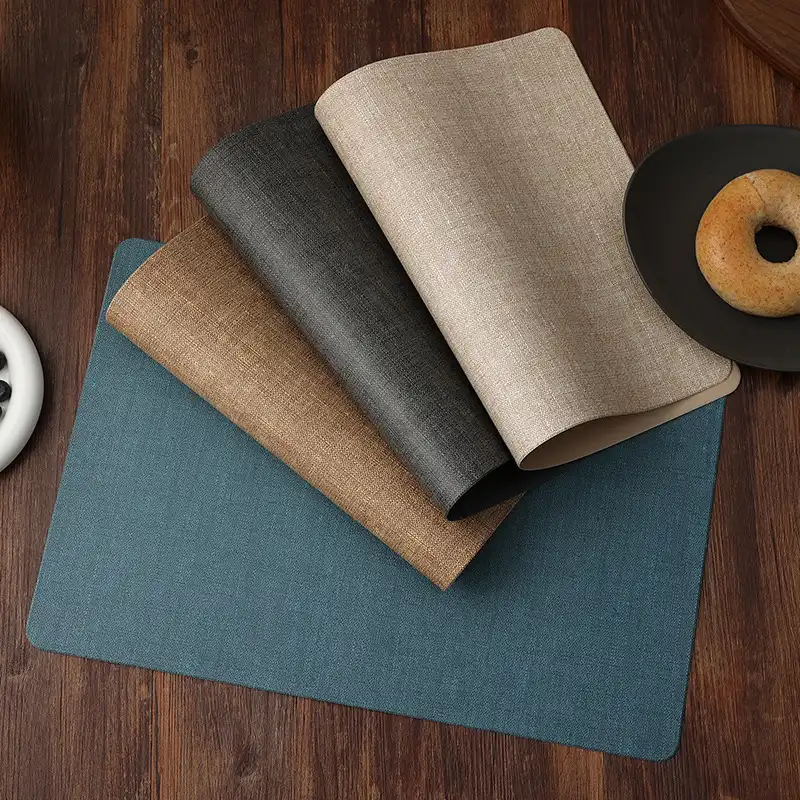
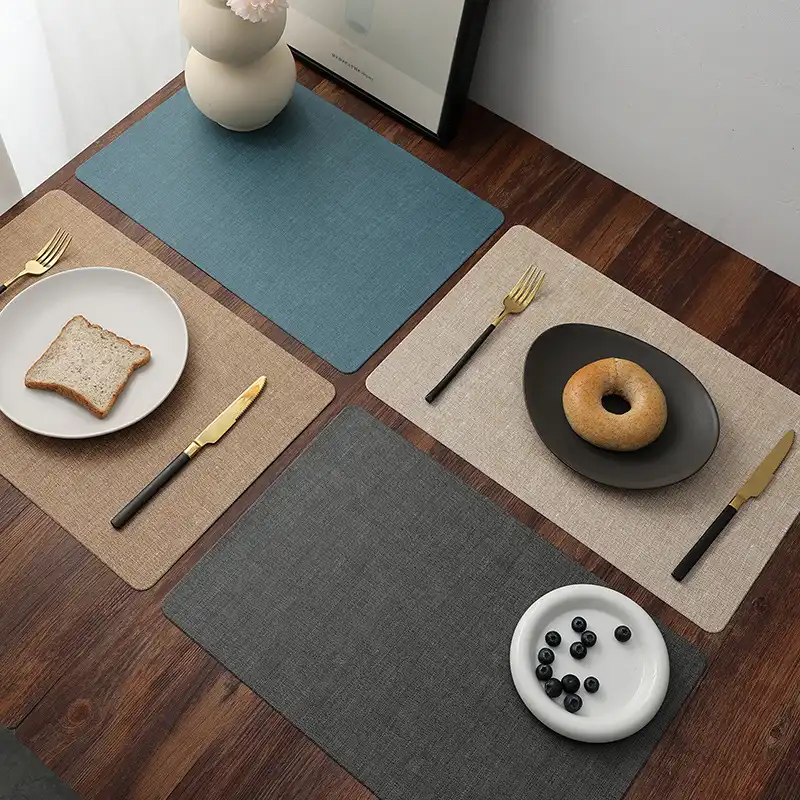
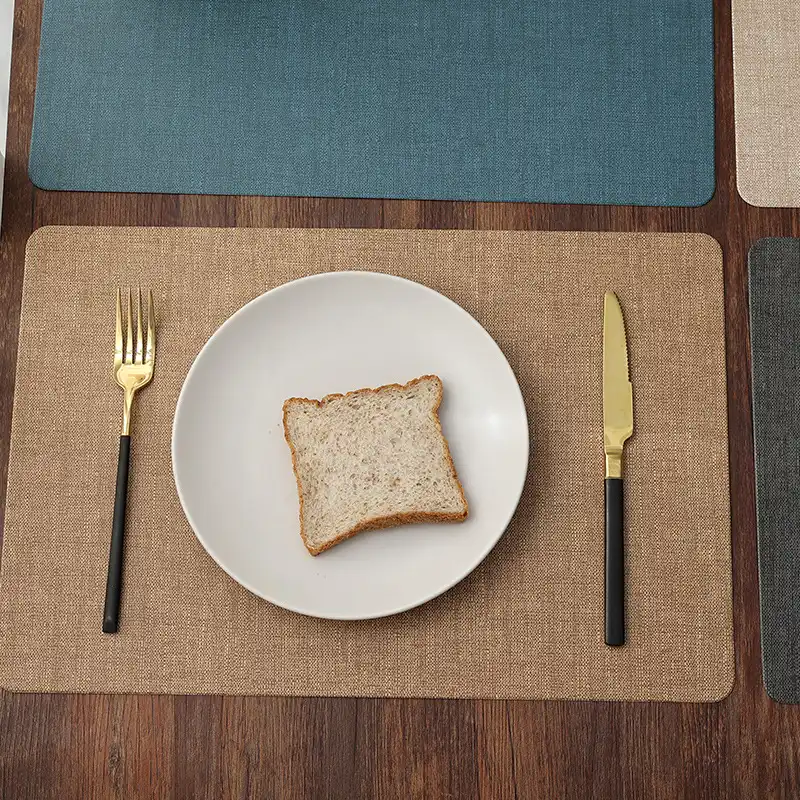
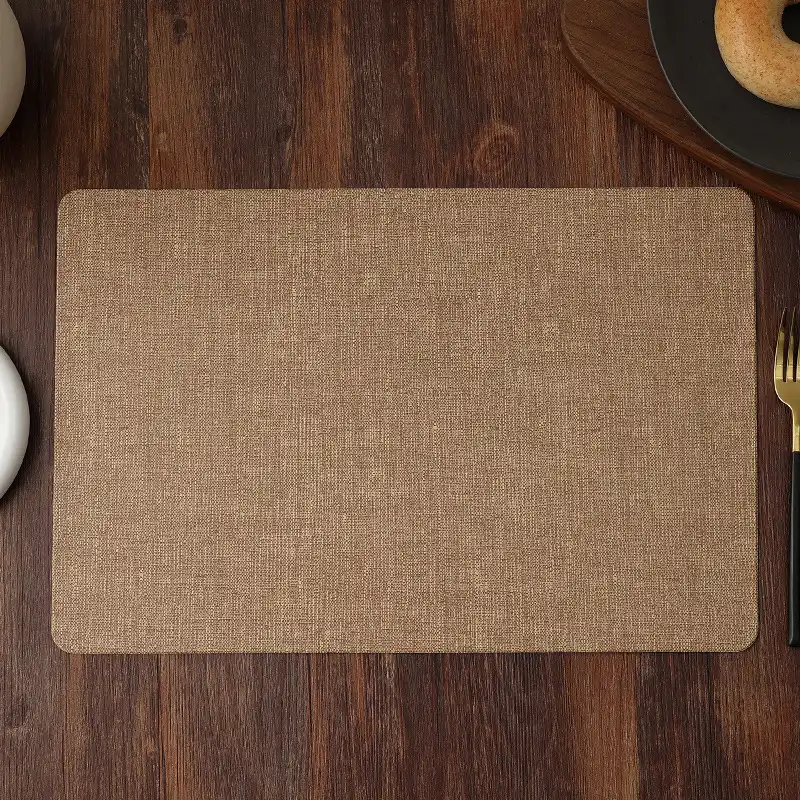
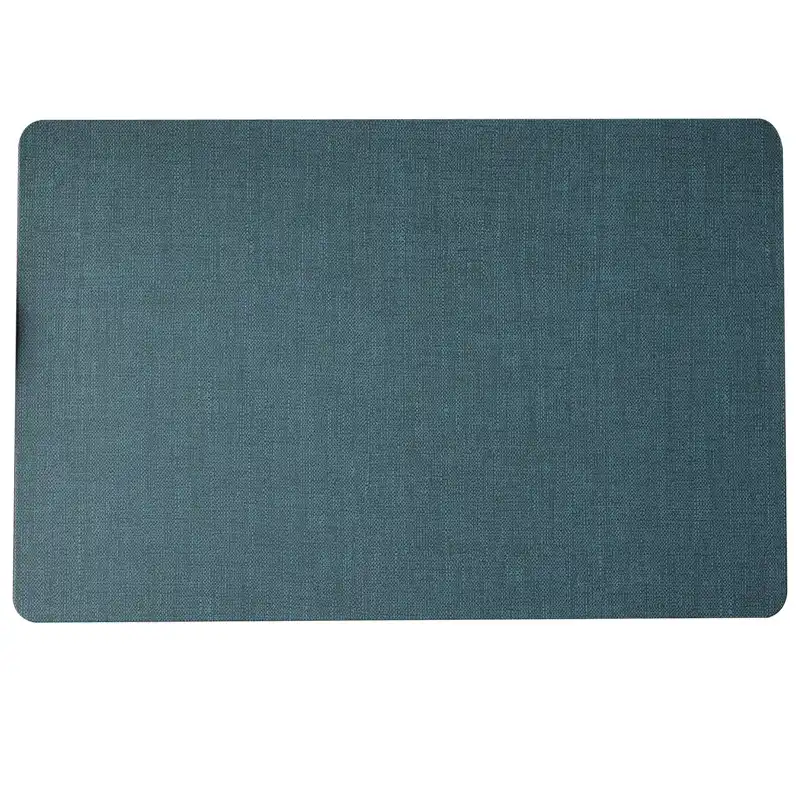
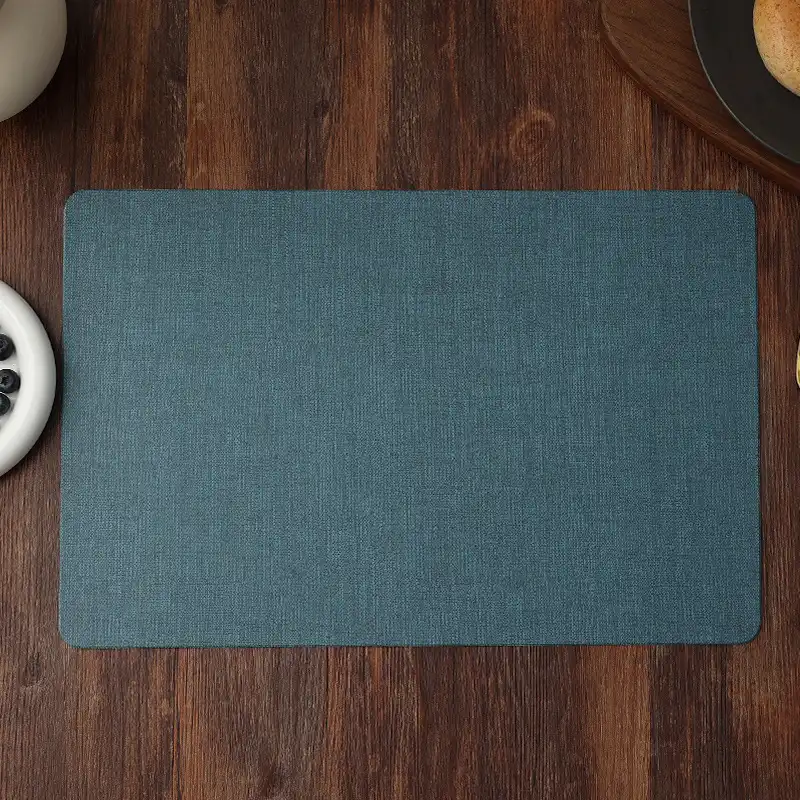
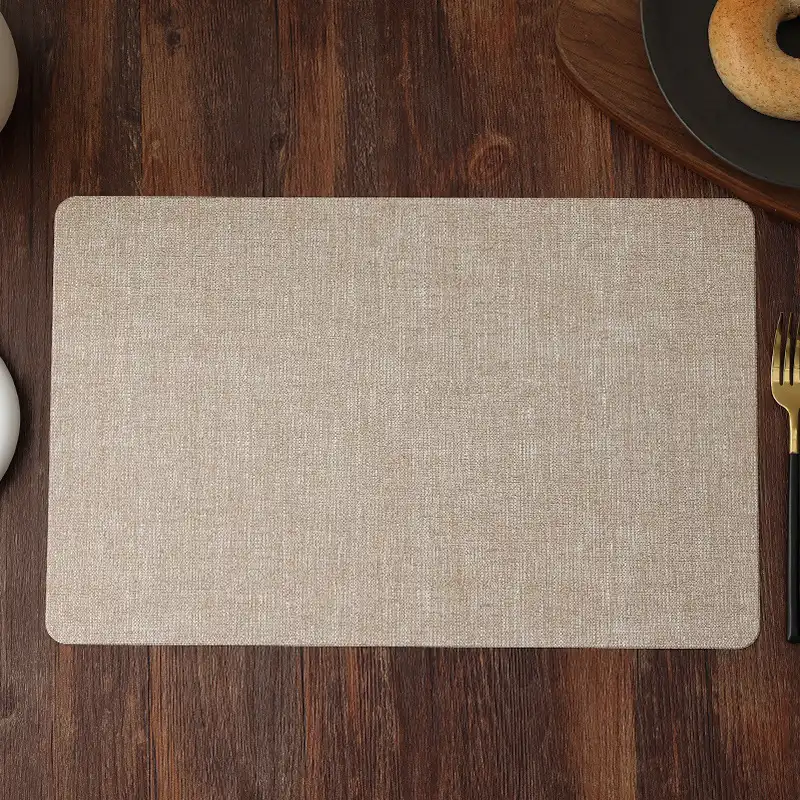
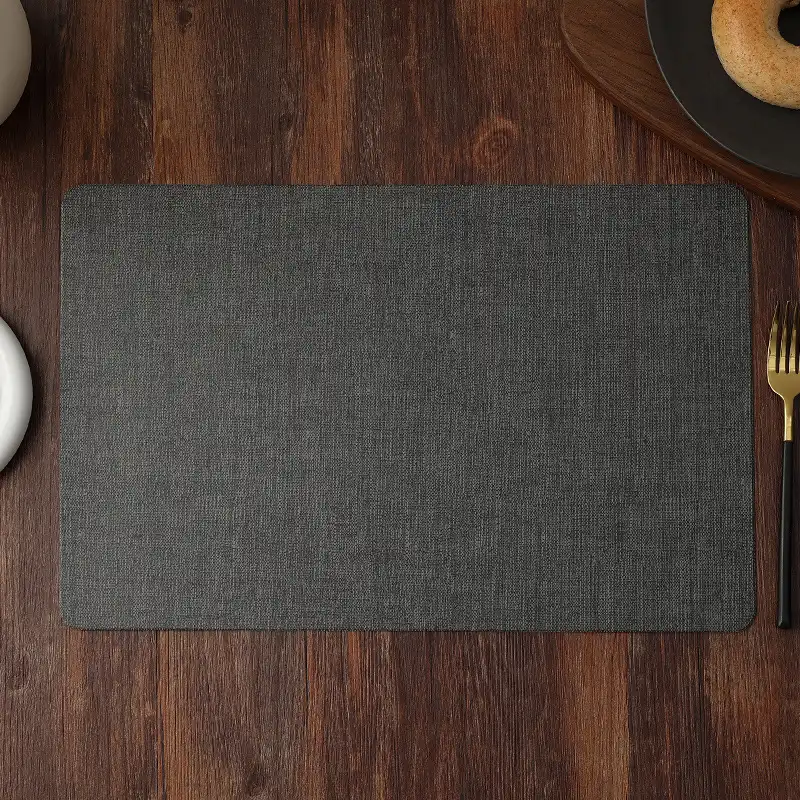
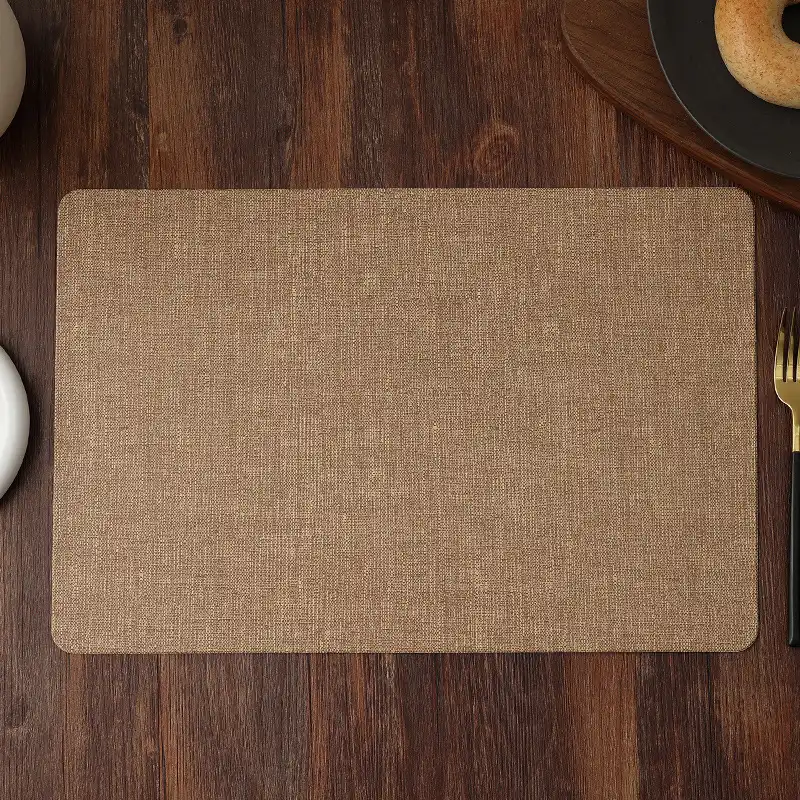
No floral print, metallic border or contrasting frame competes with the tableware. A fine linen-look grain gives the surface enough texture to avoid appearing flat, while the solid color keeps the overall setting calm and adaptable.
The result is a straightforward PVC table mat for buyers who need a consistent background across dining tables, breakfast areas, cafés or coordinated retail collections. Deep blue, milk coffee, dark gray and khaki each change the atmosphere without changing the basic construction.
Product Details
| Item No. | T020 |
|---|---|
| Material | PVC |
| Surface | Fine Linen-Look Texture |
| Shape | Rectangular with Rounded Corners |
| Standard Size | 45 × 30 cm |
| Approx. Weight | 90 ± 5 g per piece |
| Edge Finish | Pressed and Finished Edges |
| Color Options | Deep blue, milk coffee, dark gray and khaki |
| Care | Wipe clean or rinse briefly, then dry flat before storage |
| Customization | Color, dimensions and logo application may be reviewed for bulk projects |
When the Tableware Should Remain the Main Feature
Highly decorative placemats can work well for events, but they are not always the best background for patterned plates, colorful food presentation or an interior that already contains several textures.
This table mat takes a quieter approach. The surface resembles fine woven linen when viewed from a normal dining distance, yet the restrained solid color leaves the plate, cutlery and glassware visually dominant.
That makes the design easier to combine with an existing tableware collection. Buyers do not need to redesign the entire place setting around a strong printed motif or metallic decoration.
The same simplicity also supports repeat use. A restaurant, hotel or retailer can introduce several colors while retaining one consistent size, edge shape and surface character.
A Linen Appearance Without Fabric-Linen Maintenance
The fine crosshatched grain gives the mat a textile-inspired appearance, but the material is PVC rather than natural linen, cotton or an open woven textile.
Routine dining residue remains on the continuous surface instead of settling deeply between open yarns. Water drops, sauces and light oily marks should still be removed promptly, but the mat can usually be cleaned without laundering or ironing.
This difference is useful for buyers who like the understated character of linen but need a surface that can be reset more quickly between meals.
The linen-look finish is decorative rather than absorbent. It should not be described as a fabric mat or promoted as a product intended to soak up large spills.
Pressed Edges Create a Cleaner Rectangular Finish
The edges are pressed and finished rather than left as a visibly open weave. Rounded corners soften the outline and reduce the severe appearance that can come from a sharply cut rectangular mat.
For commercial tables, this detail helps several mats look more uniform when positioned side by side. The straight long edges provide a clear reference for alignment, while the rounded corners are less visually intrusive beside cutlery and neighboring seats.
Edge quality remains an important sample-review point. Buyers should check the corner shape, surface-to-edge transition, finished dimensions and whether the mat returns flat after transport.
The pressed edge does not make the mat indestructible. Repeated sharp folding, cutting or contact with pointed utensils can still damage the surface or edge.
Four Neutral Colors with Different Interior Roles
Deep Blue for Calm Modern Dining
Deep blue provides the strongest color identity in the range without becoming bright. It works with white porcelain, dark cutlery, warm wood and cooler gray interiors.
It can suit contemporary restaurants, hotel breakfast rooms and home dining spaces that need more color than black or gray but still require a controlled appearance.
Milk Coffee for Warm, Relaxed Tables
The milk-coffee direction sits between beige and soft brown. On dark wood it creates a lighter place-setting area, while on cream or pale stone it produces a quieter tonal combination.
This version is especially easy to use with breakfast service, cafés, bakery displays and casual hospitality interiors.
Dark Gray for Commercial Flexibility
Dark gray is the most neutral and adaptable option. It supports white, black, colored or patterned tableware and can be introduced without forcing the room into a particular decorative theme.
For distributors and hospitality buyers managing several projects, gray can provide a practical core color before adding more specialized shades.
Khaki for Natural and Wood-Based Interiors
Khaki brings a softer earthy direction to wooden dining tables, botanical interiors and restrained homeware collections. It provides less contrast than deep blue or dark gray, allowing the linen-look texture to become the main detail.
Color should be confirmed from a physical sample. Wood tone, room lighting and nearby textiles can make neutral PVC surfaces appear warmer, cooler, lighter or darker than they do on a screen.
Simple Table Solutions for Repeated Daily Use
Café and Bakery Tables
A café table may need to accommodate coffee, a small plate, cutlery and occasional food spills without looking like a formal restaurant setting. The 45 × 30 cm format creates a defined place for those items while keeping the presentation relaxed.
Milk coffee and khaki work naturally with bread, desserts and wood tabletops. Deep blue or dark gray can provide stronger contrast for white cups and plates.
Hotel Breakfast and Guest Dining Areas
Breakfast rooms require frequent table resets and a layout that staff can reproduce consistently. The uncomplicated rectangular shape is easy to align, and the plain surface does not require each mat to face a particular pattern direction.
Hotels can use one color throughout the room or assign different tones to separate dining zones while retaining the same product format.
Restaurants Using Distinctive Plates
When the menu presentation already relies on artisan ceramics, colored plates or decorative serving pieces, another strong graphic layer beneath them may be unnecessary.
This solid-color table mat provides texture and visual separation without competing with the restaurant’s tableware or food presentation.
Home Dining and Workday Tables
The mat can move between breakfast, dinner and desk use without looking overly ceremonial. Its linen-look grain adds warmth to a bare surface, while the plain rectangular format remains suitable for everyday interiors.
After use, the mat should be cleaned and dried before being returned to a dining table, desk or storage area.
Retail and Private-Label Color Collections
Four coordinated neutrals allow retailers and distributors to build a small color range around one consistent product. Buyers can offer a cool group with deep blue and dark gray, and a warmer group with milk coffee and khaki.
The absence of a fixed printed design also leaves more room for project-specific color development or understated branding, subject to production review.
Project note: Check the plate diameter, cutlery position, tabletop color, spacing between seats and intended cleaning routine before confirming a bulk order.
Cleaning a Solid PVC Table Mat
Remove crumbs first, then wipe routine marks with a soft damp cloth or sponge. Mild detergent may be used when water alone does not remove food or oily residue.
A brief rinse can be used when necessary. Dry the front, reverse and pressed edges completely before stacking so that moisture is not trapped between the mats.
Strongly colored sauces, coffee, tea and oils should be removed promptly, particularly from milk-coffee and khaki versions. Long contact times may make some marks more difficult to clean.
Avoid abrasive pads, metal brushes, sharp scrapers, bleach, alcohol and strong solvents. These may roughen the linen-look surface or damage the edge finish.
Machine washing, tumble drying, dishwashers and prolonged soaking are not recommended. Store the table mats flat or loosely rolled rather than sharply folded.
Normal plates, cups, bowls and warm serving dishes may be placed on the surface. Use a separate trivet beneath cookware taken directly from a stove or oven because no verified product-specific high-temperature rating has been confirmed.
Custom Table Mats for Wholesale and Hospitality Projects
A plain table mat may look simple, but bulk projects still require several details to be controlled: color consistency, finished size, surface grain, corner radius, edge quality and flatness.
Custom Color Development
Current options include deep blue, milk coffee, dark gray and khaki. Additional colors may be reviewed according to order quantity, available PVC materials and production feasibility.
Custom colors should be approved from a physical sample under the intended lighting. A neutral tone selected from a digital image may appear noticeably different after production.
Custom Dimensions
The standard size is 45 × 30 cm. Other dimensions may be discussed for smaller café tables, wider restaurant settings, desk mats or coordinated serving surfaces.
The corner radius, surface proportions and edge finish should be reviewed again whenever the dimensions change rather than assumed to remain visually identical.
Logo Application
Logo application may be reviewed for wholesale and private-label projects according to the artwork, surface texture and required quantity.
Simple logos and clear lettering generally reproduce more reliably than very fine details on a linen-look grain. Position should be selected according to the intended plate area so that the mark remains visible during use.
A pre-production sample is recommended before confirming logo size, contrast and placement.
Wholesale and Repeat Orders
Bulk orders can be reviewed for restaurants, cafés, hotels, distributors, promotional buyers, tabletop retailers and homeware brands.
For quotation, provide the estimated quantity, preferred color, required dimensions, logo artwork when applicable, intended use and delivery destination.
Repeat orders should reference the approved sample and confirmed specification so that the color, grain, pressed edges, rounded corners and finished dimensions remain consistent.
Sample Confirmation
A physical sample can be used to check color, linen-look texture, finished size, approximate 90 ± 5 g weight, corner shape, edge finish, flexibility and appearance beneath the intended tableware.
Final production should follow the approved sample and confirmed product specification. Customization applies to the table mat itself; custom packaging is not included.
Linen-Look PVC Table Mat Frequently Asked Questions
Is a table mat the same as a placemat?
In dining use, the terms often describe the same type of individual mat placed beneath plates and cutlery. “Table mat” is a broader expression, while “placemat” more specifically refers to an individual place setting. This product can be described by either term.
Is the linen-look surface made from real linen?
No. The product is made from PVC with a fine texture that visually resembles woven linen. It does not contain natural linen fabric based on the current product specification.
Is the surface woven or completely solid?
It appears to be a continuous textured PVC surface rather than an open woven mesh. Final construction and reverse finish should still be confirmed through the selected production sample.
Can the PVC table mat be washed with water?
It can be wiped with a damp cloth and briefly rinsed when necessary. Avoid prolonged soaking, machine washing and dishwashers, and dry the mat completely before stacking.
Will liquid pass through the table mat?
The continuous PVC surface is designed to resist routine dining spills better than an open woven mat. However, liquids may still reach the table from the edges or remain beneath the mat, so spills should be cleaned promptly from both surfaces.
Is 45 × 30 cm suitable for a standard place setting?
It accommodates many standard dinner plates with basic cutlery. Oversized chargers, several utensils or closely spaced commercial tables should be tested as a complete arrangement before ordering.
Can hot cookware be placed directly on the mat?
Use it beneath normal dining plates, bowls, cups and warm serving ware. Pots, pans and dishes taken directly from a stove or oven should be placed on a dedicated heat-resistant trivet.
Can the color, size or logo be customized for wholesale orders?
These options may be reviewed for bulk projects, subject to quantity, material availability, artwork and sample approval. Custom packaging is not provided.