
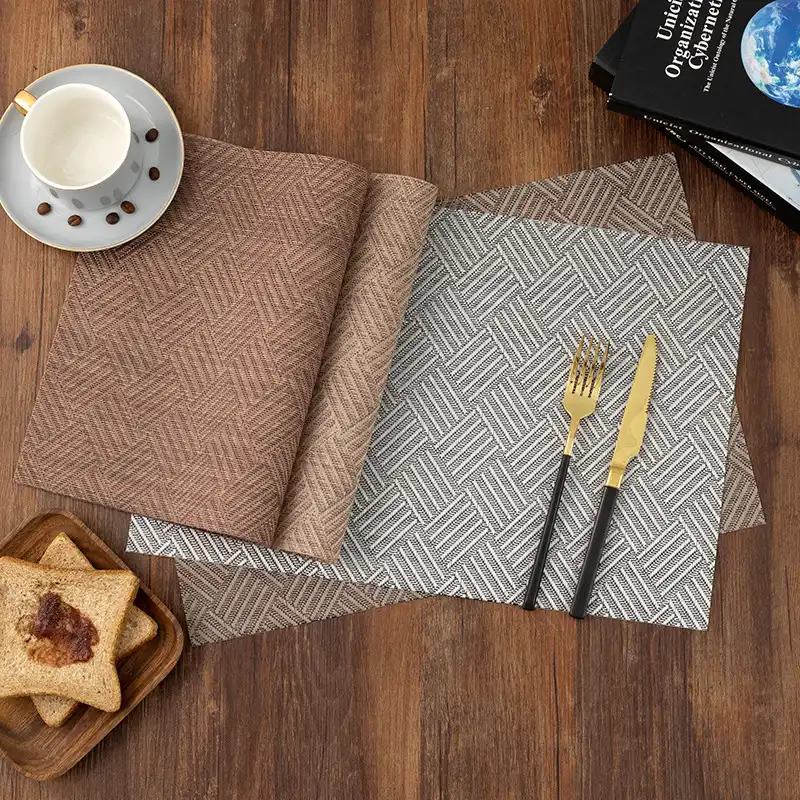
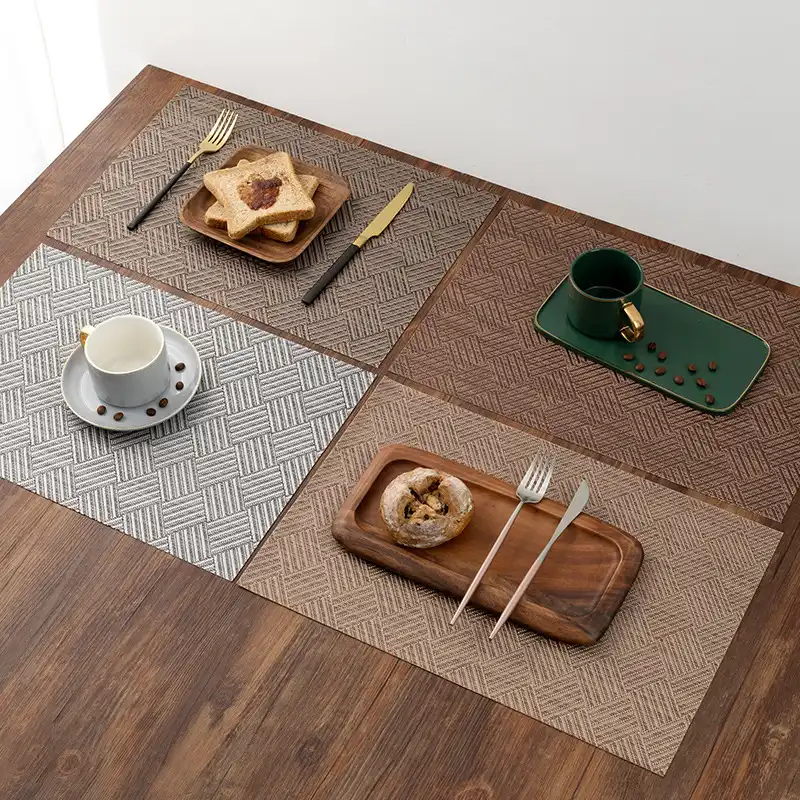
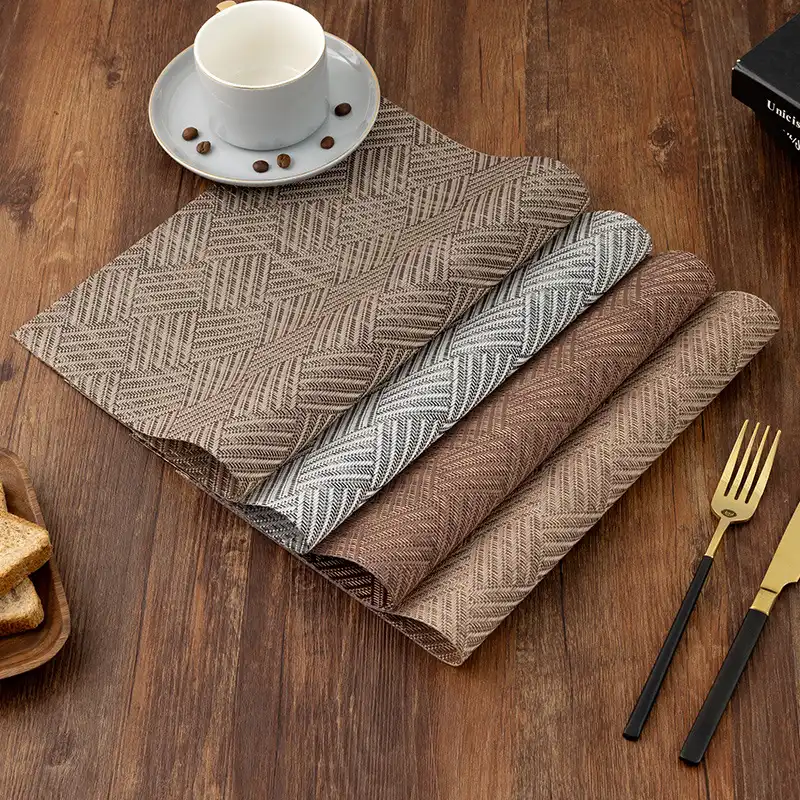
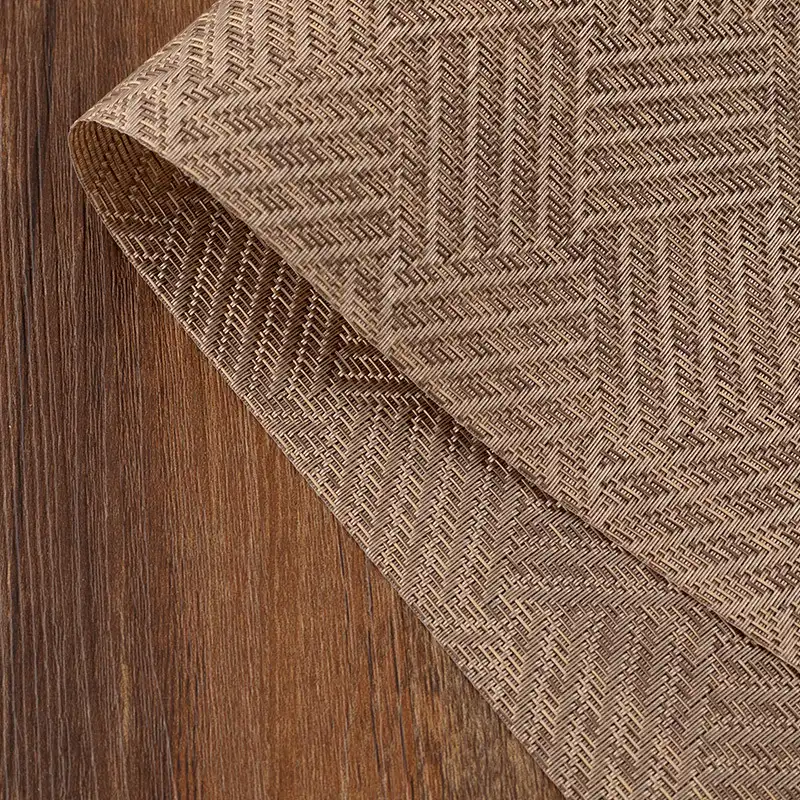
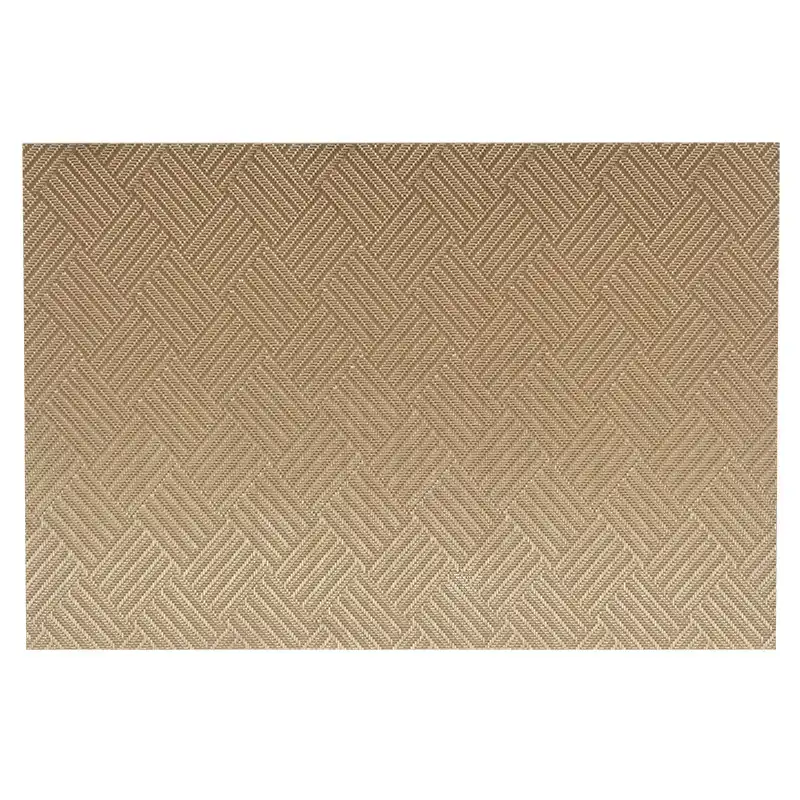
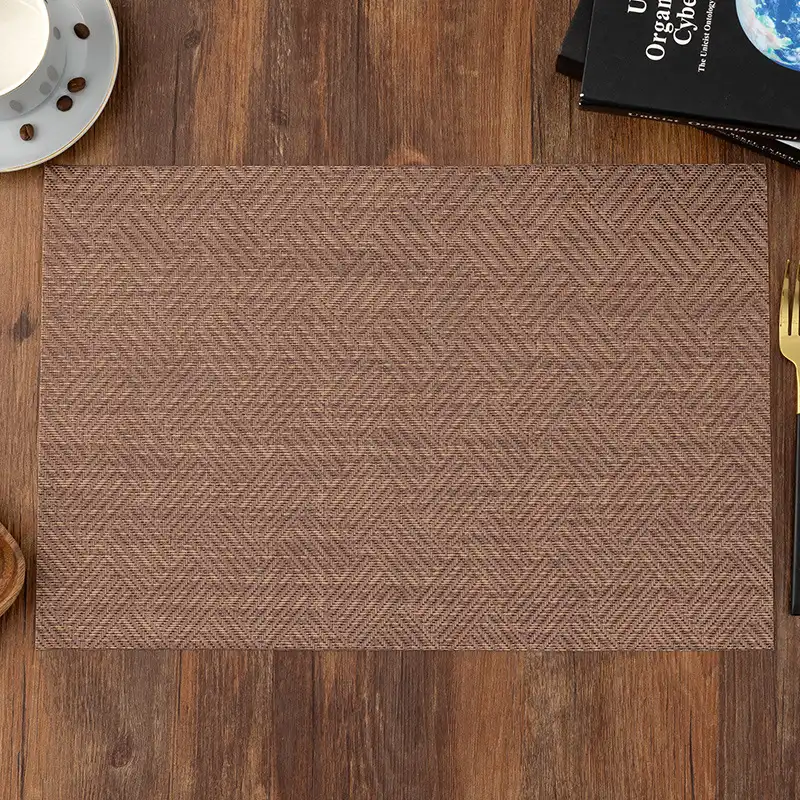
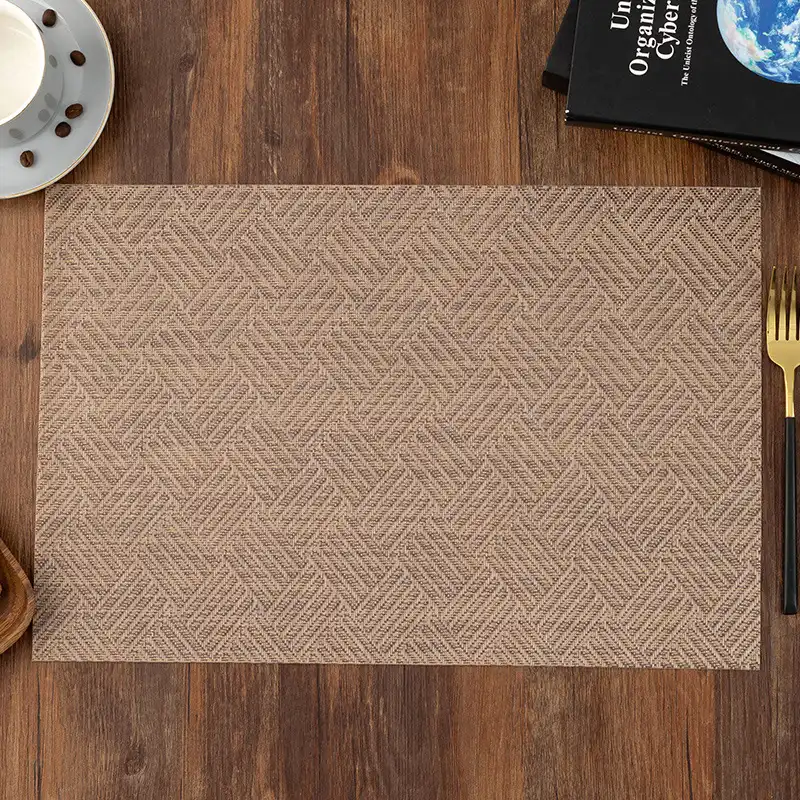
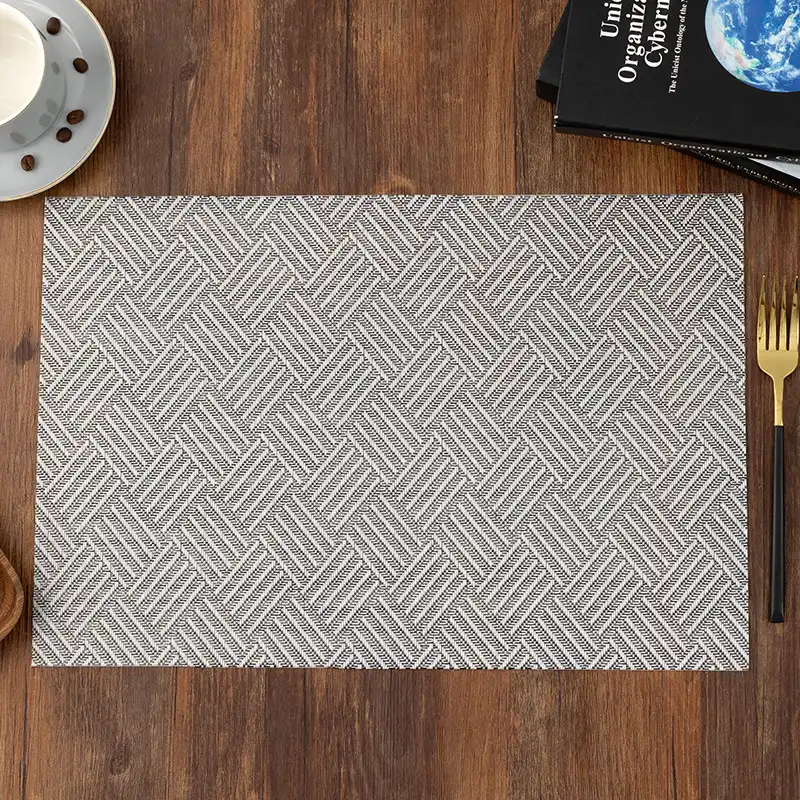
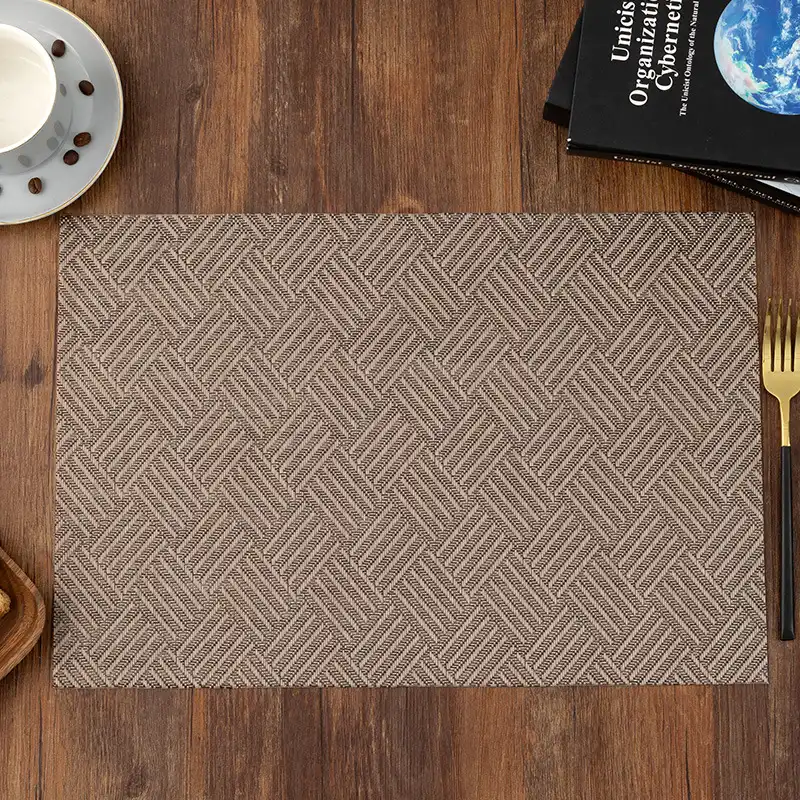
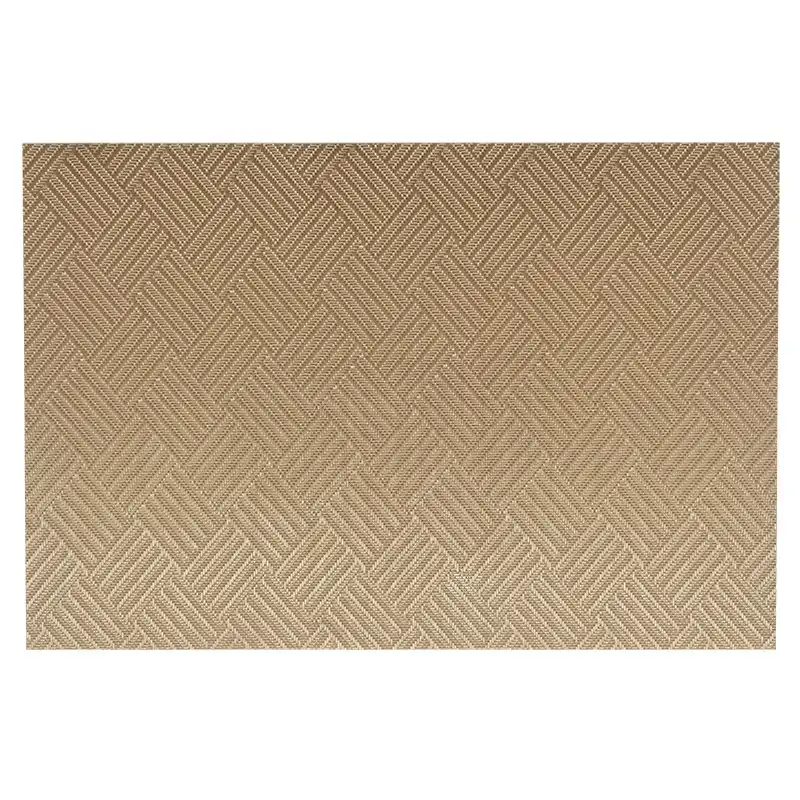
Some patterns decorate a table; this one brings order to it. Short groups of parallel lines turn in alternating directions, joining into a compact geometric surface that resembles woven parquet or carefully arranged textile panels.
The effect is detailed without being ornate. Antique bronze, sand, silver-black, sand-black and gold tones allow the same 45 × 30 cm format to move between warm wood tables, cooler modern interiors and more formal hospitality settings.
Product Details
| Item No. | T019 |
|---|---|
| Material | 70% PVC and 30% Polyester Yarn |
| Construction | Woven PVC-Coated Polyester Yarn |
| Shape | Rectangular |
| Standard Size | 45 × 30 cm |
| Pattern | Interlocking Directional Geometric Weave |
| Color Options | Antique bronze, sand, silver-black, sand-black and gold |
| Care | Wipe clean or rinse briefly with mild detergent, then dry flat |
| Customization | Color direction, dimensions and logo application may be reviewed for bulk projects |
| Documentation | Applicable material test documents may be discussed for the selected specification |
A Pattern Built from Direction Rather Than Color
Each section contains closely spaced lines running in one direction. The neighboring section turns those lines, creating an interlocking repeat across the complete placemat.
From a distance, the surface reads as a restrained neutral texture. Viewed more closely, the changing direction becomes clearer and gives the mat a more tailored appearance than a plain woven grid.
This makes the design useful when buyers want visual depth but do not want florals, large stripes, branding or a strong multicolor print. Plates and cutlery remain the main focus, while the geometric weave prevents the setting from looking unfinished.
The pattern repeat also creates an important production detail. Cut position, line direction and edge alignment can influence whether the finished mat appears balanced. Bulk projects should therefore approve the complete placemat rather than reviewing only a small material swatch.
Geometric Order for Wood, Stone and Neutral Tables
Warm brown versions connect naturally with walnut, oak and darker timber surfaces. Instead of disappearing into the wood, the directional linework creates enough contrast to define an individual place setting.
Silver-black and sand-black combinations provide a cooler alternative for gray stone, black glass and contemporary commercial interiors. Gold introduces a brighter decorative note without changing the underlying pattern.
The appearance also changes after the tableware is added. A white plate increases contrast and makes the geometric background easier to see. Dark or patterned plates create a quieter result, leaving most of the weave visible around the outer area.
For coordinated projects, the placemat should be reviewed together with the table finish, plate color, cutlery and room lighting. Neutral color names alone do not show how metallic or blended yarns will appear in the final setting.
Five Color Directions with Different Roles
Antique Bronze for Warm Wood Interiors
The antique-bronze direction has a muted brown metallic character that suits traditional dining rooms, darker cafés and hospitality interiors using timber, leather tones or warm lighting.
Sand for Light and Relaxed Settings
Sand introduces a softer neutral surface for breakfast rooms, casual restaurants and pale wood tables. It provides texture without creating a strong dark block beneath the plate.
Silver Black for Modern Contrast
Silver-black produces the clearest light-and-dark definition within the pattern. It works well with white porcelain, black cutlery and gray or monochrome interiors.
Sand Black for a More Restrained Graphic Effect
Sand-black keeps the geometric structure visible while reducing the brightness of silver. It suits tables that need definition but should remain calm and understated.
Gold for Decorative Hospitality Tables
Gold gives the interlocking pattern a warmer, more noticeable finish for private dining, events and seasonal tabletop collections. The exact effect should be checked under the intended lighting because metallic-looking yarns can change significantly between daylight and indoor service.
Table Solutions That Use Structure Instead of Ornament
Business Dining and Private Meeting Tables
Floral patterns and bright color blocks do not suit every commercial table. The repeated geometric layout provides a more disciplined background for business lunches, private meeting rooms and executive dining areas.
Silver-black and sand-black are particularly suitable when the surrounding space already uses gray, black, wood or brushed-metal finishes.
Restaurants with Strong Plates but Quiet Table Linens
A restaurant using distinctive plates may not need another decorative image beneath them. This placemat adds texture through the weave while allowing the tableware, food presentation and cutlery to remain visually dominant.
The 45 × 30 cm format should be tested with the complete setting, especially where several utensils, bread plates or closely positioned seats are used.
Cafés and Breakfast Areas on Wood Tables
On a wood surface, plain brown placemats can appear flat or disappear into the tabletop. The changing line direction in the antique-bronze and sand versions introduces separation without creating a hard contrasting border.
For a compact breakfast arrangement, the mat can hold a plate, cup and basic cutlery while leaving part of the wood visible around each place setting.
Retail Collections Organized by Neutral Color
The five color directions make it possible to build a coordinated collection without changing the dimensions or pattern. Buyers can group warm bronze, sand and gold together, while silver-black and sand-black form a cooler modern range.
This approach is useful for distributors and homeware brands that want several visual options but prefer to manage one core construction and size.
Project note: Confirm the pattern direction, cut position, color, plate size, tabletop finish and spacing between seats before bulk production.
What the Woven Construction Means in Daily Use
The placemat is made from polyester yarn coated with PVC and arranged into a woven surface. It is not natural linen, printed fabric or embossed faux leather.
The yarn coating allows most routine dining residue to remain near the surface, where it can be wiped away more easily than stains absorbed into untreated textile fibers.
Small spaces remain between the woven yarns. Water, coffee, sauces and fine crumbs may pass through these openings, so the placemat should not be treated as a completely sealed waterproof barrier.
After a spill, lift the mat and clean the tabletop underneath. This is especially important on unfinished timber, lacquered surfaces and other materials that may mark when moisture remains trapped.
The flexible construction can be loosely rolled for handling or temporary storage. Avoid sharp folding, heavy compression and stacking while damp, as these conditions may affect flatness and edge alignment.
Cleaning the Directional Weave
Begin by shaking away loose crumbs. Wipe routine marks with a soft damp cloth or sponge, following the direction of the woven lines where possible.
If food residue becomes caught between the yarns, use mild detergent and a soft brush. Clean gently from more than one direction rather than pressing sharp tools into the openings.
A brief rinse may be used when necessary. Clean water should then be removed from both sides, and the mat should be dried flat before stacking or returning it to service.
Avoid abrasive pads, metal brushes, bleach, alcohol and strong solvents. Machine washing, tumble drying, dishwashers and prolonged soaking are not recommended unless a selected production version has been separately tested for those methods.
The mat can be used beneath normal dining plates, bowls, cups and warm serving dishes. Pots, pans and cookware taken directly from a stove or oven should be placed on a dedicated heat-resistant trivet.
Custom Development, Wholesale and Sample Support
With this design, consistency depends on more than matching a color. The repeat must sit correctly within the rectangular shape, the directional blocks should remain balanced, and the edges need to follow the weave cleanly.
Pattern Scale and Cutting Position
The size of each geometric block and its position at the finished edges can be reviewed for project orders. Enlarging or reducing the mat without adjusting the repeat may leave the pattern visually unbalanced.
A full-size sample should be used to confirm the layout before bulk production. A small cutting may show the yarn color but cannot demonstrate the final pattern distribution.
Color Development
Current directions include antique bronze, sand, silver-black, sand-black and gold. Alternative combinations may be discussed according to order quantity, yarn availability and weaving feasibility.
Final color should be approved on a physical sample because blended and metallic-looking yarns may appear different under showroom, restaurant and daylight conditions.
Custom Size Review
The standard size is 45 × 30 cm. Other dimensions may be reviewed for compact café tables, wider restaurant settings or coordinated serving mats.
Custom dimensions should be developed together with the geometric repeat, rather than simply cutting the standard pattern to another size.
Logo Application
Logo application may be reviewed according to the artwork, weave density and selected color. Large, simple marks generally remain clearer than fine text placed across a directional woven background.
A logo should be positioned where it will not be covered by the plate or visually merge with the geometric blocks. Sample confirmation is recommended before bulk production.
Wholesale and Repeat-Order Support
Bulk orders can be reviewed for restaurants, cafés, hotels, business dining spaces, distributors and tabletop retailers.
For quotation, provide the estimated quantity, selected color, required dimensions, intended application, logo artwork when applicable and delivery destination.
Repeat orders should reference the approved sample and confirmed specification so that the yarn combination, weave density, pattern direction, cutting position and dimensions remain consistent.
Sample Confirmation
A physical sample can be used to check the finished size, color, geometric repeat, cut alignment, edge straightness, flatness and appearance beneath the intended tableware.
Final production should follow the approved sample and confirmed product specification. Customization applies to the placemat itself; custom packaging is not included.
Interlocking Geometric Woven PVC Placemat Frequently Asked Questions
Is this a herringbone placemat?
The design has a herringbone-inspired geometric character, but it is not a single continuous V-shaped herringbone pattern. Alternating groups of directional lines form an interlocking block repeat across the surface.
Is the pattern printed onto the placemat?
The main texture and directional pattern are formed through the arrangement of woven PVC-coated polyester yarns rather than a flat photographic print.
Is a woven PVC placemat fully waterproof?
No. The coated yarn resists routine moisture, but liquid can pass through the small spaces in the weave. The mat and the tabletop beneath it should both be cleaned after spills.
How should food caught in the woven pattern be removed?
Shake away loose crumbs, then use a soft damp cloth, sponge or soft brush with mild detergent. Clean gently from several directions and allow both sides to dry completely.
Will a 45 × 30 cm placemat fit a standard dining setting?
It fits many standard plates with cutlery and a drinking glass. Oversized chargers, several utensils or closely spaced commercial tables should be tested as a complete setting before ordering.
Can hot cookware be placed directly on the placemat?
Normal plates, bowls, cups and warm serving dishes can be used on it. Cookware taken directly from a stove or oven should be placed on a separate heat-resistant trivet.
Can the color, size or logo be customized for wholesale orders?
These options may be reviewed for bulk projects, subject to yarn availability, artwork, quantity and sample approval. Custom packaging is not provided.