
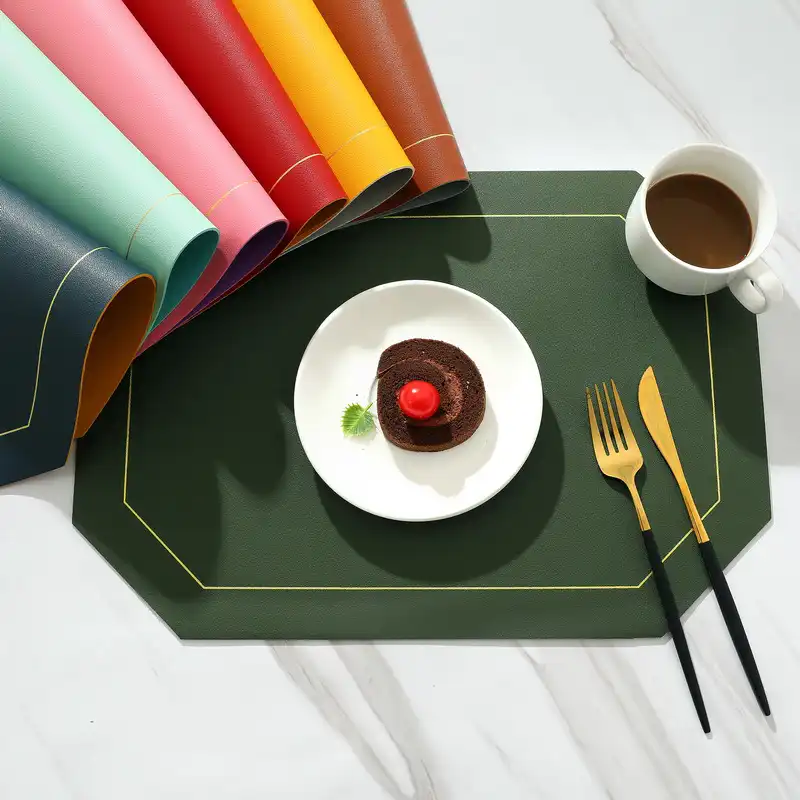
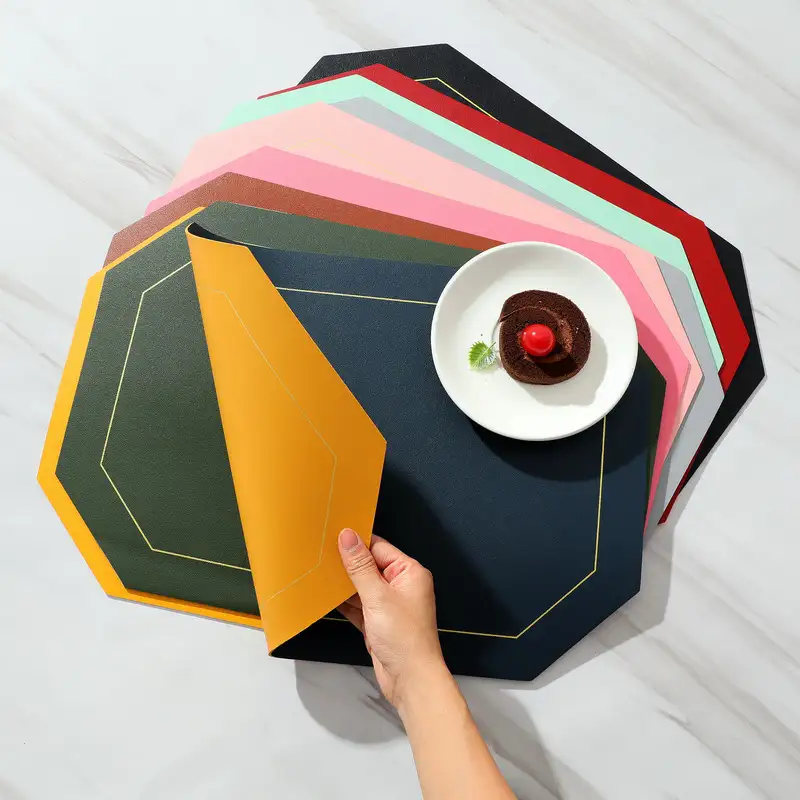
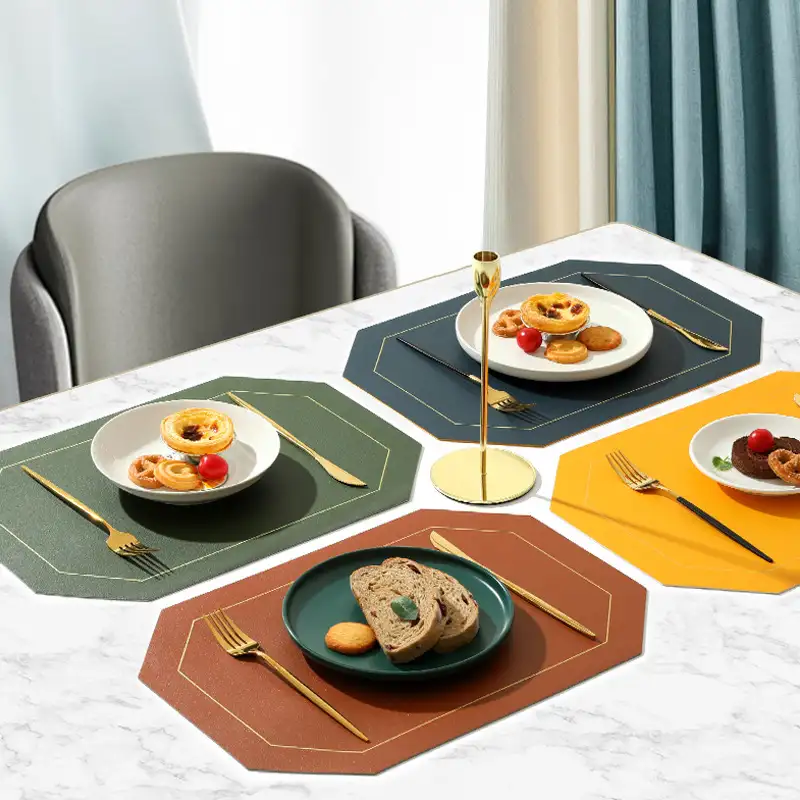
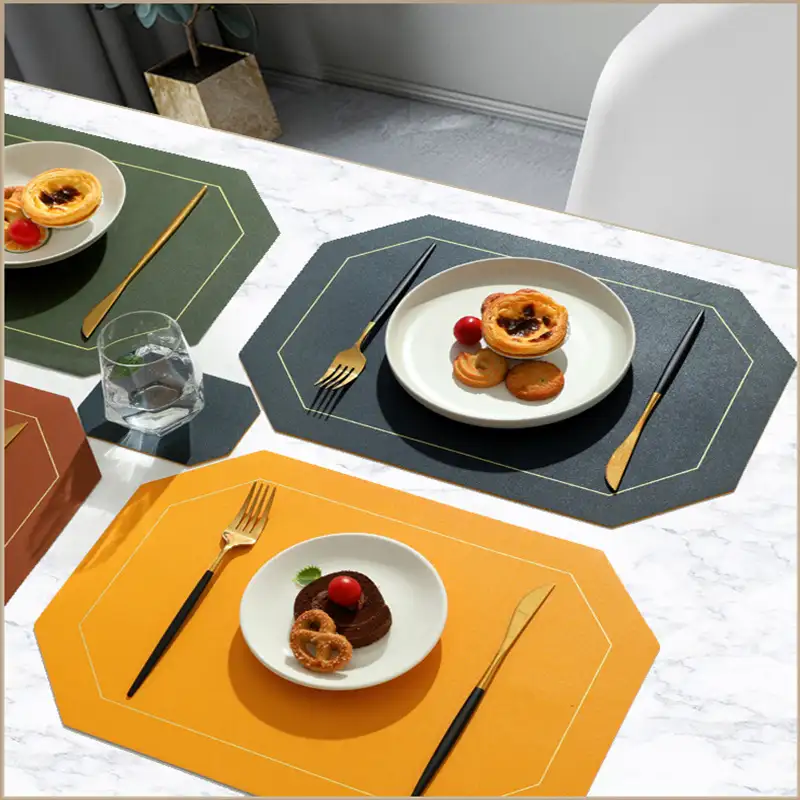
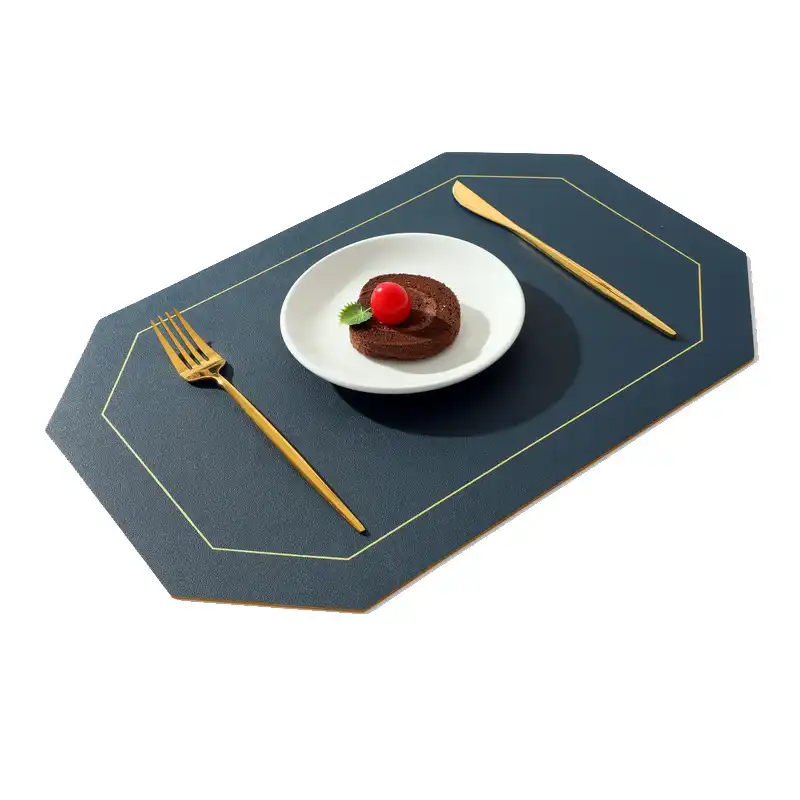
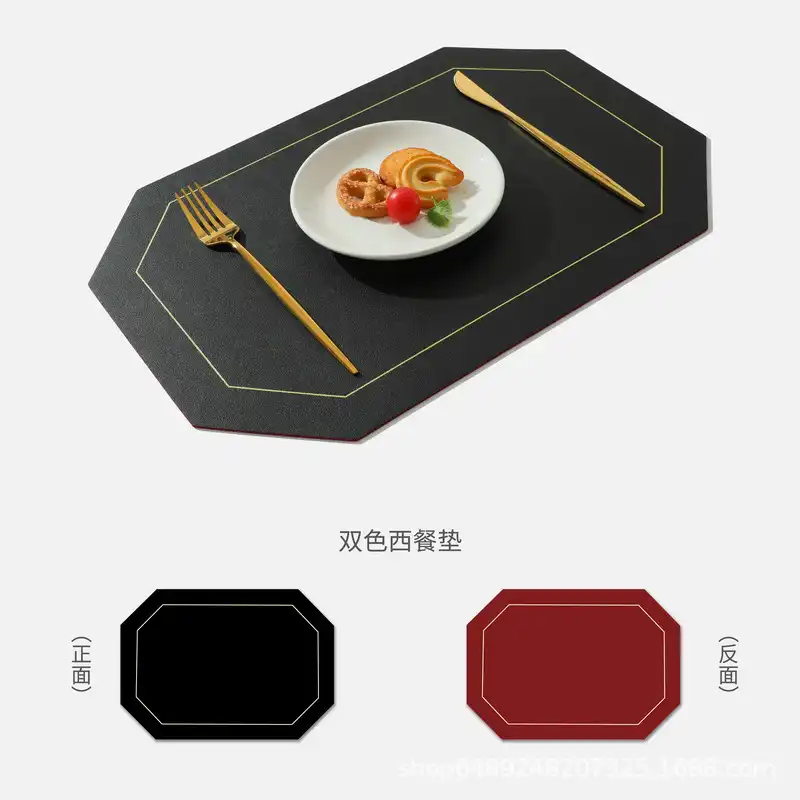
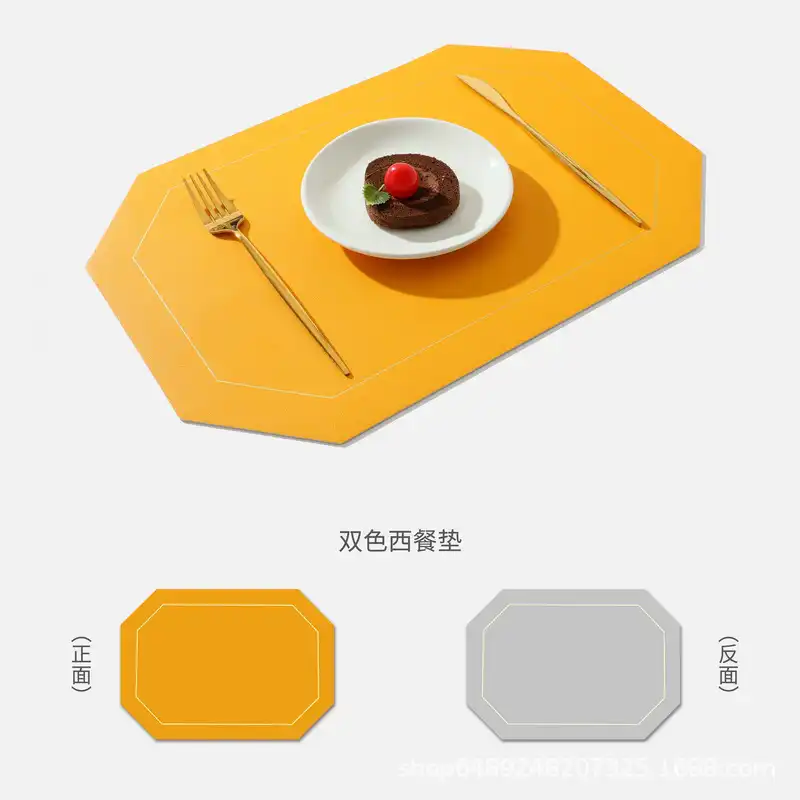
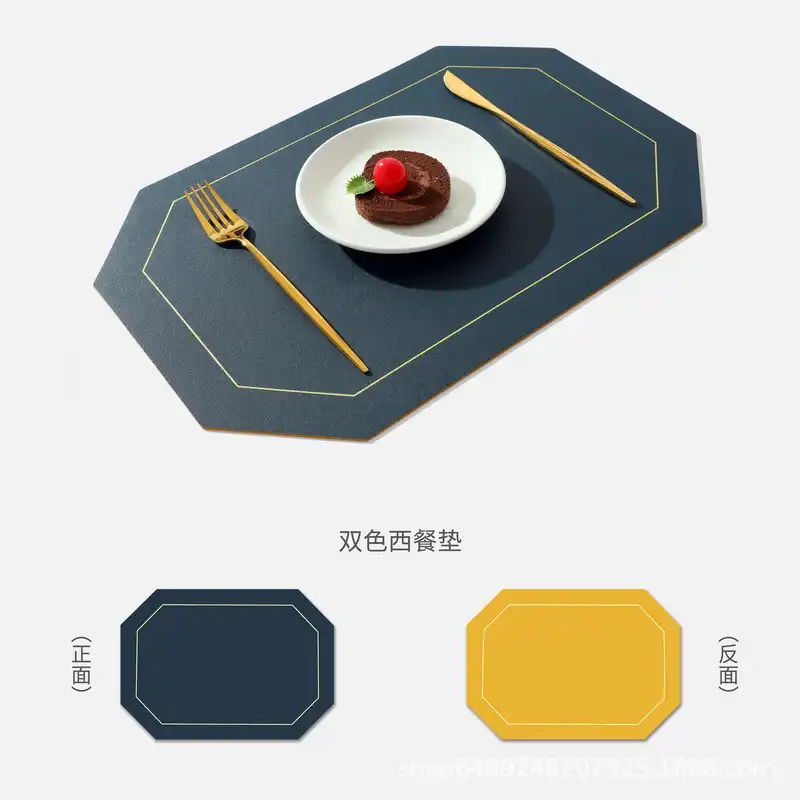
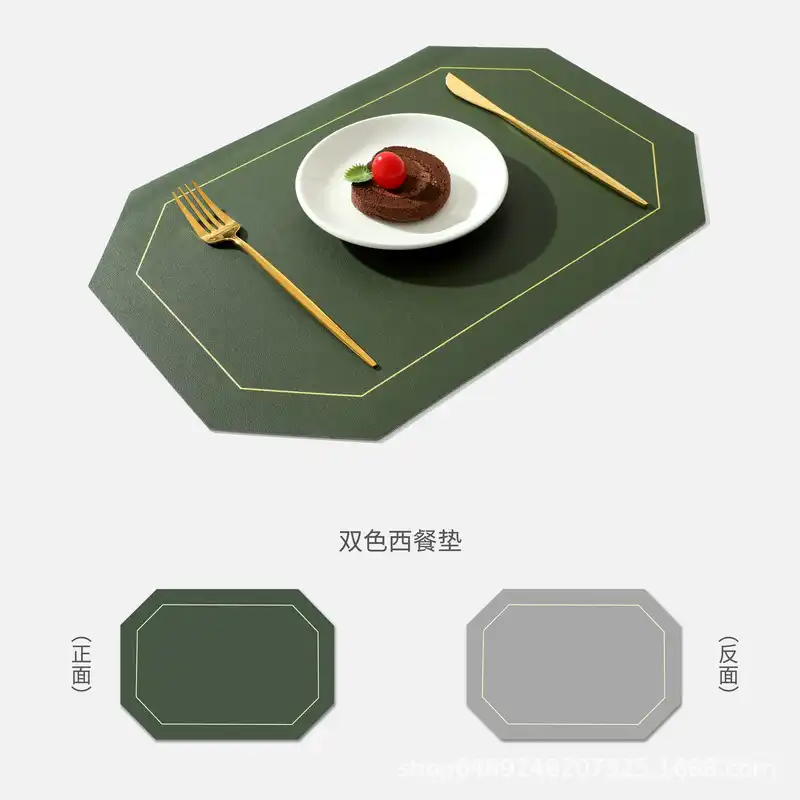
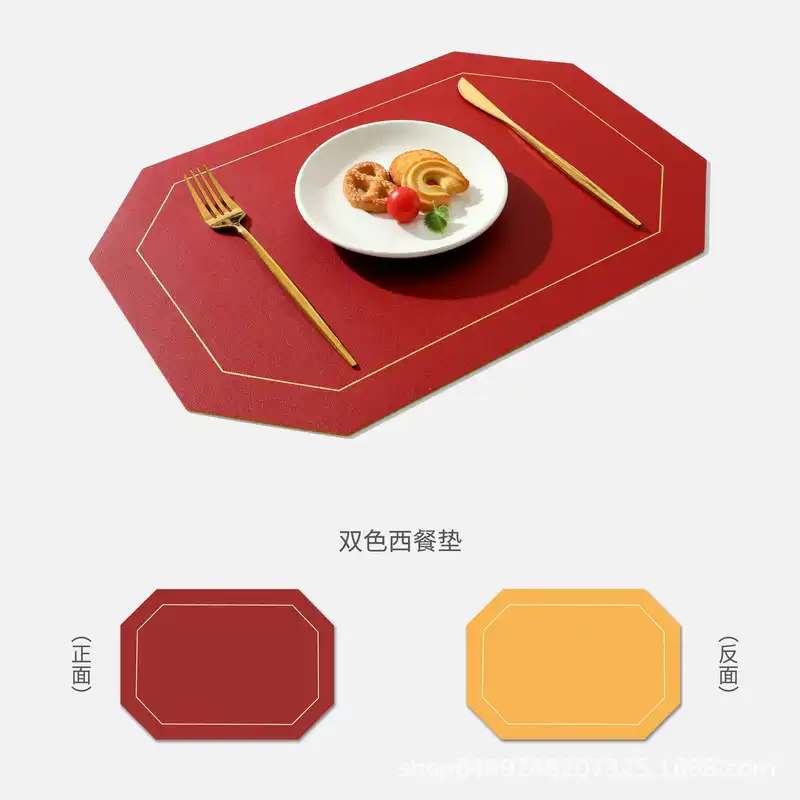
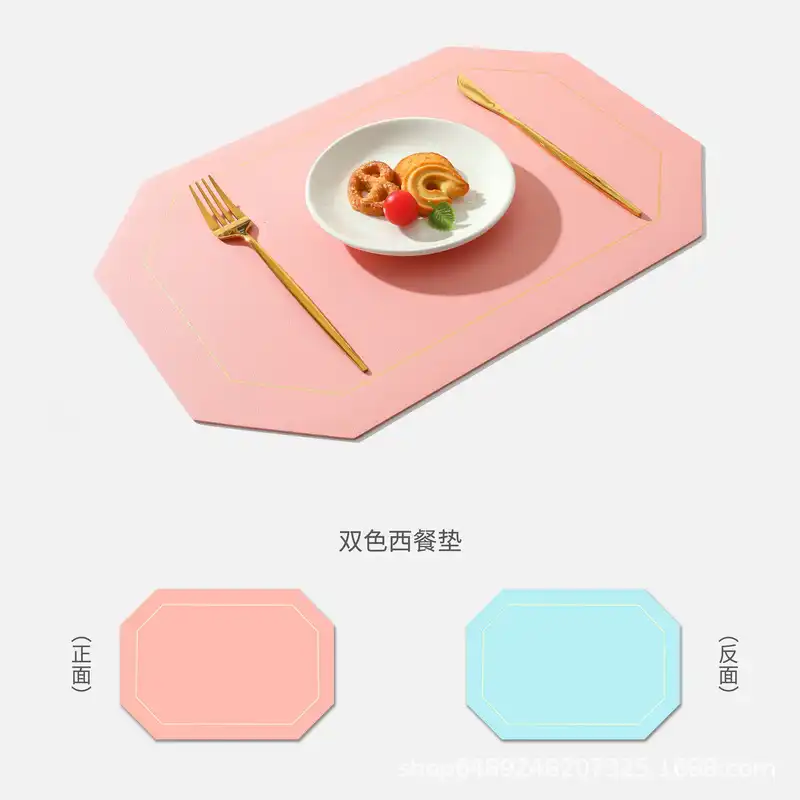
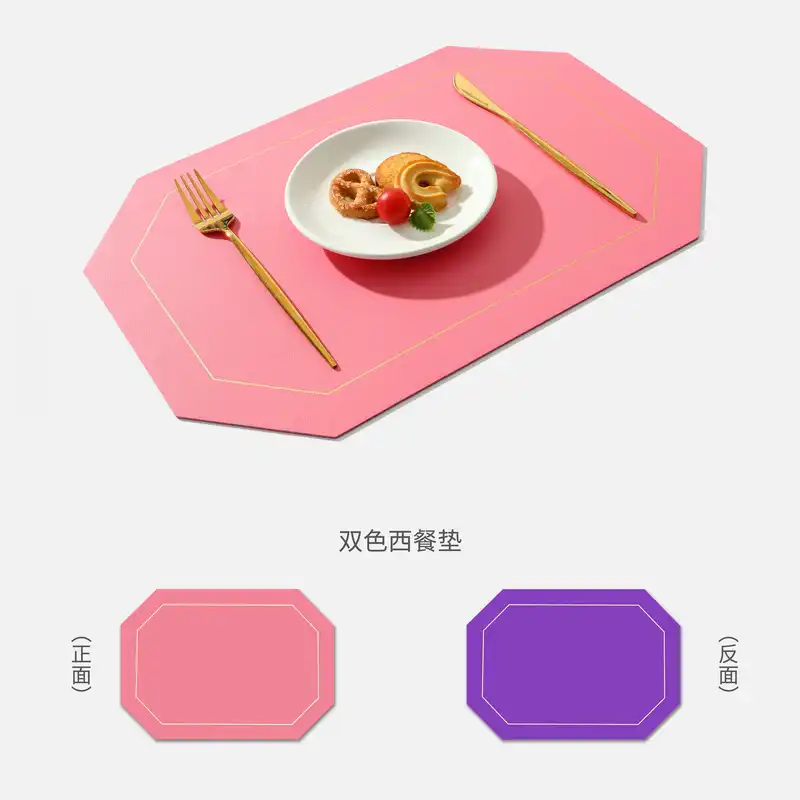
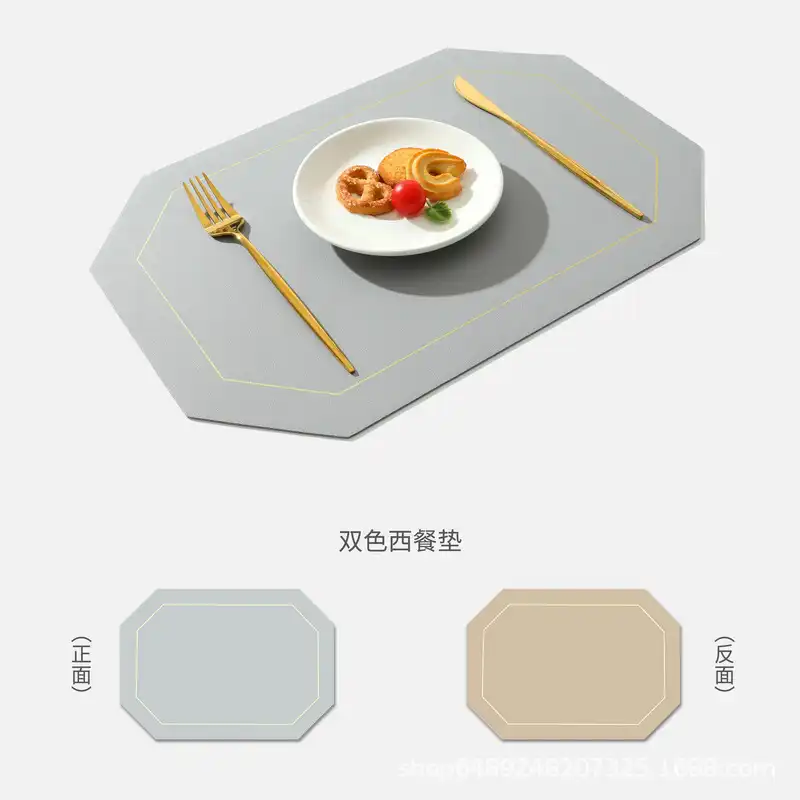
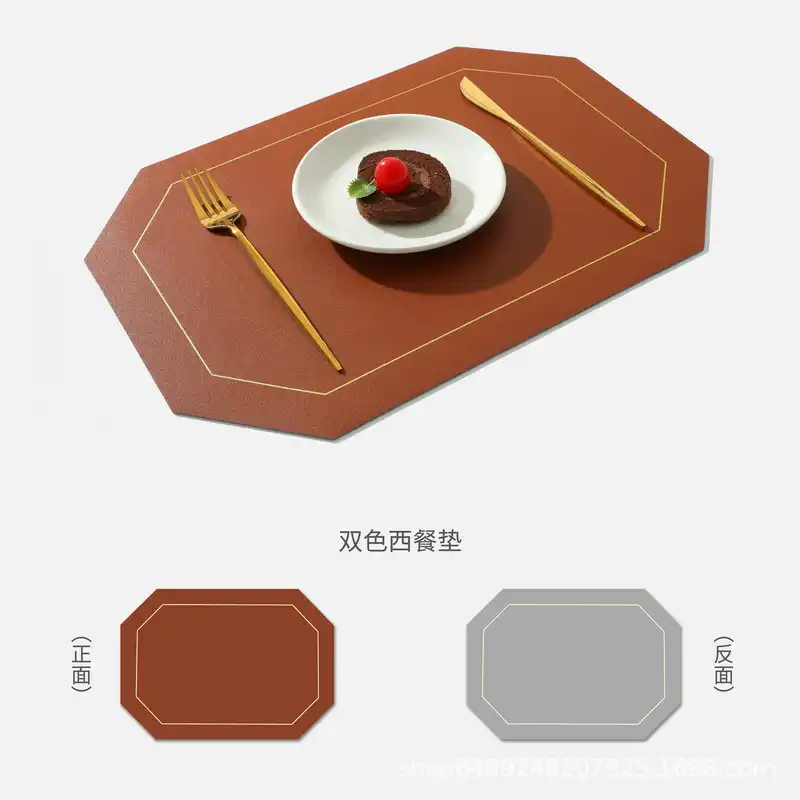
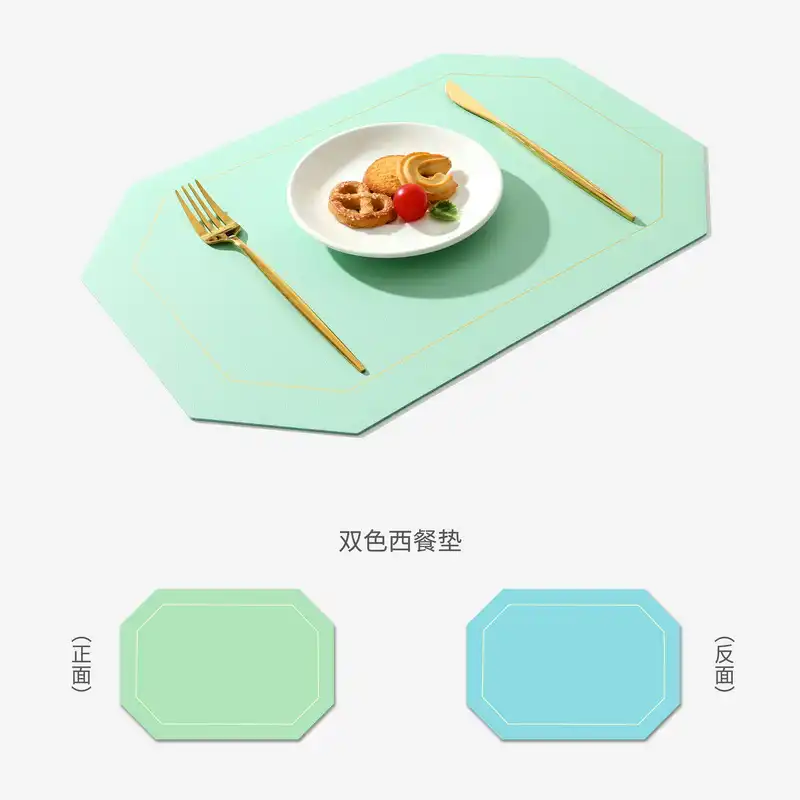
Eight clean edges transform the familiar rectangular place setting into a more structured geometric presentation. The elongated octagonal outline feels distinctive without becoming difficult to arrange, while a slim gold-colored line adds a restrained decorative frame around the tableware.
Two usable color surfaces provide different styling directions within one placemat. Combined with ten available color options, the design works particularly well for restaurants, hotels, cafés and homeware collections that need a recognizable shape with flexible color coordination.
Product Details
| Item No. | F011 |
|---|---|
| Material | PU Faux Leather |
| Shape | Elongated Octagonal |
| Standard Size | 43 × 30 cm |
| Approx. Weight | 135 g per piece |
| Reference Thickness | Approx. 1.8 mm |
| Surface | Fine Leather-Grain Texture |
| Construction | Layered, Reversible Two-Tone Design |
| Decorative Detail | Slim Gold-Colored Line |
| Color Options | 10 colors available; refer to the color selector above |
| Care | Wipe clean or briefly rinse, then dry flat before storage |
| Customization | Color pairing, dimensions, gold-line position and logo application can be reviewed for bulk projects |
Octagonal Geometry with a Refined Gold-Line Frame
The four clipped corners distinguish this design from a standard rounded rectangle while retaining practical horizontal space for a plate, cutlery and drinkware. The geometric outline introduces clearer structure without using an irregular shape that is difficult to align across a table.
A narrow gold-colored line follows the octagonal profile and creates a second visual boundary inside the outer edge. It can coordinate with gold-tone cutlery, charger plates, napkin rings and menu details while leaving the main surface calm and uncluttered.
The line is a decorative surface treatment rather than a solid metal frame. Its width, position, corner alignment and metallic tone should be reviewed through a physical sample when precise coordination with other tabletop details is important.
Reversible Two-Tone Styling
Both sides are designed as usable color surfaces. Turning the placemat over allows the table setting to move between two coordinated or contrasting color directions while retaining the same octagonal proportions.
This is especially useful for restaurants and hotels that want different daytime and evening settings, or for homeware collections that combine two colors within one product rather than producing separate single-sided mats.
The front-and-back colors should be reviewed together. Edge appearance, gold-line placement, grain texture and any logo application can affect whether both sides look intentional when the placemat is turned over.
Physical samples provide a more reliable color reference than screen images, particularly for dark blue, black, green, burgundy, pale gray and softer pastel shades.
Practical Place-Setting Size and Everyday Care
The 43 × 30 cm format provides room for many standard dinner plates, cutlery arrangements and drinking glasses. Its cut corners reduce some of the visual width associated with a full rectangle while preserving useful space around the plate.
Buyers using oversized charger plates, broad bowls or closely spaced seats should test the complete dining arrangement rather than judging suitability from the plate diameter alone.
Routine water drops, coffee, sauces and light oily residue can usually be removed with a soft damp cloth. Mild detergent may be used when necessary, followed by a clean wipe or brief rinse.
Strongly colored sauces and oily marks should be removed promptly, particularly from pale colors and around the decorative gold line. Avoid prolonged soaking, machine washing, dishwashers, abrasive pads, bleach, alcohol and strong solvent-based cleaners.
Allow both sides to dry completely before stacking. Store the placemats flat or loosely rolled and avoid repeated sharp folding, which may affect the geometric outline or leave visible creases.
The surface is suitable beneath normal dining plates, bowls and warm serving ware. Cookware taken directly from a stove or oven should be placed on a separate trivet because no product-specific high-temperature rating has been confirmed.
Octagonal Placemat Solutions for Structured Table Settings
This design is intended for projects that need more visual identity than a conventional rectangular placemat but still require a shape that can be repeated consistently across several seats.
When a Standard Rectangle Feels Too Conventional
The clipped corners create a recognizable geometric silhouette without significantly reducing the central dining area. This gives restaurants, cafés and home dining collections a stronger design feature without relying on printed patterns.
When Tableware Needs a Clearer Visual Frame
The inset gold line defines the area around the plate and cutlery. On larger restaurant and hotel tables, this repeated outline can help individual place settings appear more deliberately organized.
When One Product Needs Two Color Moods
The reversible construction allows one side to support a darker, more formal presentation while the reverse can introduce a lighter, warmer or more seasonal direction. Exact pairings should be selected according to the intended collection.
When Geometric Details Must Repeat Across the Table
The octagonal shape works well with angular trays, rectangular plates, faceted glassware and modern interior details. Repeating the same cut-corner profile across each seat can create a more consistent visual rhythm than mixing several unrelated shapes.
Project note: Plate size, table width, seat spacing, front-and-back colors and surrounding metallic accessories should be reviewed before bulk production.
Custom Octagonal Placemat Development and Sample Support
A successful custom project requires the outline, colors, decorative line and logo to be considered together. We can help buyers convert a table-setting idea into a clearer production specification before bulk manufacturing.
Shape and Dimension Review
The standard 43 × 30 cm size works with many common place settings, but the corner cuts and overall proportions also affect usable space. Table dimensions, plate diameter, cutlery layout and seat spacing should therefore be reviewed together.
For an initial quotation, buyers can provide the required quantity, intended application, preferred dimensions and colors, logo artwork when required, and delivery destination.
Front-and-Back Color Pairing
Ten current color directions allow tonal, contrasting or neutral combinations to be developed. Both sides should be evaluated as finished visible surfaces rather than treating the reverse only as a backing.
A physical sample can help confirm how the two colors meet at the edge and how the selected shades appear under the intended restaurant, hotel or retail lighting.
Gold-Line Position and Corner Alignment
The line should follow the cut-corner geometry consistently. Its distance from the edge, line width, metallic tone and alignment through all eight corners can be reviewed during sample development.
A stronger contrast makes the gold line more visible, while a closer tonal relationship creates a quieter and more understated result.
Logo Method and Visibility Planning
Available logo directions may include digital printing, screen printing, UV printing, debossing or debossing with foil, subject to artwork and production review.
A large central logo may be hidden beneath the plate. A smaller mark near the lower outer edge, one clipped corner or the space beside the plate may remain more visible during dining.
Sample Confirmation Before Bulk Production
A physical sample can be used to confirm the finished dimensions, corner proportions, front-and-back colors, surface grain, gold-line alignment, logo method and artwork position.
Final production should follow the approved sample and confirmed order specification. Applicable material test documents can be shared upon request during project review, subject to the selected material and current specification.
Octagonal PU Faux Leather Placemat Frequently Asked Questions
Is an octagonal placemat suitable for a standard place setting?
Yes. The 43 × 30 cm format accommodates many standard plates, cutlery arrangements and drinking glasses. Oversized charger plates and closely spaced seating should be tested as a complete table layout before ordering.
What is the difference between an octagonal and rectangular placemat?
An octagonal placemat has clipped corners that create a more geometric outline. It retains much of the usable space of a rectangle while introducing a more distinctive shape around the tableware.
Can both sides of the placemat be used?
Yes. Both sides are intended as usable color surfaces. The selected color pairing, edge appearance, gold-line treatment and logo position should be confirmed through an approved sample.
Is the gold line made from metal?
No. It is a decorative surface treatment that creates a metallic-looking line. It does not form a solid metal border around the placemat.
How should a double-sided PU faux leather placemat be cleaned?
Wipe both sides with a soft damp cloth and use mild detergent when necessary. Remove strongly colored spills promptly, avoid abrasive tools and strong solvents, and allow both sides to dry before stacking.
Can hot plates and cookware be placed directly on the placemat?
It can be used beneath normal dining plates, bowls and warm serving ware. Cookware taken directly from a stove or oven should be placed on a dedicated trivet.
Can the size, colors, gold line and logo be customized?
These elements can be reviewed for bulk projects. The finished dimensions, two-color combination, line position, logo process and artwork placement should be confirmed through a physical sample before production.